





Neck Massager Sourcing Mistakes and Order Clarity
Avoid unclear neck massager orders by verifying the operating experience, exact model version, and itemized kit against the approved sample and quotation.
 Meilan Tech 5 min read
A neck massager purchase order should tell the supplier which device to make, what the user should be able to do, and what must arrive in the box. Many inquiries do not reach that level of clarity. They ask for “more modes,” name a product family rather than an exact version, or request a “complete kit” without listing its contents. Those phrases leave room for a quotation, sample, and retail listing to describe different offers.
The answer is not a longer wish list. Resolve the three ambiguities below with a named sample, version-matched documents, and an itemized quotation before approving the order. F11 and F12 are used as different physical examples, not interchangeable configurations or promises about every shipment.
1. Buying a feature count instead of an operating experience
“Ten modes” or “many intensity levels” may look specific in an RFQ, but a number does not explain how a customer starts a session, changes a setting, reads the result, or turns the device off. A mode and an intensity level are different controls. A buyer who has only compared counts cannot know whether the selected behavior is easy to demonstrate or support.
For the quoted model, ask the supplier to perform a short sequence on a labeled sample: power on, choose a mode, adjust intensity, change any separately quoted function, and end the session. Check the matching manual and record the visible or audible response after each step. If a remote or voice prompt is part of the requested experience, confirm whether it belongs to this exact version and kit. The modes-versus-intensity guide gives the deeper comparison; the purchasing requirement is the demonstrated sequence.
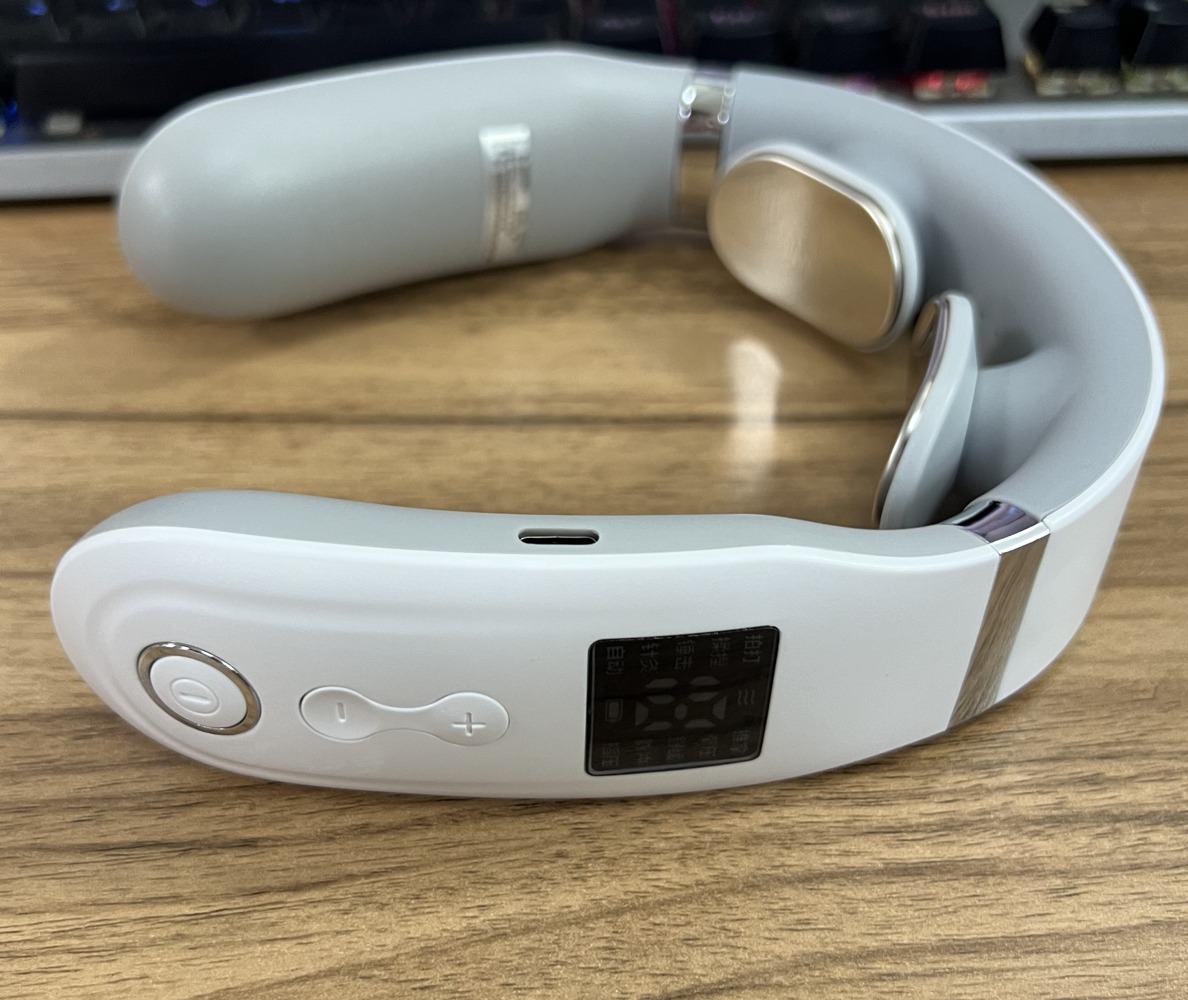
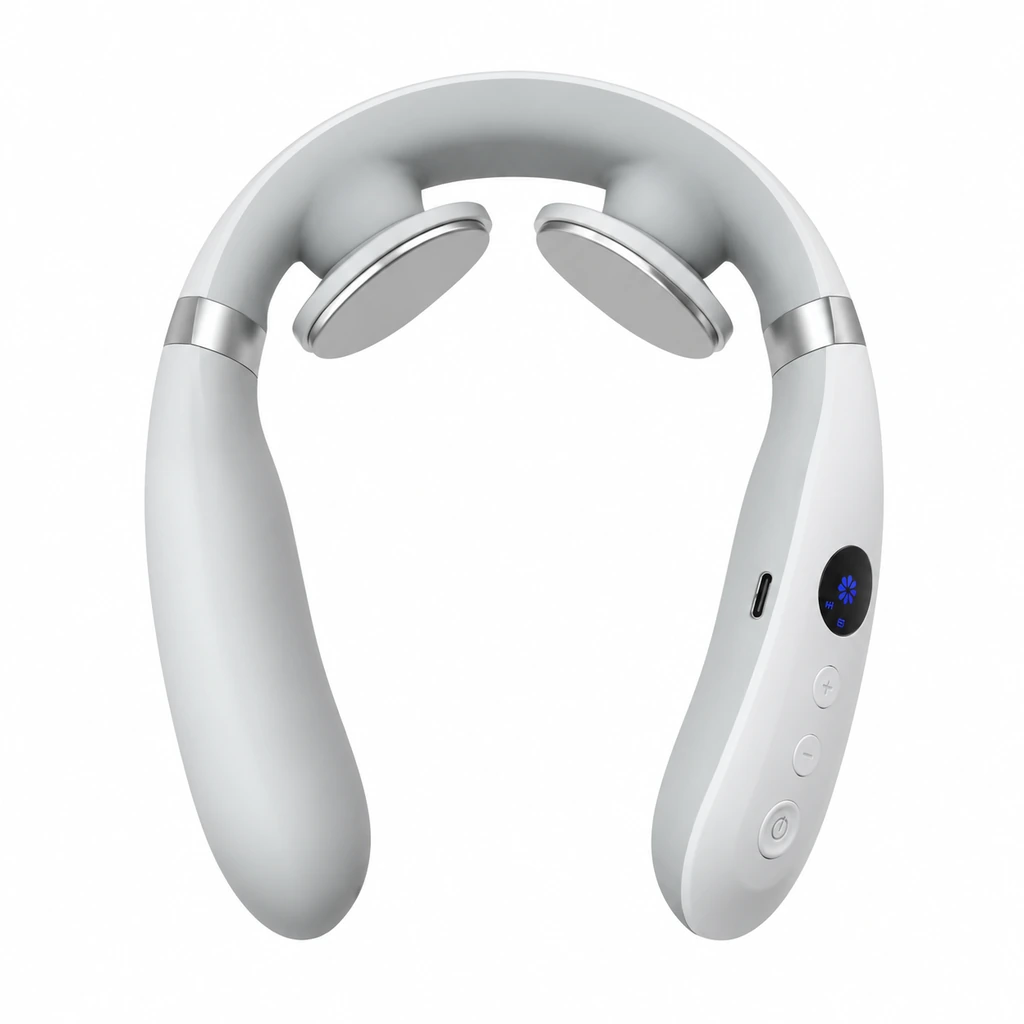
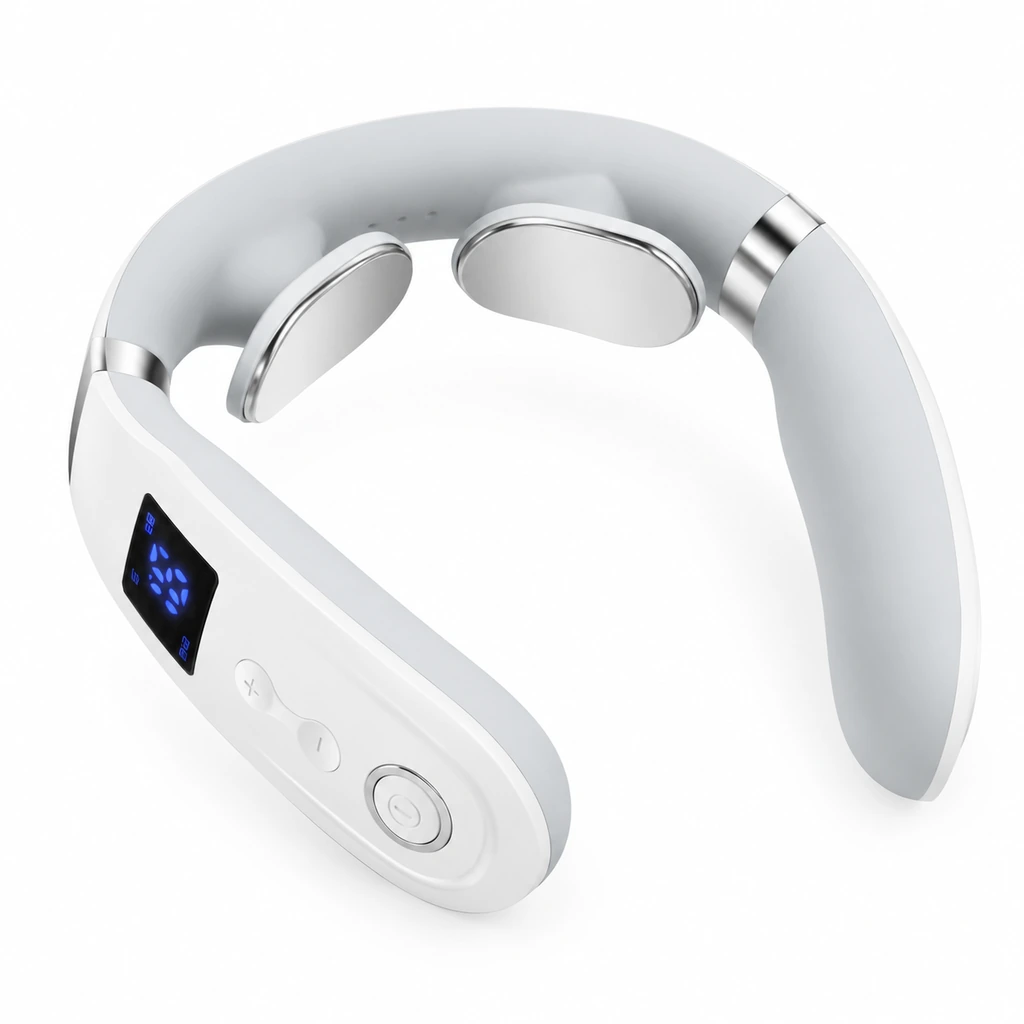
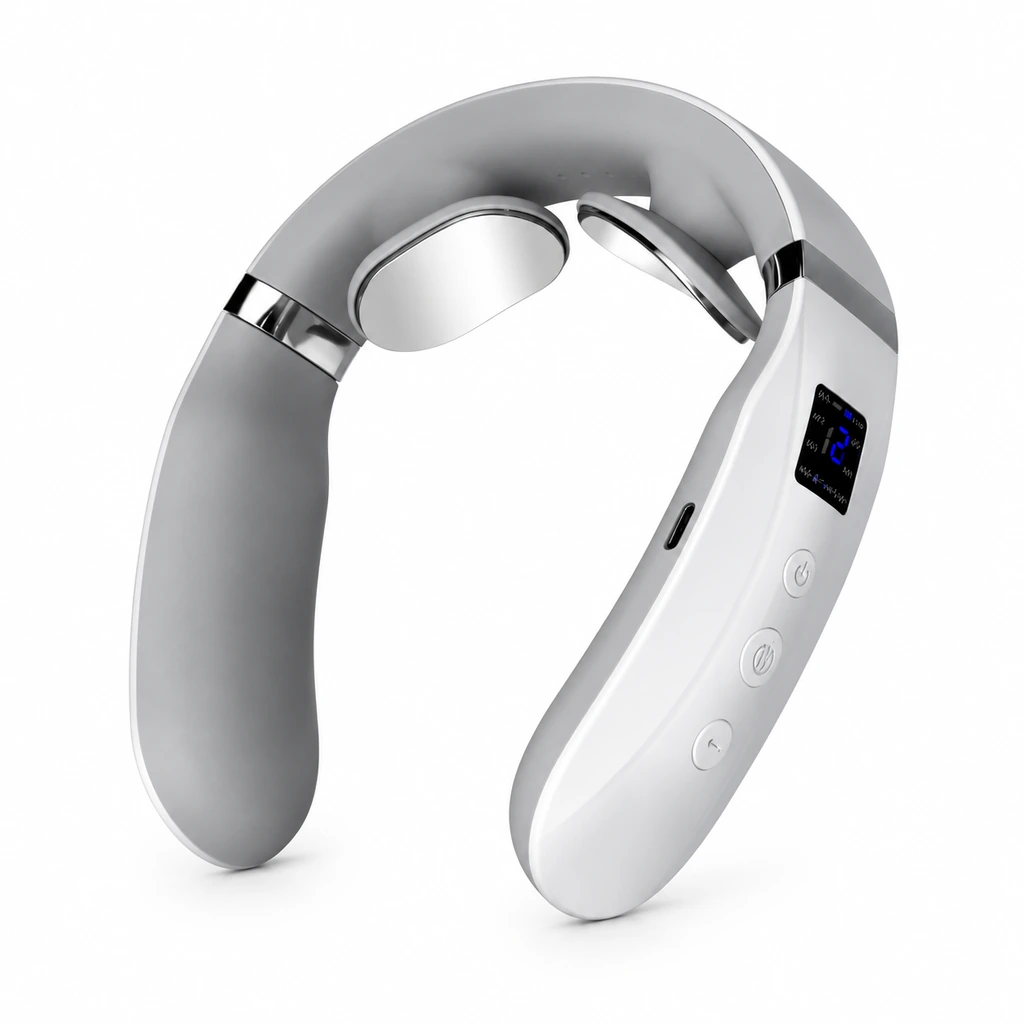
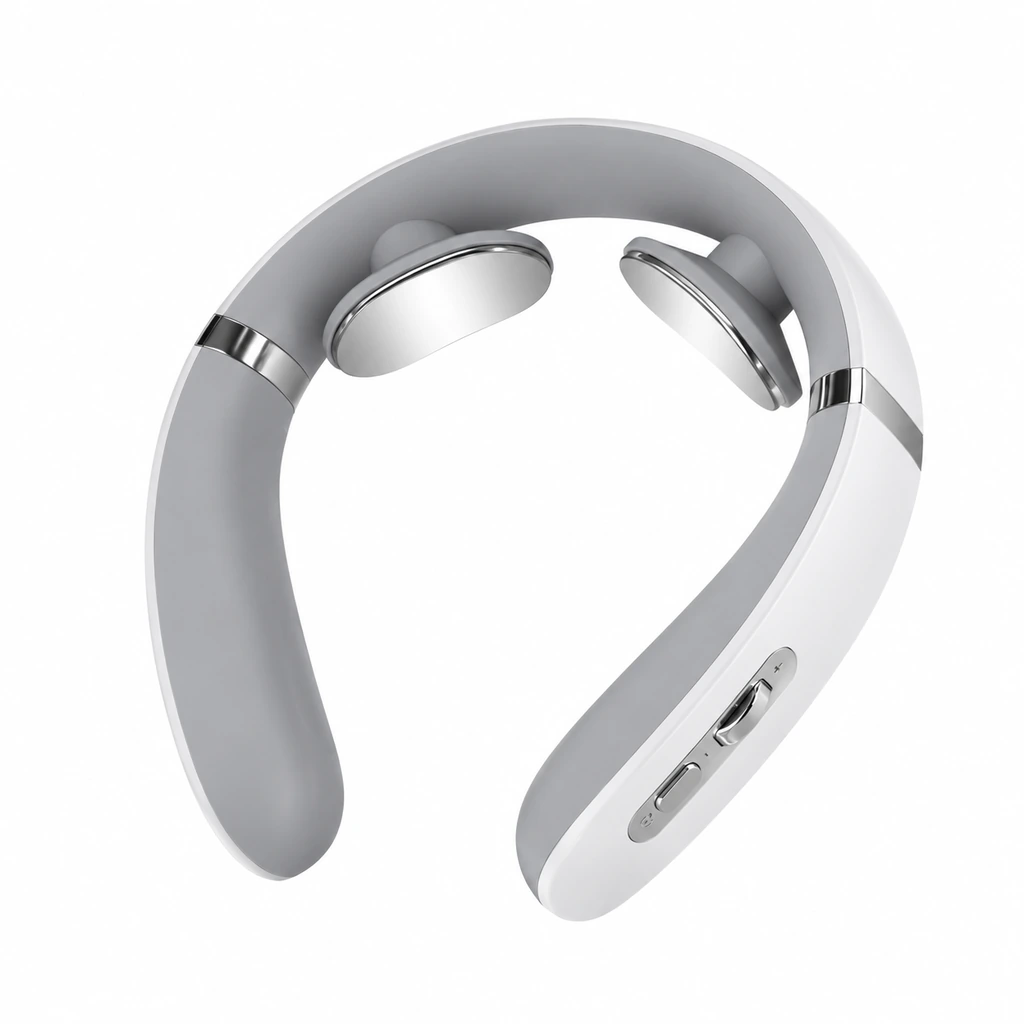
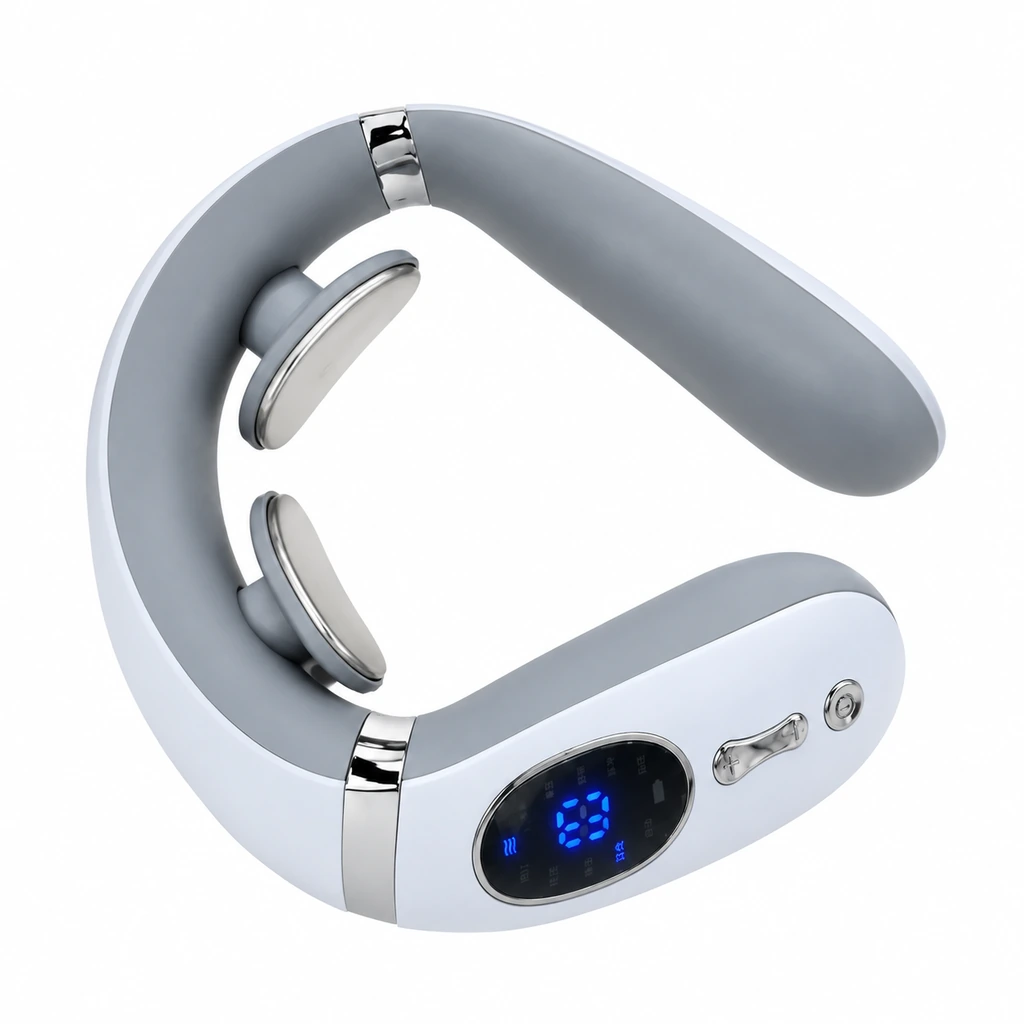
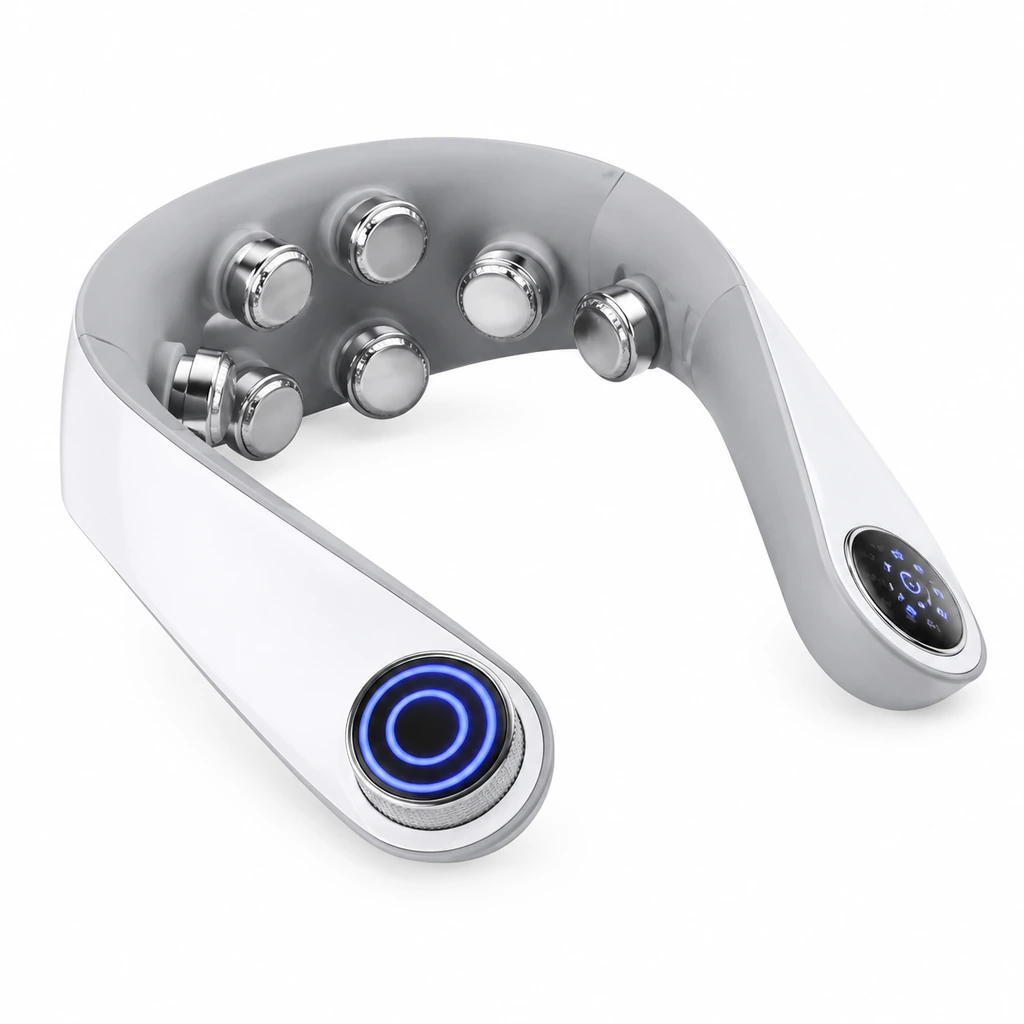
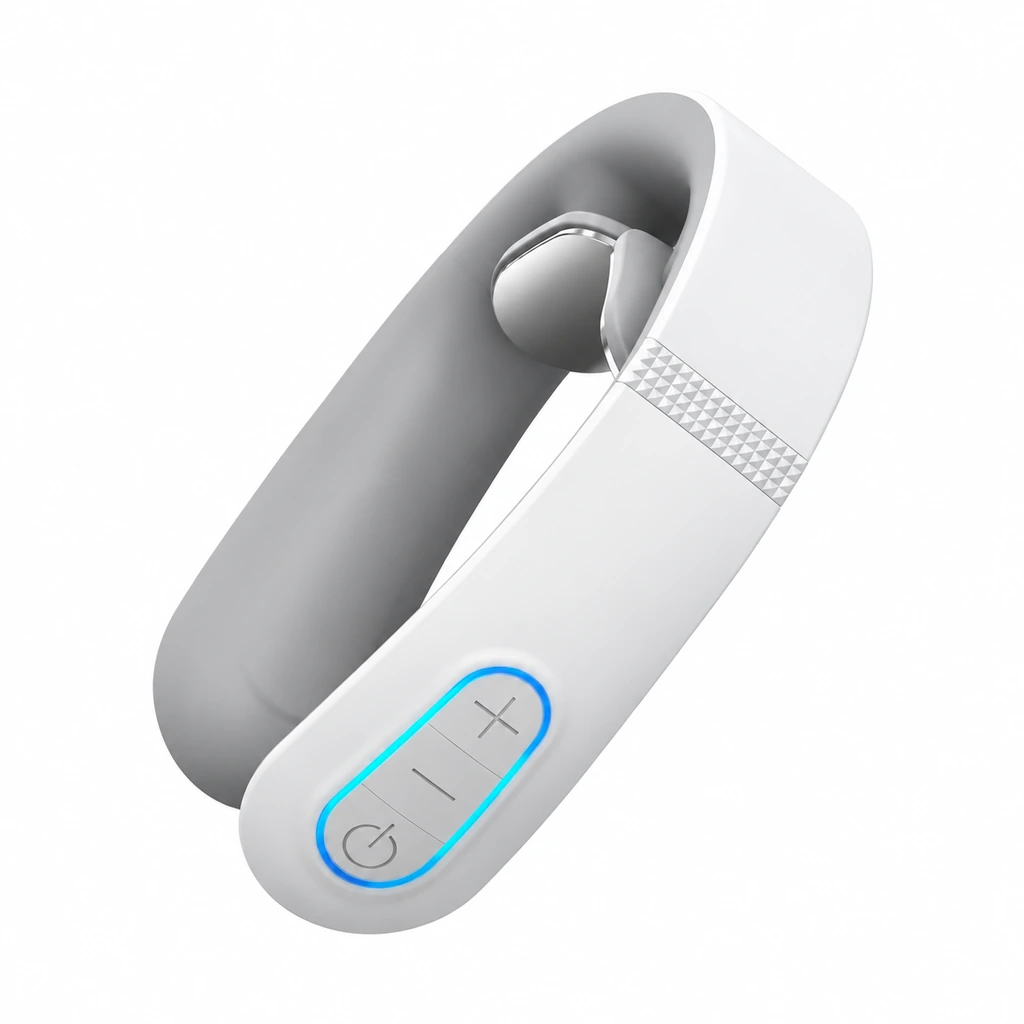
This supplied F11-series sample shows where a reviewer can begin documenting control actions. The image cannot establish the full mode sequence or the contents of every F11-series order.
The trade-off is practical: a more elaborate feature list may be useful for positioning, but it also needs accurate instructions, demo material, and support language. Decide whether those added settings serve the intended customer before making their count a buying criterion.
2. Treating “neck massager” as a complete model identity
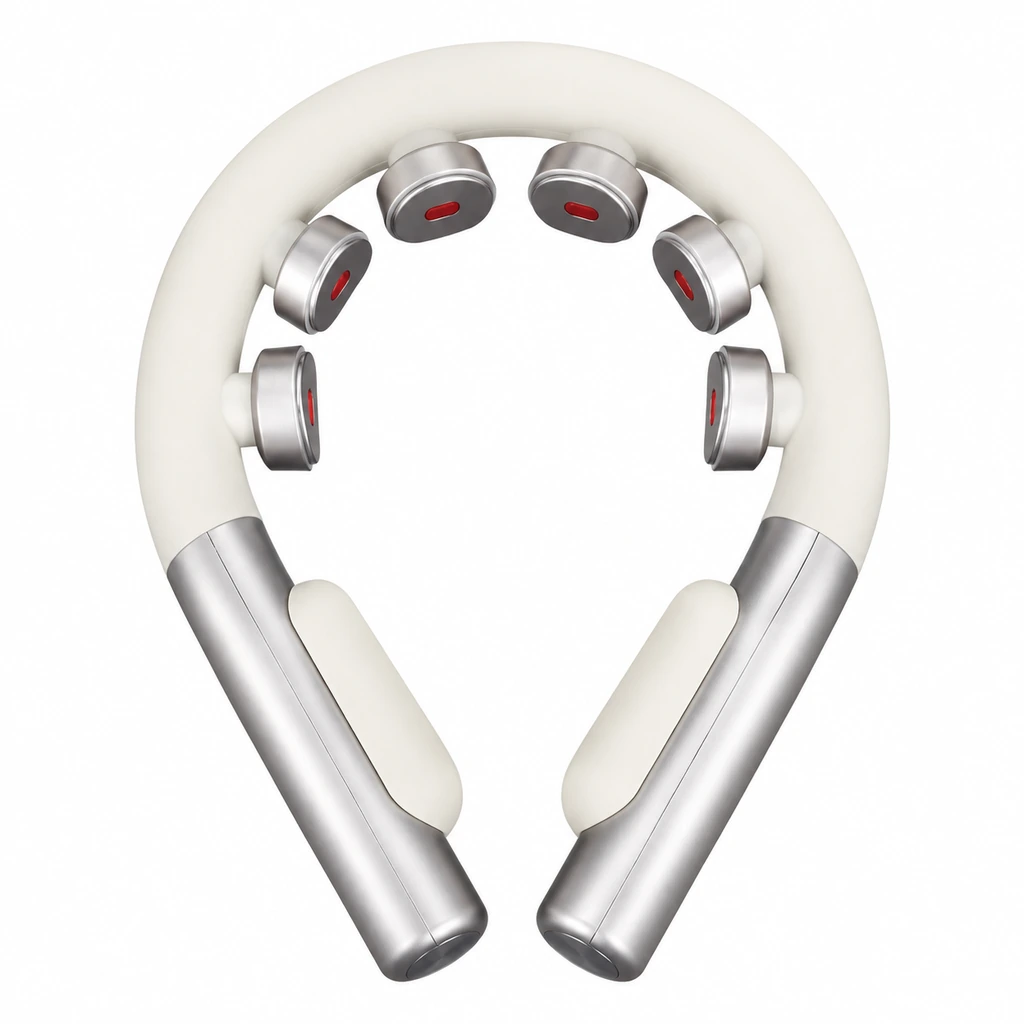
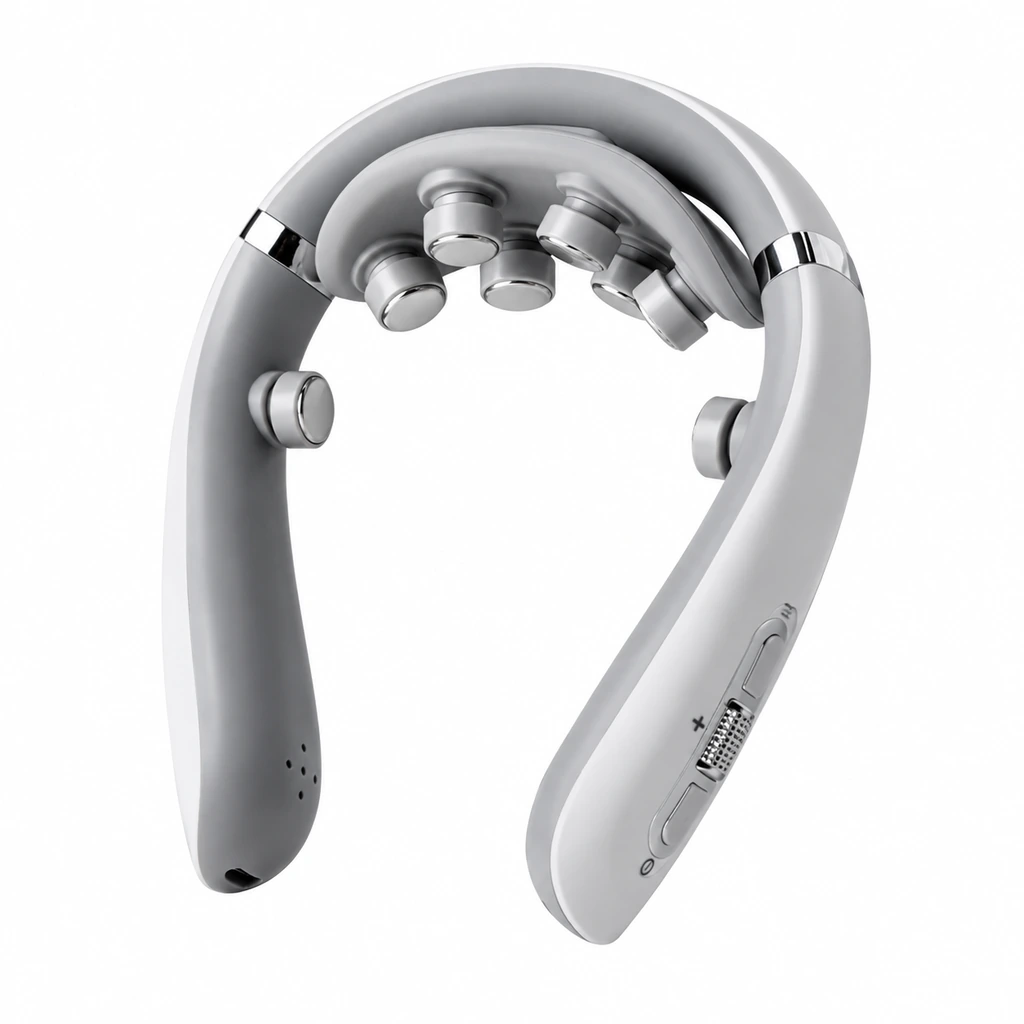
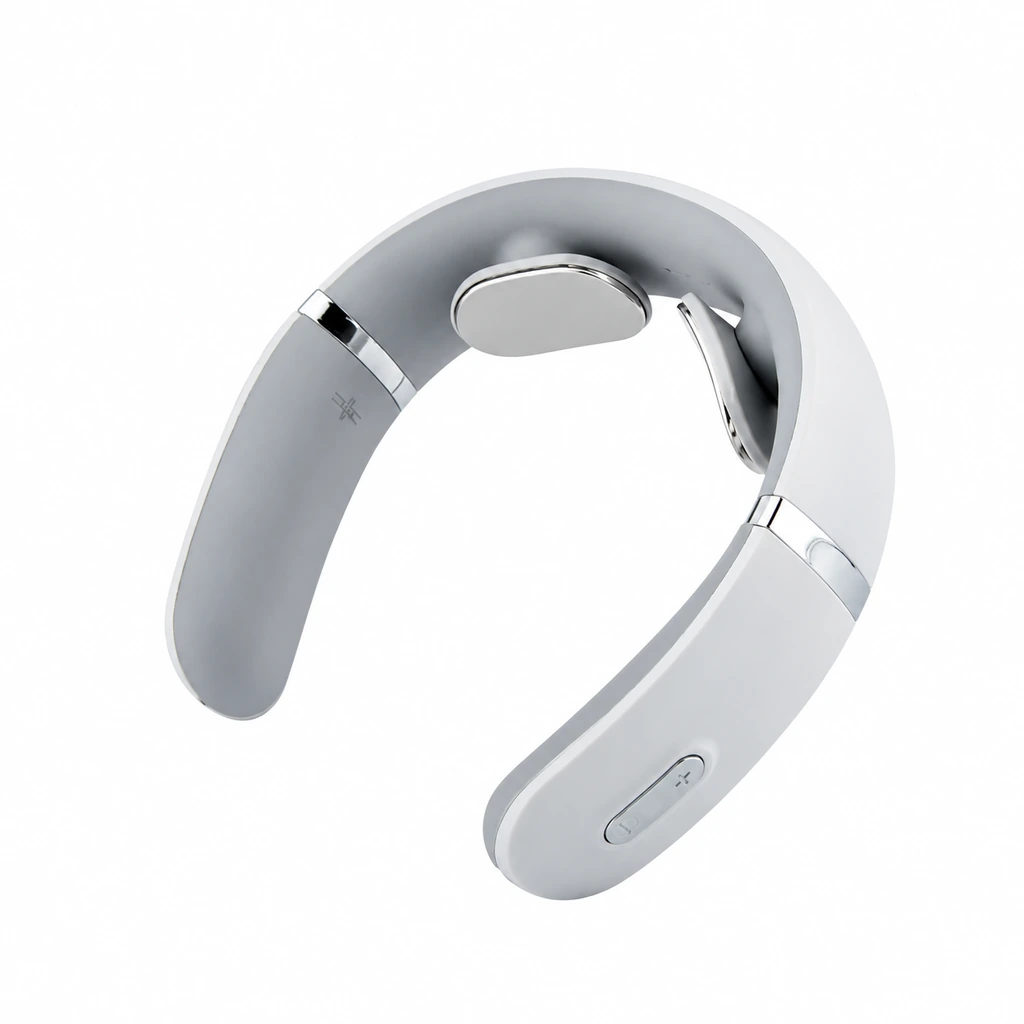
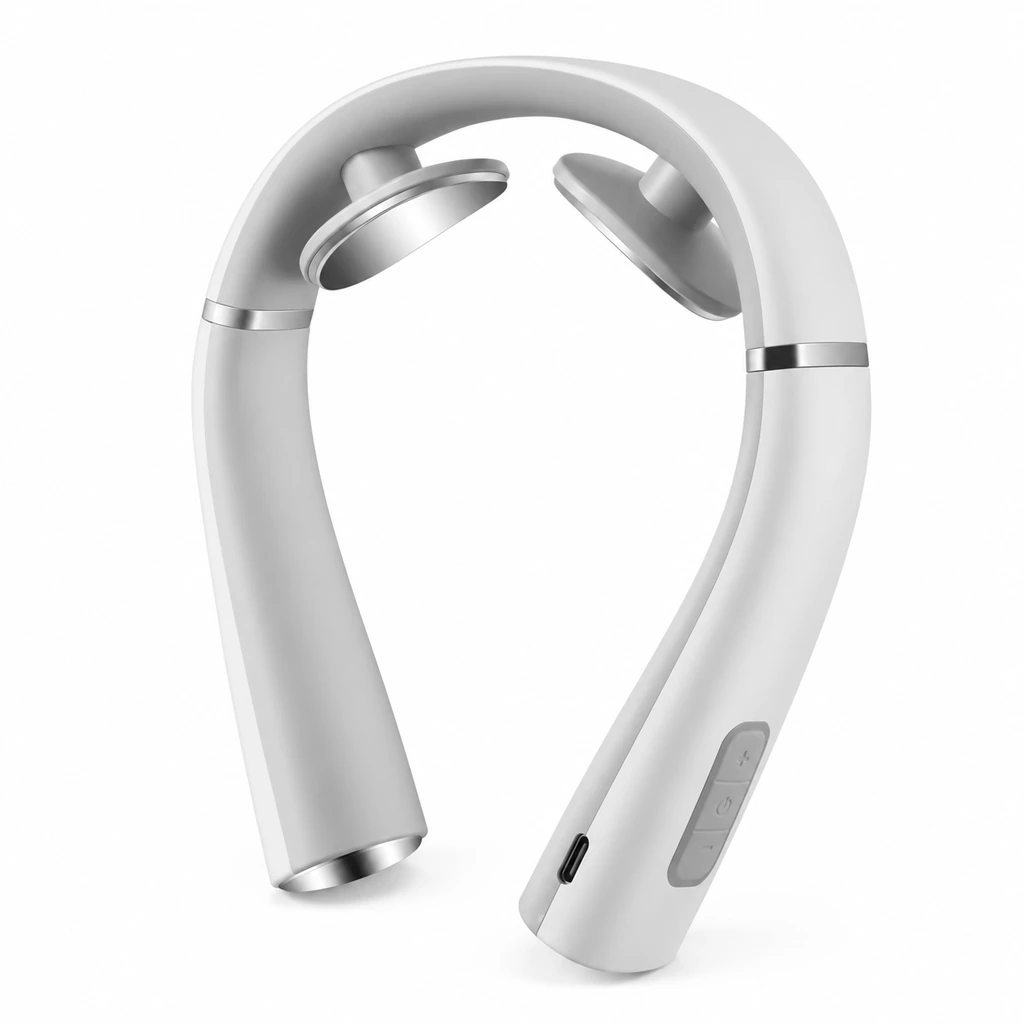
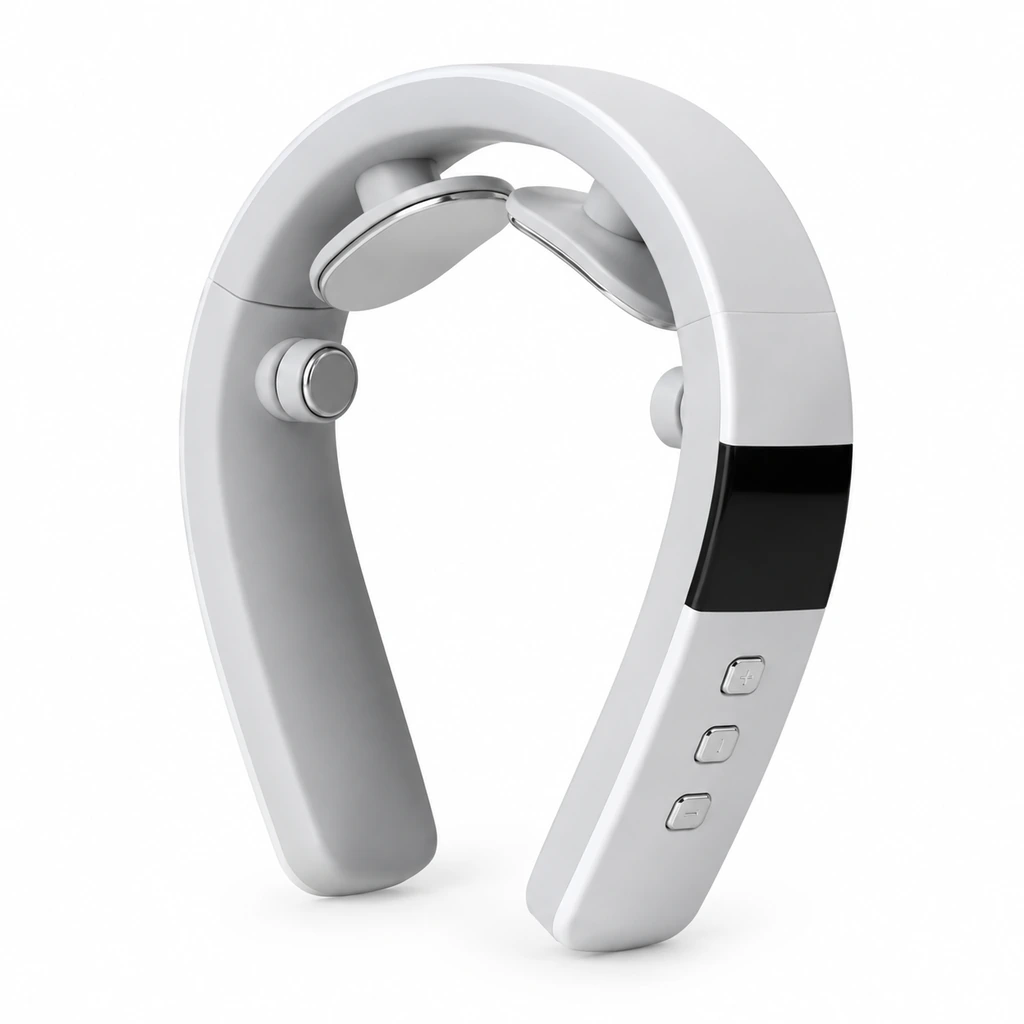
Two products in the same category can require different fit checks, control explanations, packaging, and claims. The supplied F11-series sample has a curved neck-worn body with contact pads and a device display. The photographed F12 sample tray shows a different multi-piece contact arrangement. The photos establish visible differences; they do not prove that the products use the same mechanism, deliver the same sensation, or include the same accessories.
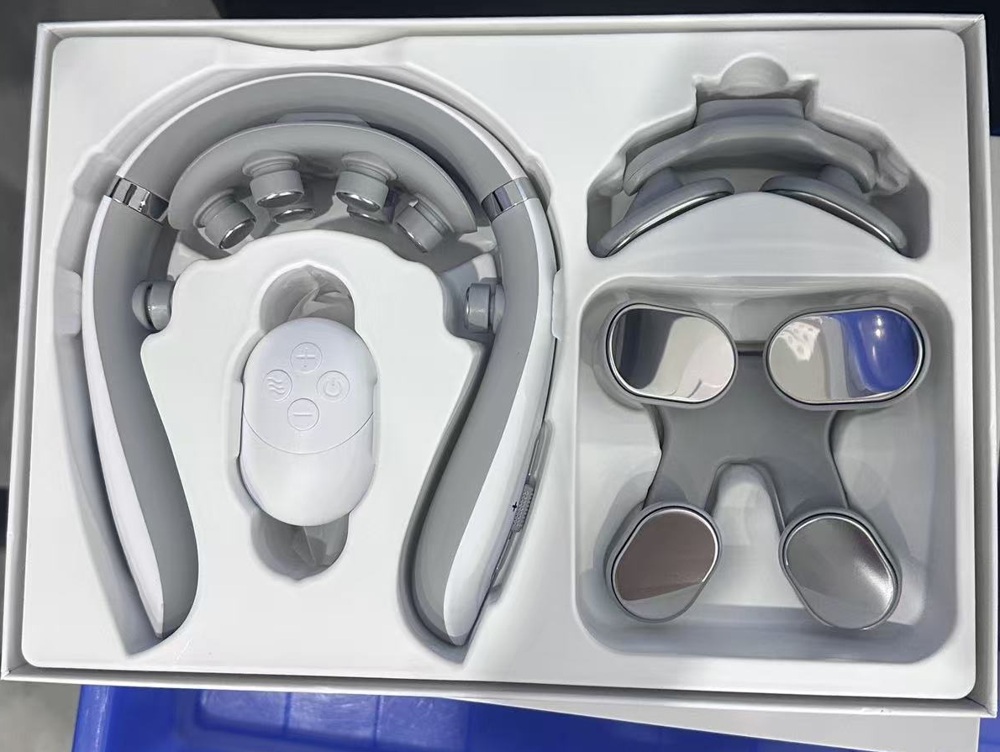
The F12 sample tray makes the physical configuration visible. Confirm the exact model, component names, and approved arrangement in the corresponding specification and sample record.
Do not let a category term or a family name stand in for the approved version. Put the exact model designation and configuration reference on the quotation, sample label, specification, manual, artwork, and purchase order. If one file carries a suffix or revision that another omits, ask the supplier to map them in writing. Do not assume a visual resemblance resolves the discrepancy.
This matters most when a buyer moves from a shortlist to a signed order. The F11 product page and F12 product page are useful starting points for identifying candidates. The order itself must point to the particular approved sample and documents, not merely to a public product page.
3. Assuming a kit photo defines what the quoted price includes
An opened sample box can show a controller, cable, booklet, and tray. It does not establish which of those items is included in a later commercial quotation, which language will be printed, or whether a market-specific adapter is proposed. “Standard accessories” is especially risky when two offers use different kit photographs or when packaging is customized.
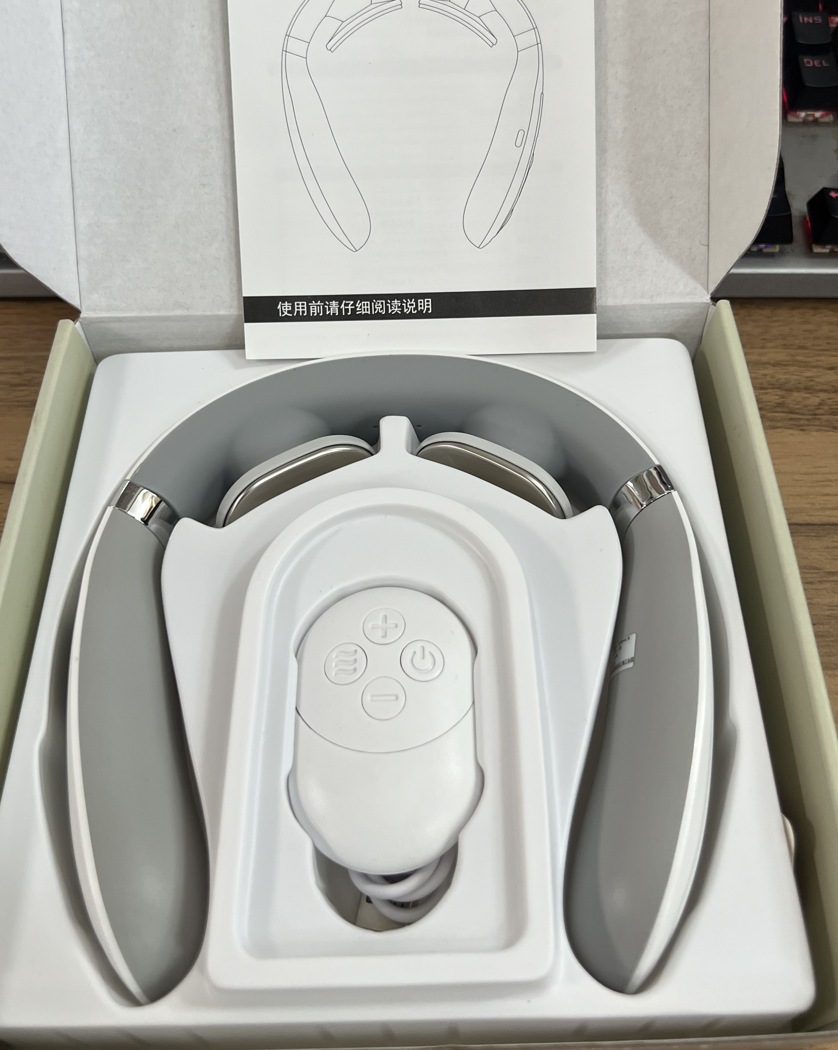
The photographed F11-series sample shows items to identify and count. The written pack list and approved order—not this photograph—determine the supplied kit.
Request one line per supplied item, with its name, quantity, relevant version, and whether it is included or optional. Compare that list with an opened approval sample. Confirm the manual language, retail box and inner tray separately from the device. For charging, name the actual cable and input arrangement; include an adapter or plug only when the quotation explicitly covers it. The charging-accessory checklist helps identify the questions that depend on the destination market.
If the buyer changes the kit after sampling, ask for a revised quotation and packed sample. A different cable, controller, manual, or tray can affect cost, packed size, customer instructions, and shipment preparation. Do not treat the earlier price or approval as automatically covering the new bundle.
Give the supplier one order-ready record
Before selecting an offer, consolidate the answers in a single sheet attached to the RFQ and later purchase order. It should identify the approved sample, not just an attractive catalog image.
| Order field | What the buyer should write down | Evidence to attach |
|---|---|---|
| Product identity | Exact model, configuration/revision, color and target market | Labeled sample and matching specification |
| Required experience | Operating sequence and only the settings or prompts essential to the offer | Sample demonstration and matching manual |
| Complete kit | Each included item and quantity; optional items kept separate | Itemized quote, pack list and opened sample |
| Customer-facing version | Manual language, box and artwork revision | Approved print files and packed sample |
| Open points | Unanswered questions, owner and decision needed before release | Supplier's written response or revised quotation |
Ask the supplier to return the same reference on its quote and to mark unresolved rows rather than silently filling them with a standard configuration. A buyer can then compare offers on the same scope. If the model, operating behavior, or kit remains uncertain, hold the affected approval until the documents and sample agree.
To request a version-specific quotation, contact Meilan with the intended market, candidate model, expected quantity, operating requirements, and itemized kit. Say which fields are fixed and which need a supplier recommendation.

