


Modes vs Intensity Levels in Neck Massager Sourcing
“Ten modes” and “16 intensity levels” look like comparable selling points, but they describe different controls. A mode usually selects an output pattern or operating program. An intensity level changes the strength within a selected program. A US wellness brand should check how those labels work on the exact sample before turning them into a product-page claim.
Put the two fields in separate columns
The Meilan F10 page lists six output modes and 16 intensity levels. The F16 page lists ten modes and 16 intensity levels. These published descriptions demonstrate why a sourcing sheet needs two fields. They do not tell a buyer that one device will feel “twice as effective,” or that every named mode has a unique measurable effect.
For each candidate, record the mode name as shown in the manual, the button or remote action that selects it, and the allowed intensity range. If heat, vibration, or another function can run independently, give it a separate field rather than folding it into a vague mode count.
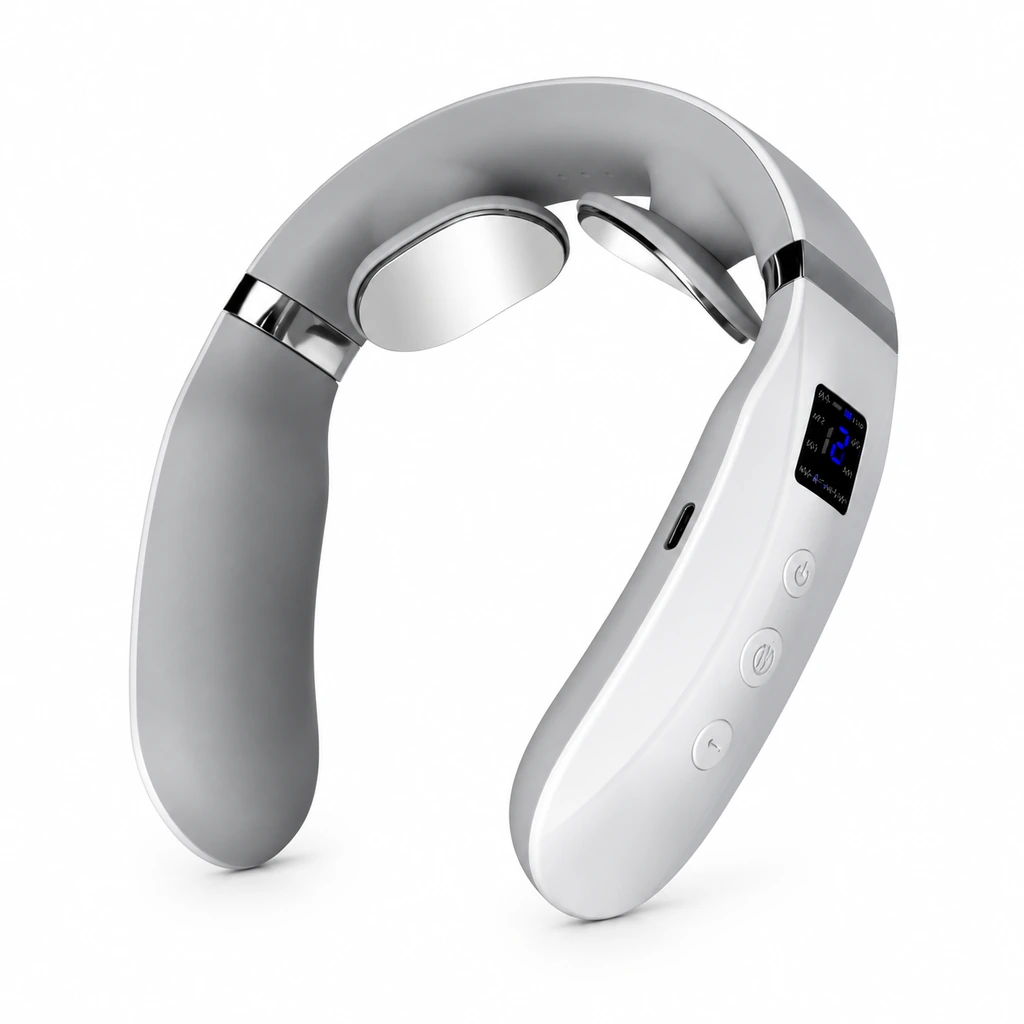
F16 product image from Meilan's official gallery. Its visible controls are a starting point for a button-to-function review; the image does not establish the behavior of every mode.
Observe the sequence, not just the number
Use one charged sample and a written test sequence. Start from power-on, change the mode, raise and lower intensity, switch any independent function, and restart the device. Record what the display or voice prompt says at each step. Does a new mode retain the previous intensity or return to a default? What happens at the highest level? Does the device time out or pause before a setting change takes effect?
These details matter to retail support. A customer may describe a “mode problem” when the real issue is a changed intensity, a locked control, or a mismatched instruction. Do not use the mode count as a proxy for ease of use.
| Specification field | What to verify on the sample | Copy risk if skipped |
|---|---|---|
| Mode | Named program, selection order, and visible cue | Listing names a program users cannot find |
| Intensity | Available steps and reset behavior | “16 levels” implies every mode uses all 16 |
| Heat or vibration | Independent or linked operation | Feature is counted twice or described incorrectly |
| Display or prompt | Wording shown to the user | Manual and product listing disagree |
Check the approved version and instructions
The client materials include different manuals within some neck-massager families. That is a reason to ask for the manual and control demonstration tied to the quoted configuration, not to assume that a series-level description covers every variant. Keep a short sign-off record: sample ID, firmware or revision if applicable, manual version, observed sequence, and approved retail wording.
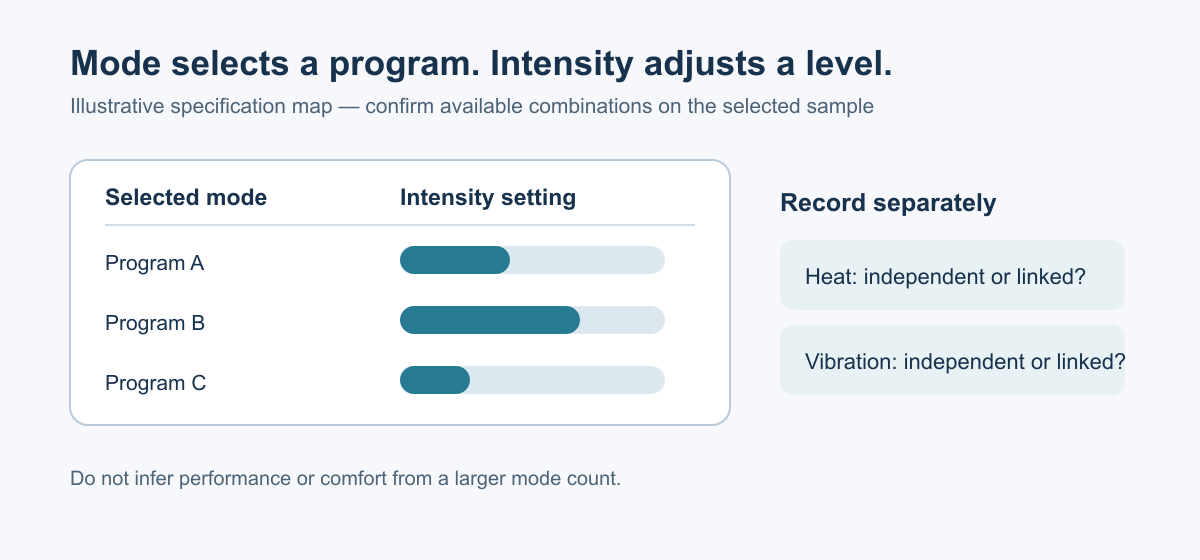
Explanatory map, not a model specification. Use a live sample and its matching manual to verify which combinations are actually available.
Write claims the customer can reproduce
Once the team has matched the manual to the sample, describe the functions plainly: for example, state the documented number of selectable programs and intensity steps for that version. Avoid implying that a higher count guarantees better comfort or clinical benefit. If you need to compare candidates, use a short decision sheet that records control behavior alongside the numbers. The neck massager range can help identify candidates; contact Meilan for the matching version documents and sample.

