


















Neck Massager Battery Shipping Document Checklist
Prepare a traceable battery-information handoff for neck massager shipments, connecting exact product identifiers, test summaries, packing details and freight-partner review.
 Meilan Tech 5 min read
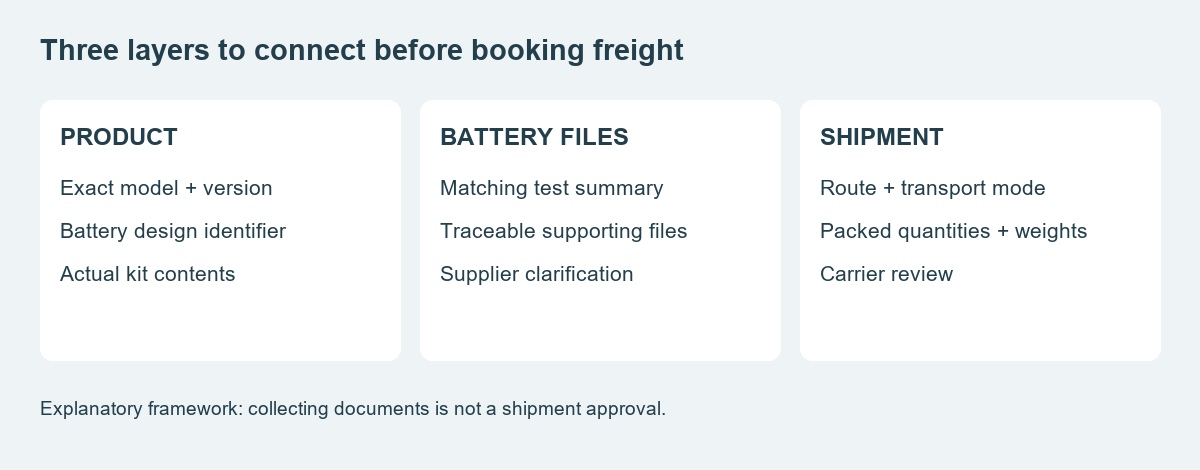
A rechargeable neck massager is not ready for a freight booking simply because its specification lists a battery capacity. The freight partner needs to connect the actual product, the battery design and the proposed shipment. A file for a similar-looking device can leave that connection unresolved.
For procurement teams, the useful handoff is a traceable information pack: exact model and battery identifiers, matching supporting documents, a description of how the batteries are packed, and shipment details. Ask the freight partner to confirm requirements for the actual route and booking rather than asking the supplier for a general “shipping certificate.”
1. Describe the exact shipment before requesting a verdict
State the origin, destination, proposed transport mode, intended shipment date and whether the goods are new saleable units, samples or returns. Include the product version, number of devices, number of batteries per device and any additional battery-powered accessories. A remote or spare battery can introduce a separate information requirement; do not assume the device specification covers the whole kit.
Explain whether batteries are installed in equipment, packed with equipment or offered separately. These descriptions are inputs for the freight partner’s classification review, not labels to choose for the most convenient service. Send photographs of the actual arrangement and distinguish the retail box from the outer shipping carton.
2. Separate battery ratings from charging specifications
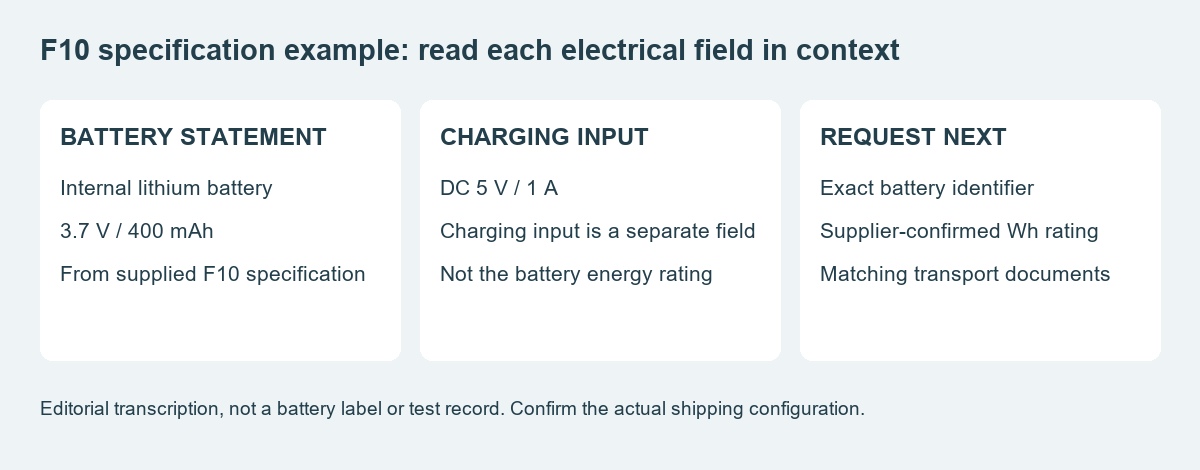
Request the battery chemistry, cell or battery manufacturer, design identifier, nominal voltage, rated capacity and watt-hour rating where applicable. Keep the wording and units from the battery documentation. Ask which identifier links the installed battery to the supplied test information.
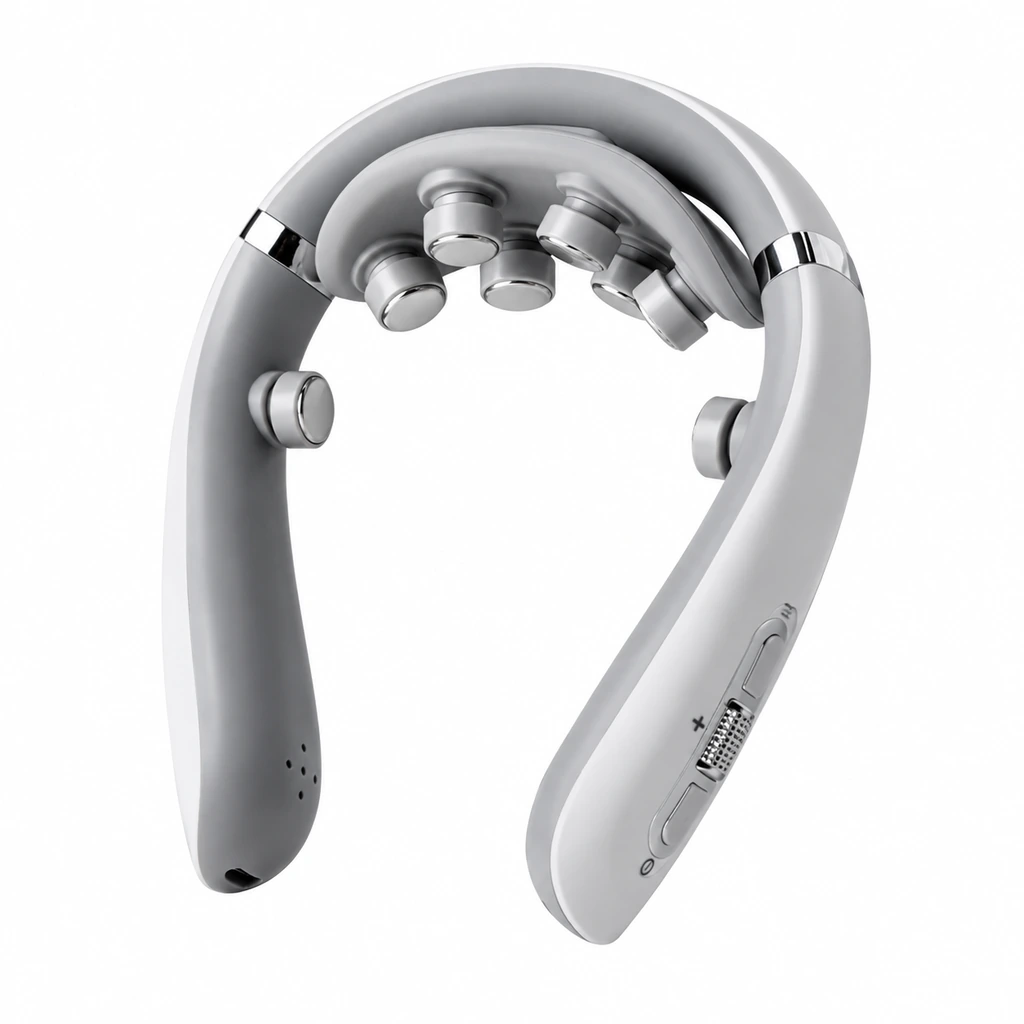
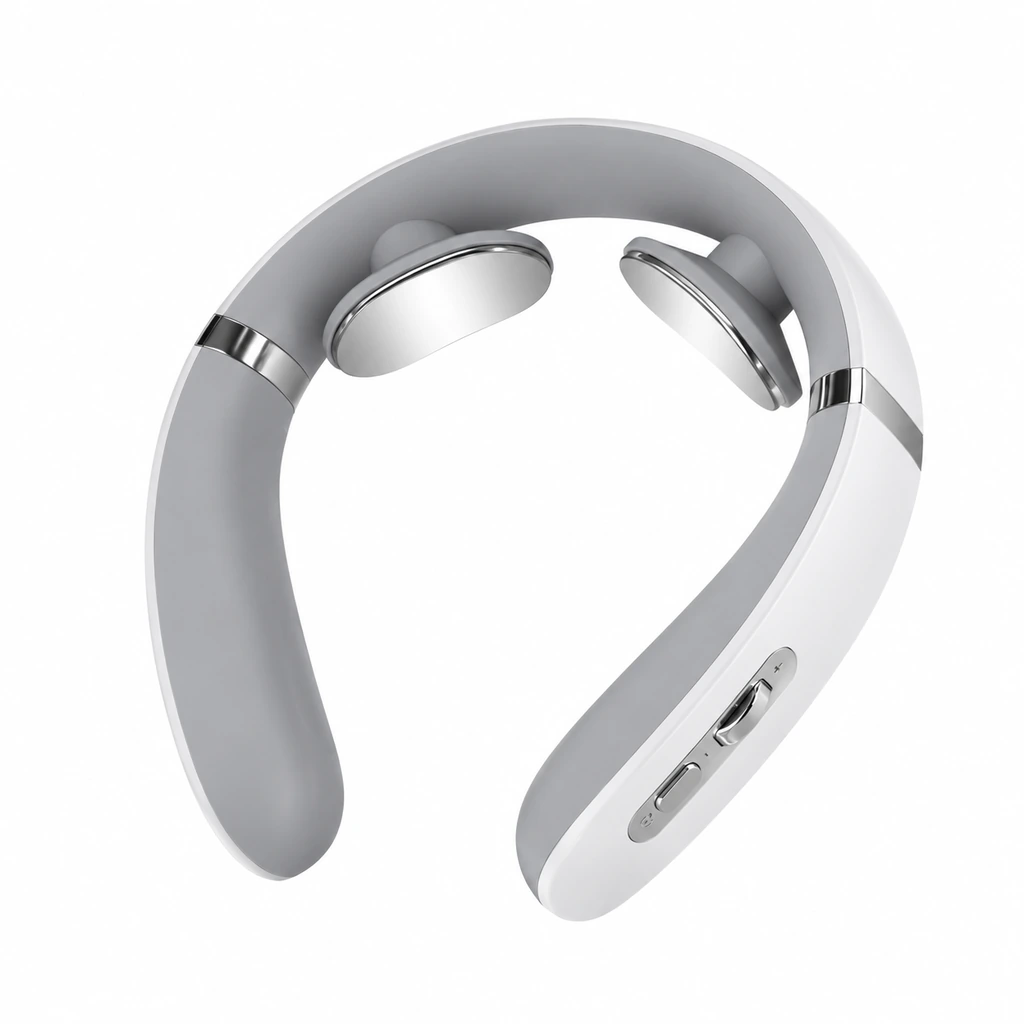
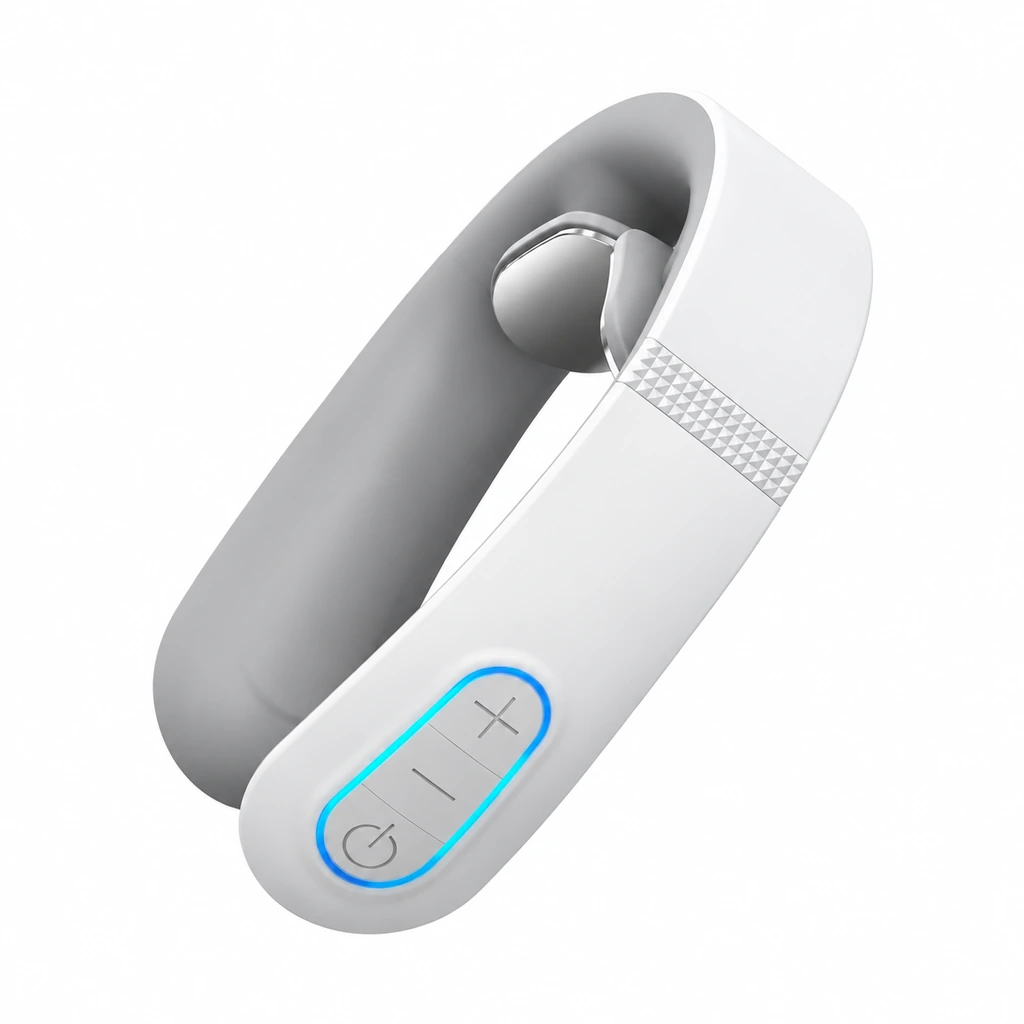
The supplied F10 specification describes an internal lithium battery at 3.7 V and 400 mAh, while listing DC 5 V/1 A as charging input. These are different fields. Multiplying a charging-input voltage by a battery-capacity figure mixes two references and does not establish the installed battery’s documented energy rating.
If a battery label is inaccessible inside the device, request traceable manufacturer documentation and an appropriate supplier record rather than asking warehouse staff to dismantle finished goods. Record an unresolved identifier explicitly. A familiar model name or a capacity value is not enough to establish that two battery designs are identical.
3. Ask for a matching test summary and a clear document index
For lithium battery documentation, request the applicable UN 38.3 test summary and any supporting files required for review. The PHMSA lithium-battery resource explains the role of test summaries and their traceability information. Check the battery design reference, responsible organization, test information and document identification against the supplier’s battery record.
A safety data sheet, an electrical product report and a battery transport test summary serve different purposes. Do not rename one as another to satisfy a checklist. If the supplier sends only a cover page, ask for the relevant complete document. If a battery manufacturer uses a different reference from the finished-product supplier, obtain the written mapping.
Meilan’s certifications overview can support an initial document conversation, but the shipment needs files that match the actual configuration. A general website page is not evidence that a particular neck massager battery has passed a specified test.
4. Describe the packed goods, including exceptions
Provide units per retail pack and outer carton, carton count, dimensions and weights, together with a proposed packing arrangement. Identify loose accessories and any spare batteries separately. Ask the freight partner which packaging measures, marks, labels, declarations or other records are required for that shipment; do not copy them from an earlier route or a product photograph.
For air transport, use the current IATA battery resources as a starting reference and obtain confirmation from the responsible logistics specialist. Applicable rules and carrier conditions can change. A generic instruction to charge every shipment to a fixed percentage is not a substitute for a configuration-specific review.
Flag damaged, defective or recalled goods and unusual returns before arranging transport. Do not put them into the routine new-product booking on the assumption that the same paperwork applies. The freight partner needs the actual condition to assess available arrangements.
5. Send one indexed handoff pack
Use an index that lets the reviewer identify a missing link without searching through unrelated attachments. The following is a request template, not evidence that these documents have already been supplied or accepted.
| Record | Information to supply | Question to close |
|---|---|---|
| Product and kit | Model/version, devices and battery-powered accessories | Does this describe everything in the shipment? |
| Battery identity | Chemistry, manufacturer, design reference and ratings | Which battery is installed in the ordered version? |
| Document mapping | Test summary, document identifiers and supplier cross-reference | Do the files cover that battery design? |
| Packing proposal | Installed or separate batteries, pack photos, counts and weights | What must change before packing approval? |
| Booking details | Route, transport mode, date and goods condition | What are the current carrier requirements? |
Keep an owner, requested action and response date for each open item. A single indexed pack reduces ambiguity, but it does not remove the need for clarification. Where the battery or packing configuration is still changing, identify the draft information clearly so the freight partner does not review it as a final shipment.
6. Reconfirm after a battery or packing change
Reopen the affected review if the battery design, supplier, quantity, accessory kit, packing method or route changes. Do not assume that an earlier file remains applicable because the retail model name is unchanged. Share the updated records and ask which conclusions need to be revisited.
Keep the freight partner’s response with the exact document set and shipment details reviewed. A freight quotation is a commercial proposal; it does not by itself establish that all transport requirements are resolved.
To begin the supplier handoff, send Meilan the candidate neck massager model and proposed shipment details. Request the matching battery information and document references, then have your freight partner confirm what the actual booking requires.

