
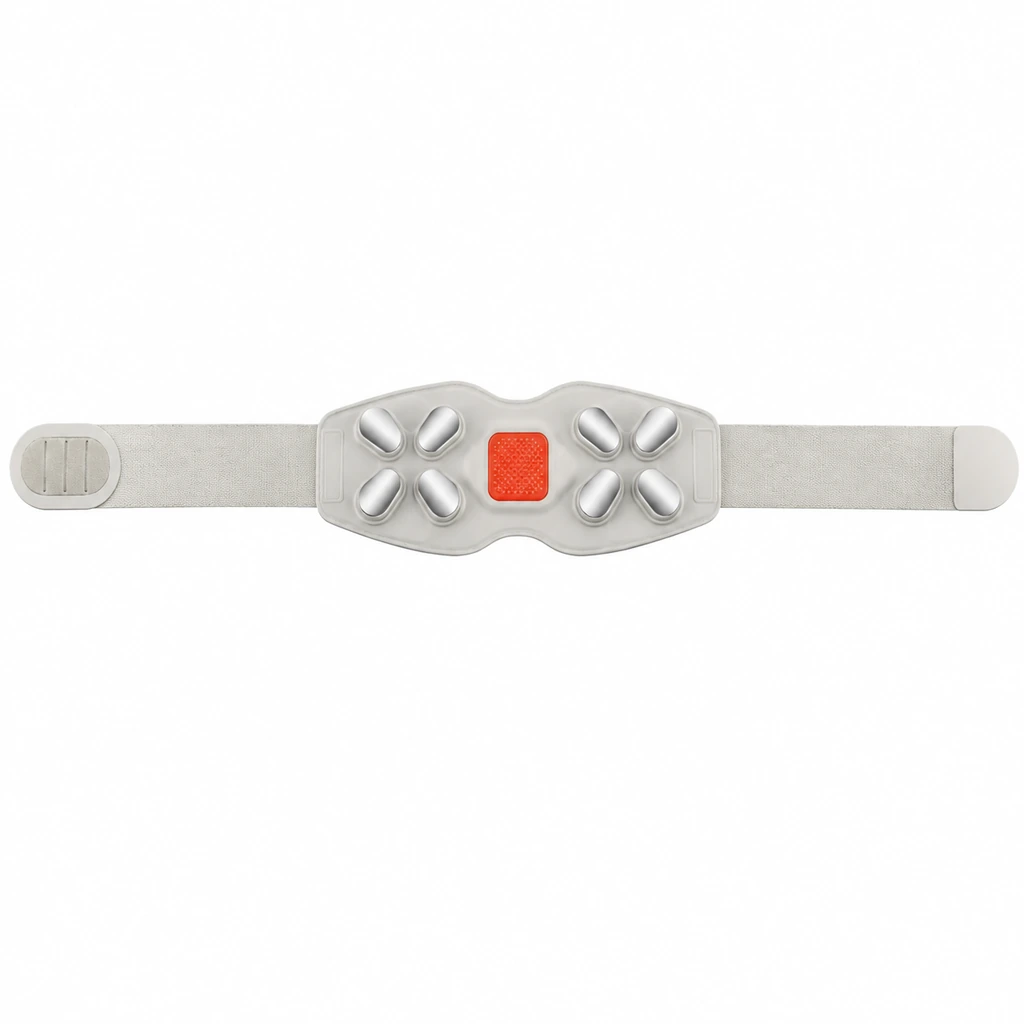

























Eye Massager Quote Comparison: Delivery Scope
Compare eye massager supplier offers by matching the finished kit, route endpoints, transport coverage, charges and task owners before judging the price.
 Meilan Tech 10 min read

Compare eye massager quotations only after the finished product, order quantity and delivery endpoint match. Identify the exact collection point, which transport stages each offer includes, who pays each charge and who handles each task. Then add only the evidenced costs needed to reach the same receiving point. A lower product price alone does not establish a lower comparable purchasing cost.
1. Agree on the same finished offer before comparing delivery
An eye massager quotation is a proposal for a defined supply, not just a price beside a photograph. A distributor needs a repeatable retail SKU; an online seller needs a pack that matches the listing and receiving requirements; a gift buyer may need several delivery addresses and a fixed presentation. Start by stating which of those outcomes the quotation must cover.
The Meilan eye massager range includes candidate models such as Y8, Y9, Y103 and Y5. Treat each selected model and version as a separate comparison. Similar appearance does not establish identical controls, accessories, documents or packaging. If two suppliers propose different configurations, show that as a product alternative before discussing a delivery-price difference.
Give both suppliers the same quantity of complete saleable units, approved version reference, destination language, included accessories and retail-pack specification. Distinguish samples from production orders and one-time artwork or setup work from repeat-order costs. The eye massager gift-set accessory checklist helps define the kit before freight is priced. An optional item should not quietly become part of only one offer.
2. Name the collection point and the comparison endpoint
Choose the place to which the purchasing comparison will be made: a nominated consolidation warehouse, the buyer’s receiving warehouse or a specific gift-distribution location. Record the full address or precisely identified facility, rather than only a city or country. “Delivered to the destination” can still leave questions about a terminal, a warehouse gate, an unloading area or a booked receiving slot.
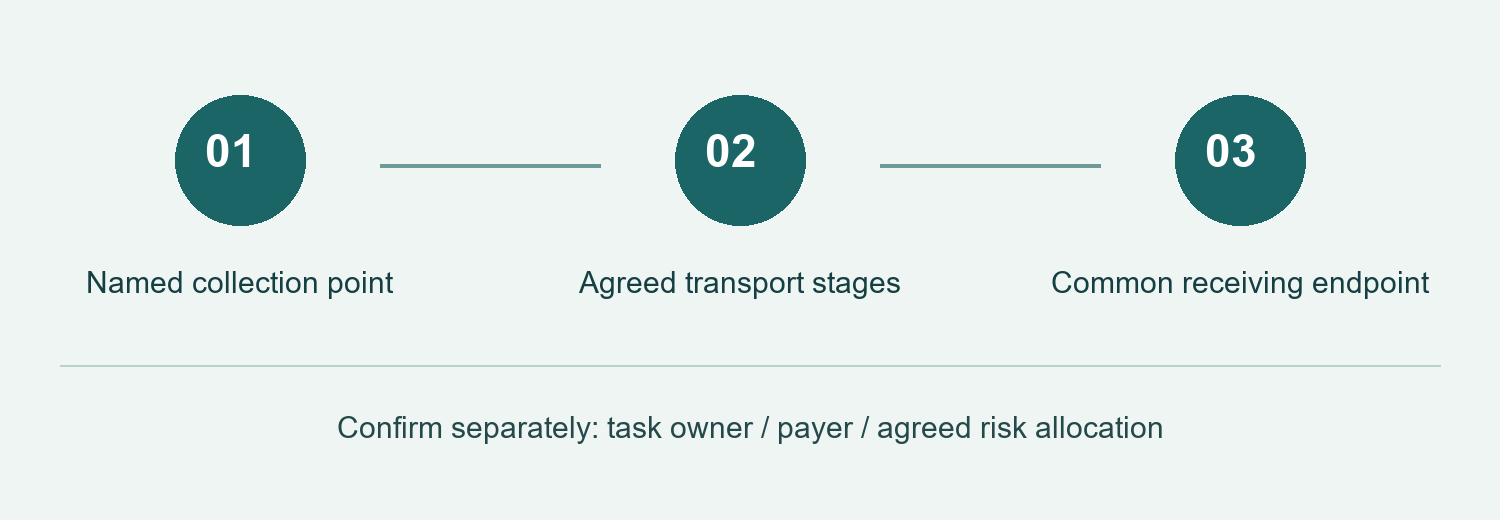
Identify the start of the quoted service just as carefully. Ask where the goods will be collected, who books the collection, who loads them and what must be ready before the vehicle arrives. A supplier’s business address is not necessarily the collection address. If a forwarder collects from several suppliers, include the consolidation point and any separate receiving or handling charge.
Keep the physical handover, the end of the quoted transport service and the agreed allocation of risk distinct in the written confirmation. One does not establish the others. The ICC overview of Incoterms® rules explains that the rules address delivery tasks, costs and risks. Where a quotation uses a named rule, ask the parties to state the intended rule, named place and edition and confirm their agreement with a qualified adviser where necessary. This guide compares purchasing information; it does not interpret individual trade rules or settle contractual obligations.
3. Compare transport coverage stage by stage
Ask each supplier to describe the service actually included, even when both offers use the same short label. The following are comparison patterns, not Meilan service promises or definitions of trade terms. Their purpose is to reveal the additional quotation needed to reach the buyer’s chosen endpoint.
| Quoted service pattern | What the buyer should establish | How to make the comparison usable |
|---|---|---|
| Collection from a named origin | The precise pickup point, readiness conditions, loading arrangements and documents supplied. | Obtain a separate quote for the remaining route and identify any origin charges excluded by both parties. |
| Transport to a named terminal or consolidation point | The exact facility, transport stages, handling scope and release conditions at that point. | Price onward transport, facility charges and receiving arrangements that remain outside the offer. |
| Transport to a named receiving address | The address, delivery method, appointment requirements and whether unloading or special access is included. | Confirm remaining charges and tasks individually; an address in the quotation is not proof that every destination cost is included. |
Name the proposed transport mode and service, not just “shipping.” Ask whether the route involves consolidation, a transfer warehouse or a final-mile subcontractor, and which service changes require buyer approval. A faster-looking route is not useful if it reaches a point from which the buyer has no confirmed onward arrangement.
4. Give freight providers the same packing and timing inputs
Freight figures cannot be compared sensibly when one is based on a device weight and another on packed shipping cartons. Request the packing data for the exact quoted configuration: saleable units per carton, carton count, external dimensions, gross weight and the treatment of partial cartons. If pallets are proposed, obtain the resulting shipment dimensions and weight as well. Keep these inputs with the freight quotation revision.
A retail box, protective inner tray, accessory kit or gift sleeve can change the packed shipment. Reconfirm transport inputs after the pack changes instead of carrying forward an earlier freight allowance. Ask the carrier or forwarder to identify its chargeable-weight basis, rounding and applicable surcharges for the offered service. Use its written calculation; do not apply an assumed universal volumetric divisor.
For the exact product version, ask what product and battery information the selected carrier requires to assess acceptance and pricing. The supplier should provide the relevant documents for that version; the carrier should confirm its own acceptance conditions. A sample shipment or another model’s document does not establish that the proposed production consignment is accepted.
Separate production completion, collection readiness, departure, estimated arrival and readiness for warehouse receipt. State whether quoted transit time starts at collection, departure or another event. For an online launch or gift deadline, work back from the required receiving date and identify estimates and dependencies. Do not turn an estimated arrival into a guaranteed channel-ready date.
5. Reconcile the cost scope without counting a charge twice
For each cost, record whether it is included in a named quotation line, separately priced, conditional or outside the offer. Also identify who arranges the work and who pays the invoice. These may be different parties. “Included” needs an identifiable scope; an empty field is not evidence that the charge is zero.
| Cost area | Evidence to request | Comparison rule |
|---|---|---|
| Goods and retail pack | Version-specific unit price, quantity basis, contents and included packing work. | Compare the same complete saleable unit; show optional items and one-time work separately. |
| Origin collection and handling | Pickup, loading, collection vehicle and any consolidation or origin-facility charges. | Assign each route stage once; check for gaps between the supplier and forwarder quotations. |
| Main carriage and surcharges | Route, service, packing inputs, validity and applicable surcharge conditions. | Use the same shipment basis and validity period; show conditional additions rather than assuming they will not apply. |
| Destination handling and final delivery | Named terminal or address, release charges, onward movement, appointment and unloading scope. | Add only the work needed to reach the agreed endpoint; distinguish optional receiving services. |
| Clearance, duties and taxes | Written service scope and an applicable estimate from the responsible logistics or tax specialist. | Separate service fees from duties and taxes; show estimate status and tax treatment without inventing rates or recovery assumptions. |
| Insurance and exception services | Any agreed cover, its documentary scope and separately priced storage, redelivery or other conditions. | Do not infer cover from the freight total; distinguish base costs from conditional exposure. |
| Currency and payment costs | Quotation currency, agreed comparison exchange rate and date, payment schedule and known transaction charges. | Keep original-currency values visible and apply one documented conversion basis for the purchasing review. |
A useful comparison total is the quoted amount plus confirmed additions required to reach the common endpoint, with any verified overlap removed once. Keep estimated additions and unresolved items visible beside that total. Until material exclusions are priced, describe the result as a partial comparison rather than ranking suppliers by a falsely precise delivered cost.
If a forwarder’s total already includes pickup, do not add the same pickup charge again from a supplier’s optional service. Confirm whether that optional service will actually be ordered and have the revised quotation reflect the choice. Conversely, do not remove a charge merely because two lines have similar names: they may cover different facilities or stages.
For a per-unit view, divide the comparable order cost by the agreed quantity of complete units, using the same treatment of one-time charges for every offer. Do not spread setup work over speculative future orders. Payment timing also matters: a deposit, balance payment and later logistics invoices create different cash commitments even when a comparison total is similar.
6. Confirm task owners and the evidence of handover
Create a written handoff between the supplier, buyer and nominated logistics provider. Identify who books collection, provides shipment data, prepares the agreed documents, responds to carrier questions, receives arrival notices and books the final delivery. A supplier can coordinate a task without that proving who bears its cost or risk. Ask the parties to confirm all three separately.
Agree what record closes each operational step. Collection evidence should identify the shipment, date, carton count and recorded condition; the receiving record should distinguish cartons received from units subsequently checked and accepted. A carrier’s delivery record should not be treated as product-quality approval. Confirm the review method and any contractual reporting deadlines in the order documents.
Before ordering, agree a contact and escalation route for a missed collection, damage, shortage, document mismatch or rejected delivery slot. Identify who gathers photographs and records, who contacts the carrier or insurer where applicable and who authorizes the next action. Do not assume a complaint automatically creates a refund, replacement or transport claim; obtain the applicable written procedure.
7. Choose on a comparable basis and retain the approved revision
The best-supported decision is not necessarily the lowest line price. A complete offer may involve less coordination for the buyer, while a narrower supplier scope may work well with an established forwarder. Judge that tradeoff against the buyer’s actual receiving capability, required timing and access to reliable supplementary quotes. Treat service availability as something to confirm, not as an assumed supplier option.
| Decision state | What the records show | Buyer action |
|---|---|---|
| Ready for commercial comparison | Matching configuration and quantity, named route endpoints, sufficiently priced scope and identified owners. | Compare the documented cost and timing basis, then approve the selected quotation revision. |
| Compare with qualifications | A defined estimate or conditional charge remains, with its basis, owner and potential effect recorded. | Show the qualification beside the result and decide whether it is acceptable before commitment. |
| Return for clarification | A material endpoint, exclusion, packing input or responsibility is missing or contradictory. | Request a revised written offer; do not rank an incomplete scope as the cheaper equivalent. |
Retain the selected quotation, packing revision, route description and responsibility confirmation with the purchase order. Require a fresh confirmation if quantity, packing, destination, service or validity changes. That record lets purchasing, finance and the receiving team work from the same decision instead of reconstructing what “delivery included” meant after dispatch.
Questions buyers ask when quotations differ
Is the lowest eye massager unit price the cheapest offer?
Only after the same version, quantity and delivery scope have been compared. Add evidenced costs to the same endpoint and show unresolved exclusions before ranking the offers.
Is “shipping included” enough detail?
No. Ask for the named collection and receiving points, included transport stages, charges, exclusions and task owners in writing.
Can Y8, Y9, Y103 and Y5 be compared as one product?
Keep each selected model and version separate. If configurations differ, present them as alternatives with their own contents and packing, rather than attributing the entire price difference to delivery.
Can a previous carton specification support the new freight price?
Use it only after the supplier confirms that it matches the new order configuration. A different retail pack, quantity or pallet arrangement calls for updated shipment inputs.
What if a destination charge has not been priced?
Keep it unresolved and identify who will obtain the quotation or estimate. Missing is not zero; a material gap prevents a complete cost ranking.
Does this comparison decide contractual risk or tax treatment?
No. Obtain agreement on the relevant terms and use qualified logistics, legal or tax advice for those questions. The comparison organizes evidence and purchasing responsibilities without interpreting trade law.
Preparing an eye massager supplier quotation comparison? Send Meilan your model, version and delivery brief, including the order quantity, retail kit, collection or receiving point, requested transport scope and required receiving date. Ask for itemized inclusions, exclusions and configuration-specific packing data so the offer can be compared on the same basis.

