


F5 Foldable Neck Massager: A Hinge and Storage Review Plan
A foldable neck massager saves space only if the folding action, stored shape, and retail pack work together. A buyer looking at the Meilan F5 should therefore review more than a photograph of the closed device. The useful question is whether a specific sample can be opened, worn, folded, and packed in the way the proposed sales channel requires—and whether the approved version can be checked consistently at the next stage.
1. Identify the exact sample before judging the hinge
Record the model, color, hardware or specification revision, sample ID, supplied accessories, and the date of review. Ask for the manual and any handling instructions that match that sample. If a quoted retail version will use different contact pads, a different case, or a revised package, mark those differences. Otherwise, a positive assessment of one sample may be applied to a kit that was never reviewed.
Start with photographs of the open, partly folded, and fully folded states. Photograph both sides from the same angles. These images establish what the team actually assessed; they do not prove a cycle-life claim.
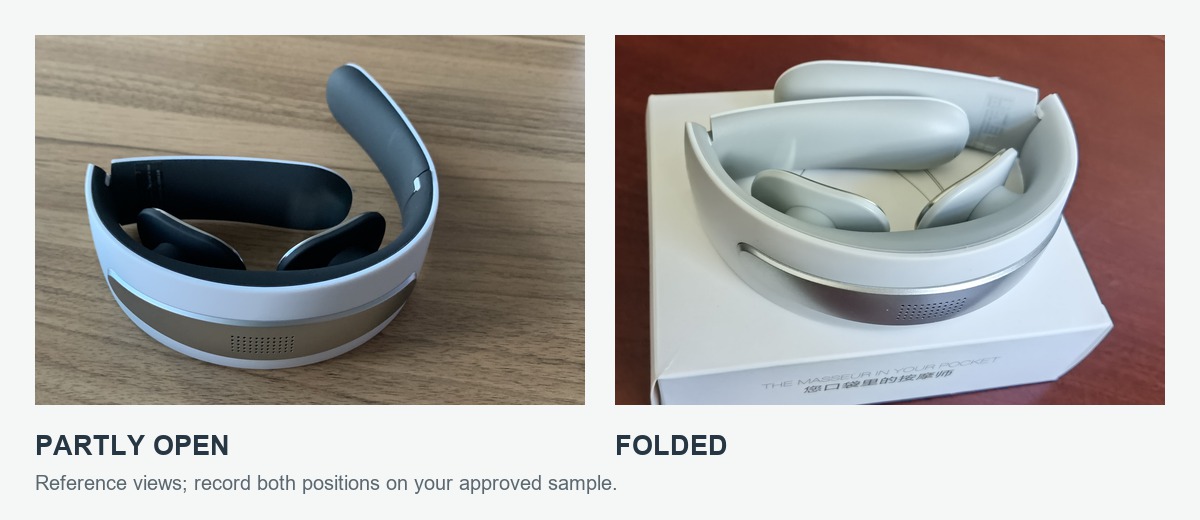
2. Observe the full opening and closing movement
Move the sample slowly from its stored position to the intended wearing position and back, using the handling method in the matching instructions. Note whether both sides move as expected, whether there is an abrupt catch or rubbing sound, and whether the user is tempted to twist a part that is meant to fold on a different axis. A comfortable single movement is useful feedback, but it is not a substitute for a defined durability test.
Check the same sample before and after several ordinary handling sequences. Record any change in resistance, new noise, loose-feeling movement, visible contact marks, or a difference between left and right. If the team wants an acceptance criterion—for example, a permissible gap or a required cycle count—obtain the supplier's version-specific specification and agree on a measurement method in writing. Do not invent a universal pass number from the product photograph.
3. Look closely at gaps, edges, and contact points
Inspect the joint when the device is open, midway, and folded. Ask: do neighboring parts touch where they should remain clear? Are there sharp or rough edges in normal handling areas? Does the outer shell show stress marks after ordinary folding? Is the left-right appearance consistent? A visible gap is not automatically a defect: its meaning depends on the approved design and tolerance. Photograph the location, measure it if a tolerance exists, and compare it with the controlled sample rather than making a judgment from memory.
The contact pads and inner surfaces also matter. A foldable structure can protect them during storage or expose them to rubbing, depending on its geometry and the pack. Confirm that the parts that touch the neck are not pressed against hard accessories or carton edges in the closed kit.
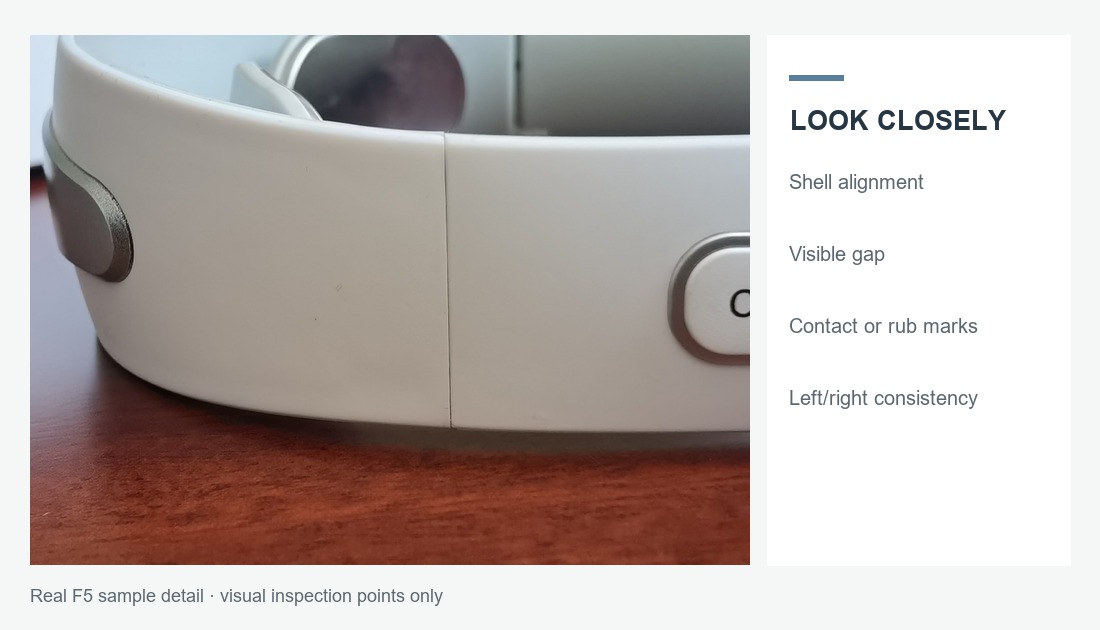
4. Test storage as the customer will encounter it
Fold the device without forcing it, then place it in the proposed retail tray, pouch, or box together with the listed accessories and instructions. Does it sit in one clear orientation? Can a customer remove and return it without dragging the pads or squeezing the hinge? Is the charging cable separated from contact surfaces? If the selling point is travel convenience, also check the closed kit's dimensions and whether the folded device remains stable during ordinary handling—not just whether the bare device looks compact.
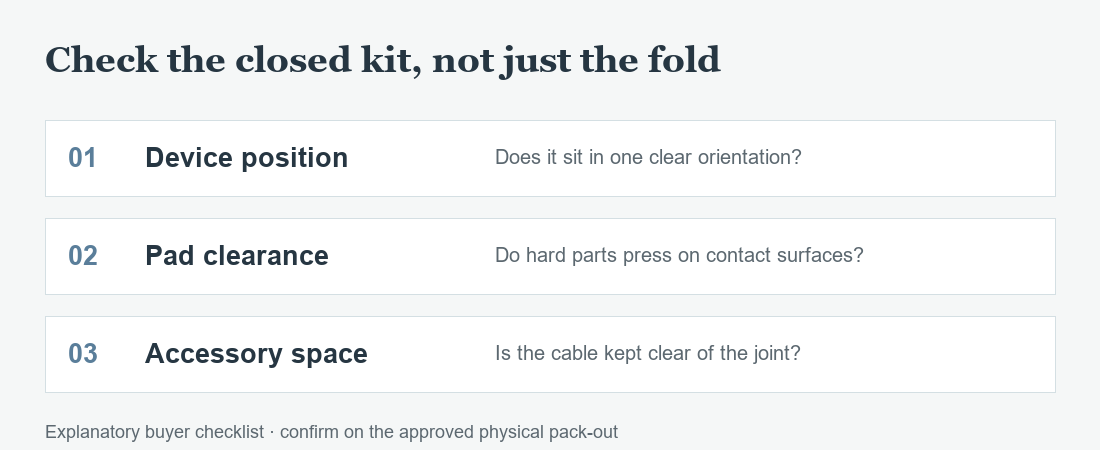
A premium-looking box and a protective box solve different problems. A tighter insert may improve presentation yet make removal awkward; a looser insert may be convenient but allow movement in transit. Review the approved pack sample and document the trade-off. Packaging performance or transit protection needs its own test conditions; a neat desk photograph cannot establish it.
5. Put the decision into a short review record
| Check | Record on the sample | What needs written agreement |
|---|---|---|
| Version | Model, revision, kit list, manual and sample ID | Which version the order will use |
| Opening and closing | Movement, resistance, noise, both sides | Handling method and any functional limit |
| Joint and shell | Gaps, rubbing, edges, contact marks | Approved appearance and measurable tolerance |
| Folded storage | Closed shape, pad protection, accessory contact | Approved tray or pouch arrangement |
| Follow-up | Photos, issue owner, corrected sample | Who signs off changes before production |
Separate observations from decisions. A buyer can record that a joint feels different after repeated handling, but a pass/fail decision requires an agreed criterion and a sample that represents the order. If the design or packaging changes, review the affected checks again rather than carrying the earlier approval forward automatically.
For an F5 sourcing discussion, send Meilan the intended sales channel, sample version, proposed pack, and any specific hinge or storage concern through the contact page. The neck massager collection can help frame the assortment, but the sample record should govern the F5 approval.

