


Incoming Material Checks: Records Neck Massager Buyers Can Request
An attractive production sample does not tell a brand buyer how the next batch of components will be identified or accepted. For a neck massager order, the useful question is narrower: which incoming materials matter to the approved configuration, and what record will show that the factory checked them before assembly? Agree on the answer before purchase-order release.
Start with the approved configuration
Ask for a version-controlled bill of materials or an equivalent component list tied to the exact sample. It should identify the shell and contact materials, electronics, battery, charging parts, controls, and any accessories that are included. Do not treat a series name as a configuration: the same family can contain different head sets, controls, or packaging.
Meilan's F12 product page describes interchangeable massage heads and a wireless remote. These are useful examples of items a buyer should name explicitly in the approved kit. The public page is not an incoming-inspection record for a particular order.
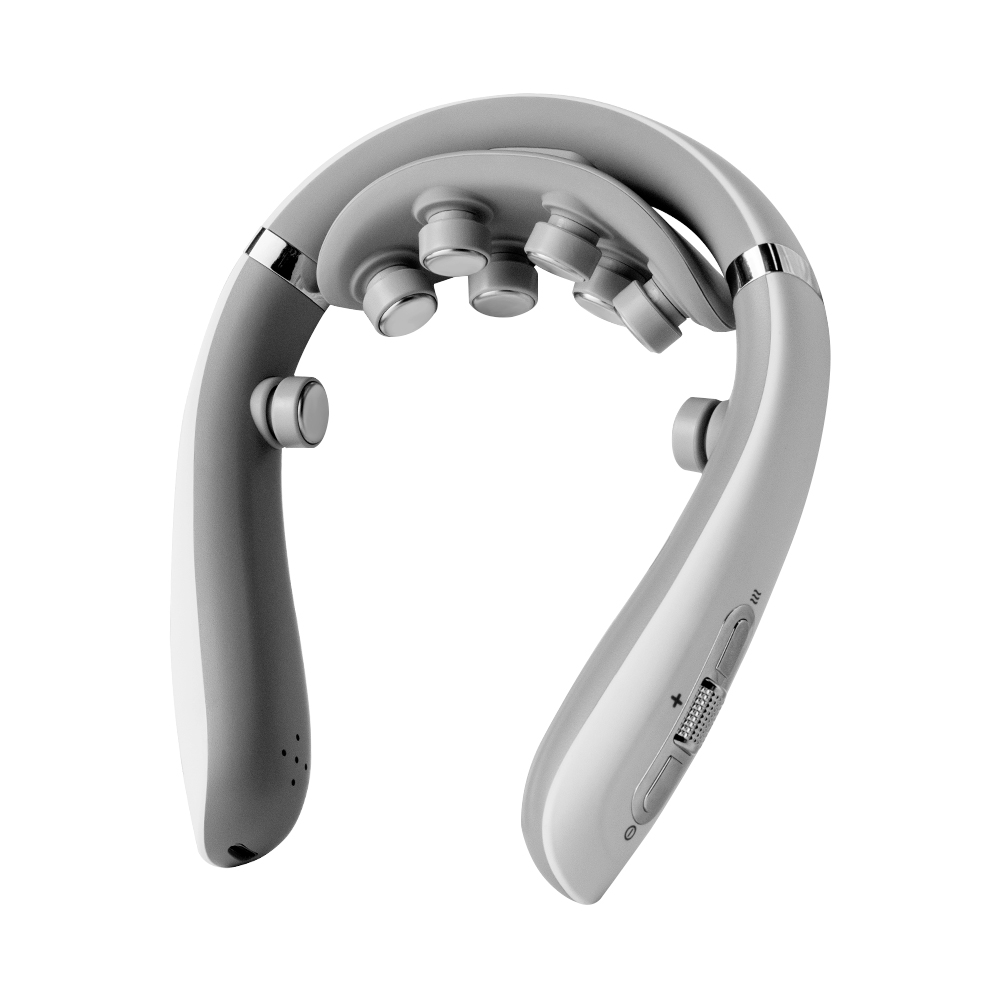
F12 product photograph from Meilan's supplied materials. It shows a contact-head arrangement, not the material grade or its inspection result.
Match each critical item to a record
For each material that affects fit, electrical function, or the retail kit, ask which document establishes the approved specification and which incoming check confirms the delivered lot. A practical request is a sample record with the supplier or internal part number, lot identifier, received quantity, inspection date, result, and disposition. Where the check depends on a measurement, request the method and acceptance limit as well.
The purpose is not to demand every factory form. It is to trace a component from the approved sample to a received lot and then to the production order. A material certificate, a component drawing, and a receiving check answer different questions; one should not be offered as a substitute for all three.
| Item to identify | Buyer question | Evidence to request |
|---|---|---|
| Contact heads or pads | Is the supplied version the approved shape and material? | Part revision, material specification, incoming check |
| Battery and charging parts | Do ratings and suppliers match the approved build? | Component identity, applicable test or receiving record |
| Remote and accessories | Is each item present in the intended kit? | Approved kit list, receiving and pack-out checks |
| Printed packaging | Does the artwork match the approved market version? | Artwork revision and print approval |
Make exceptions visible before release
Ask how a failed or substituted lot is recorded. The response should show the issue, affected quantity, decision owner, corrective action, and whether the approved sample or customer-facing information changes. A verbal promise to “use equivalent parts” is not enough when an electrical or contact material is involved.
This is also where procurement and quality should agree on hold points. If a critical component changes, who reviews the revised specification, and who approves a new sample or test? Meilan's OEM/ODM page describes configuration and material choices by model; the purchase documents should define the approved choice for this order.
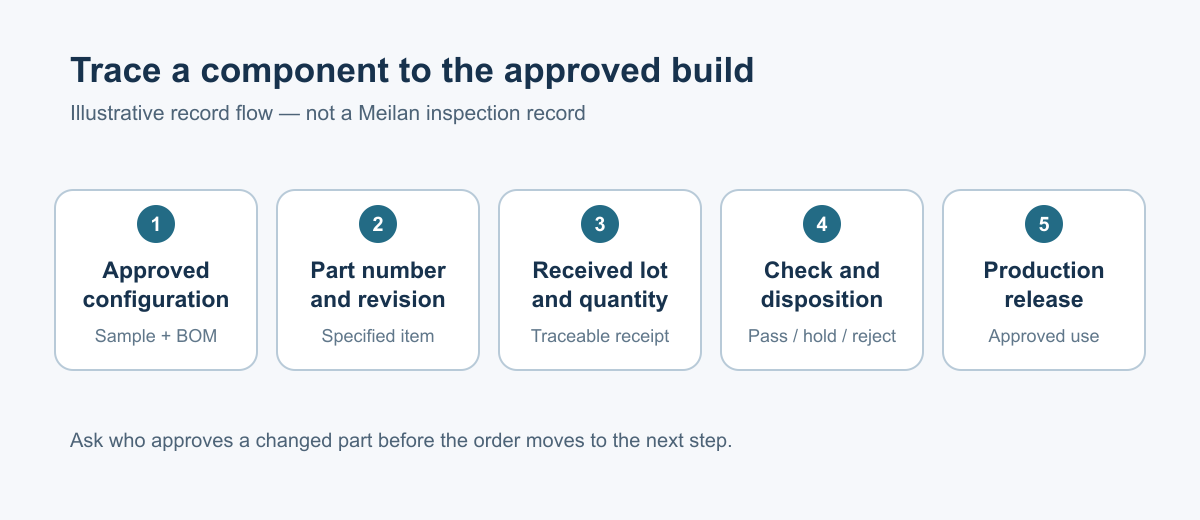
Explanatory workflow, not a Meilan inspection record. It shows the traceability fields buyers can request for the selected order.
Send a focused request
When asking for a quote, name the model, revision, target market, and intended kit. Request one example of the applicable incoming-material record and an explanation of how changed parts are approved. This gives the supplier a concrete document request and gives your team a traceable decision before mass production. Contact Meilan with the configuration you want reviewed.

