


Why Product and Packaging Approvals Need Separate Records for Neck Massager OEM Projects
A brand may approve a comfortable, working neck massager sample and still receive a carton with an outdated claim or the wrong accessory list. Product approval and packaging approval answer different questions. For an OEM project, keep the two decisions separate until both versions are identified and signed off.
Define what each sample proves
The product sample lets a buyer review the proposed device: fit, controls, operating behavior, appearance, and the accessories intended for that configuration. The packaging sample lets the team review the carton, insert, labels, printed colors, warnings, and the list of what the retail box contains. A photograph of a working device does not prove the printed copy is current; an approved artwork PDF does not prove the finished product matches the approved sample.
The image below is a supplied F50 tray photograph. It shows how the device sits in one physical presentation, making tray fit a separate review item. It does not show that any customer has approved this packaging or that the pictured arrangement is offered for every order.
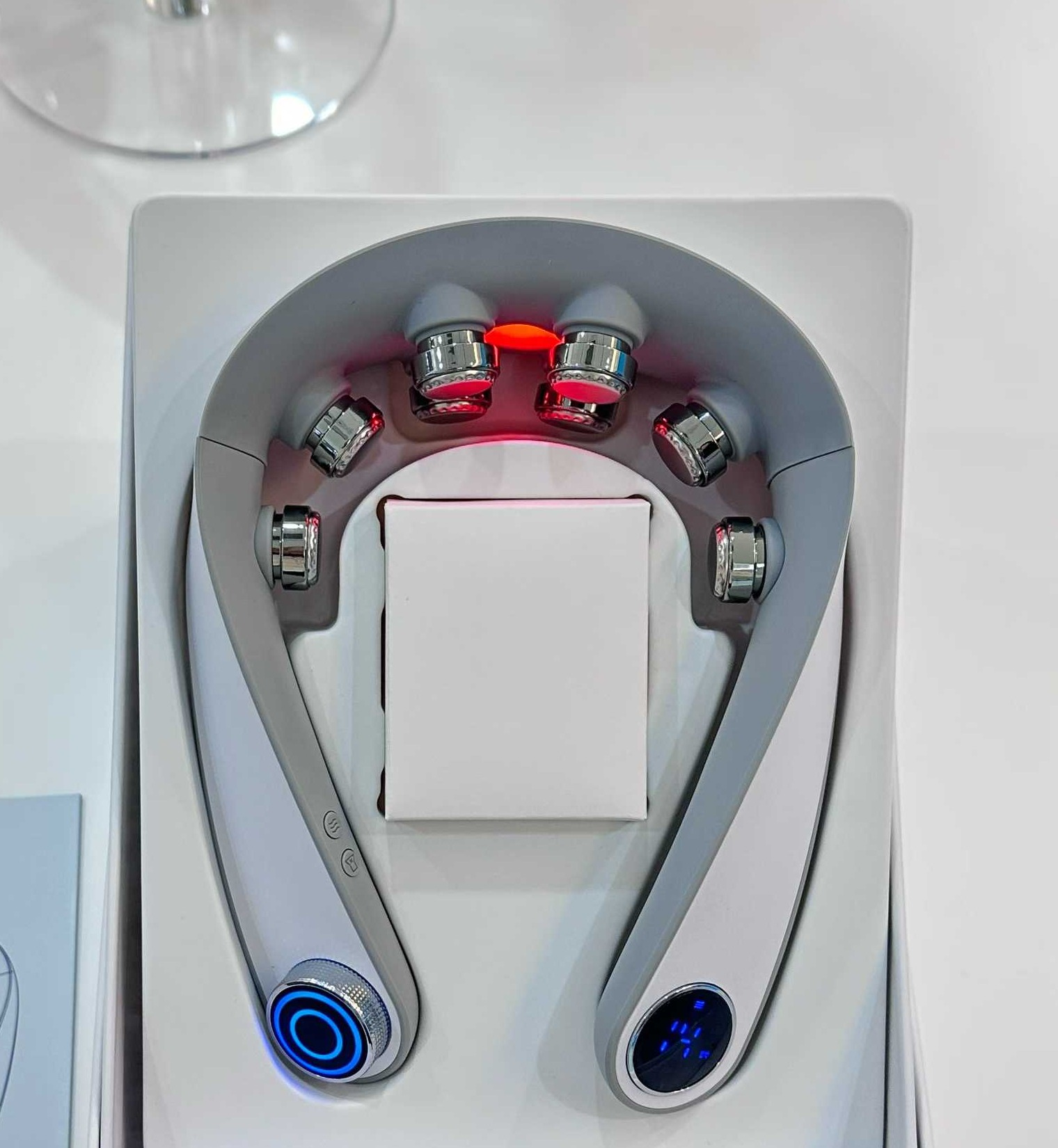
Supplied F50 tray photograph. Review protection and fit on the actual proposed kit; confirm the quoted packaging version separately.
Use two revision tracks
Give each product sample a model and revision ID. Record its functions, material or component changes, reviewer, decision date, and retained reference sample. Give the packaging its own artwork revision and physical print-sample ID. That record should identify the carton, insert, labels, language, claims, and pack-out list reviewed. The two tracks should refer to the same commercial configuration, but they need not share a revision number.
| Approval | Core evidence | Typical release question |
|---|---|---|
| Product sample | Identified unit, configuration, test notes and sign-off | Does this build match the intended offer? |
| Packaging sample | Artwork file, physical print, kit list and sign-off | Does this box describe and protect that build? |
The Meilan private-label page describes branding work as a project route. The written order and approved files should still identify the exact customization scope; a generic private-label description is not an approval record for a particular order.
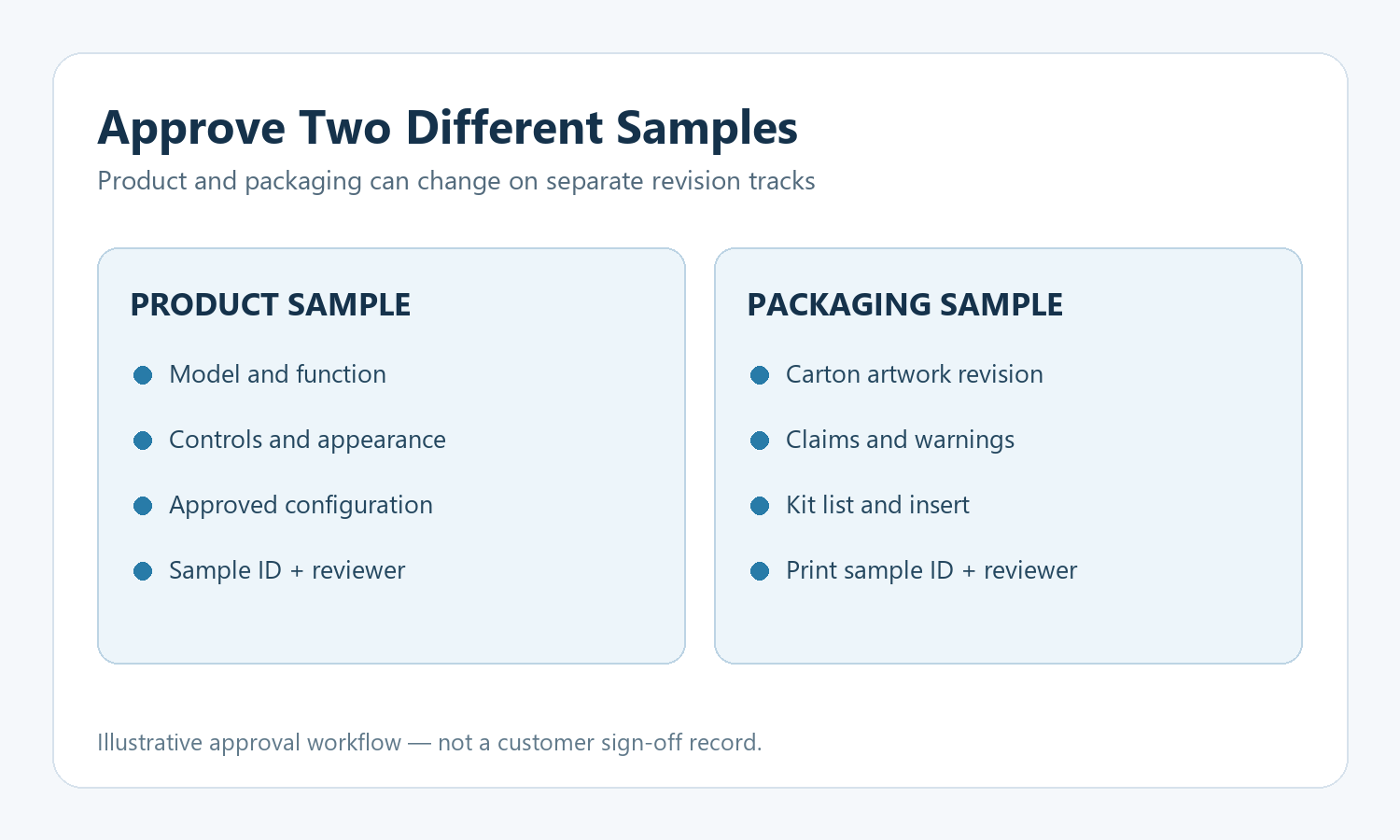
Illustrative approval workflow, not a customer sign-off record.
Reopen the affected approval when something changes
A revised control sequence may require both a new product review and a manual update. A logo adjustment may affect only print approval, unless its placement changes the device itself. A changed accessory can affect the kit, tray, instructions, and price even if the massager body is unchanged. Write down who decides whether a change triggers a new sample, new artwork, or both.
Before production release, compare the retained product sample with the retained packaging sample and final pack-out list. Check the model name, variant, language, accessories, charging information, and customer-facing claims across all three. Record any open item rather than treating silence as approval.
Send a two-part sign-off request
Ask the supplier to return separate product and packaging approval records, each with a revision ID, photographs, date, and named decision owner. Keep the final quoted configuration attached to both. Contact Meilan with your proposed device and artwork files so the team can confirm the sample stages and approval boundaries for that project.

