


How Buyers Can Document Neck Massager Fit
Neck massager fit is easy to discuss and surprisingly hard to compare. One reviewer may say a sample feels secure; another may notice a contact pad misses the intended area. Neither comment helps procurement unless it is tied to the exact sample, wearer, position, and test method. A short fit record turns subjective impressions into useful design and sourcing questions without claiming that one device suits everyone.
Identify the sample before anyone wears it
Start with the model, revision, sample date, and any accessories or settings used. Photograph the device from the front, side, and contact-surface view. Note whether the sample is a stock unit or a changed configuration. If the supplier sends a second sample, give it a new identifier rather than merging its feedback with the first.
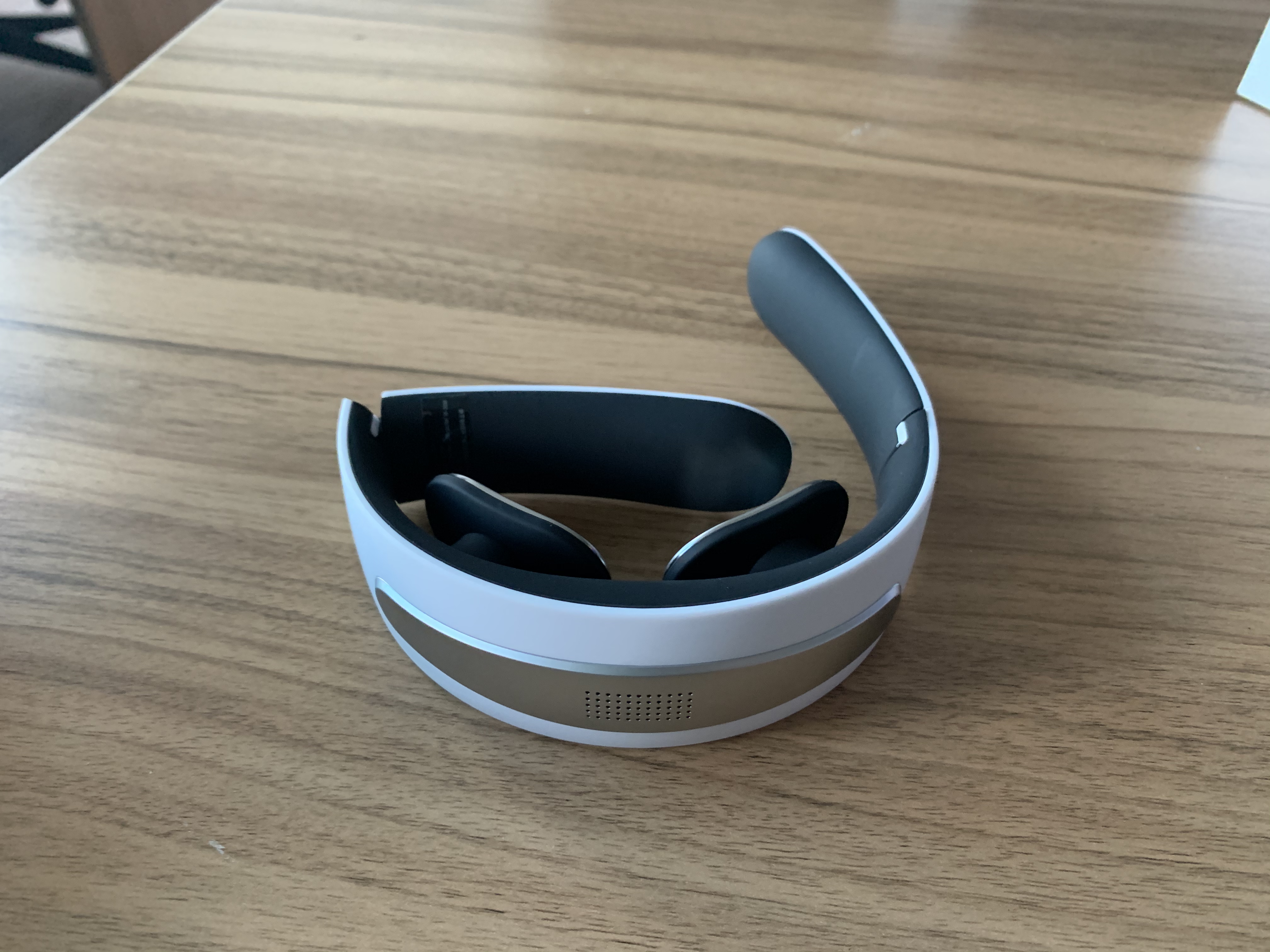
F5 sample photo from Meilan's supplied materials. Its visible contact surfaces provide a reference for recording where the device meets a wearer; the photo does not establish universal fit.
For a candidate from Meilan's neck massager range, ask for the same-version specification and instructions. A product photograph cannot tell you the intended adjustment range or wearing sequence.
Record contact, not just comfort
Draw a simple neck-and-shoulder outline or use an approved sample photo. Mark where each contact surface sits during normal wear. Record whether the housing presses on an unintended area, moves when the wearer turns, or needs repeated repositioning. Note the device's opening and contact-point dimensions from the supplier's drawing, but measure the physical sample when those dimensions are important to your brief.
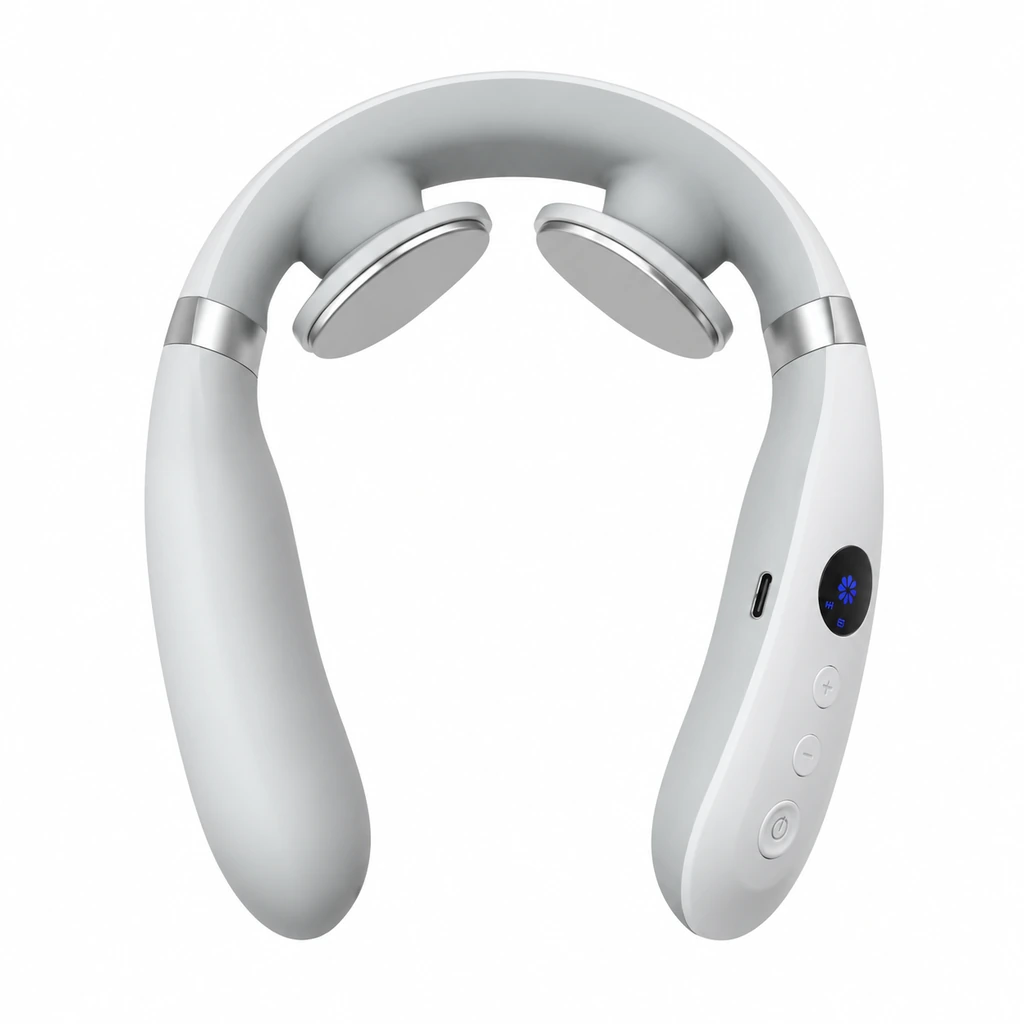
F10 product visual shows another contact-pad layout. Different visible shapes are a reason to test each candidate separately, not proof that one fits better.
Keep feedback as observations: “left pad did not maintain contact when the reviewer turned” is more useful than “poor fit.” The first statement tells a supplier what to investigate.
Use a small, disclosed review group
A practical fit log can use these fields:
| Field | What to record |
|---|---|
| Sample | Model, revision, identifier, and photo |
| Reviewer | An anonymous code and relevant neck-size or wearing measurement |
| Setup | Placement, adjustment, session length, and settings |
| Contact | Which surfaces touched, shifted, or created pressure |
| Feedback | Reviewer's own words, plus an observable issue |
| Follow-up | Supplier question, proposed change, and retest status |
Choose reviewers who reflect the intended audience, but state the group size and selection method in the internal record. A small staff trial is a sourcing check, not evidence that the device fits all customers. Do not turn personal comfort notes into medical or therapeutic claims.
Resolve patterns before approving the sample
Group repeated observations by cause: device geometry, contact-pad position, wearing instructions, or a sample defect. Ask the supplier which issue can be addressed on the selected version and what a proposed change would affect. If a contact material or structure changes, request an updated sample and the corresponding documentation rather than approving from a revised photo.
For the next review, repeat the same setup and log the change against the previous sample. This shows whether the change addressed the original issue without confusing it with a new setting or wearer.
Send a decision-ready fit note
End with three lists: accepted observations, open questions, and items requiring a new sample. Keep the decision limited to the reviewed configuration. When you contact Meilan, attach the sample identifier, photos, fit log, and exact questions. That gives the product team a clearer basis for the next revision and for approving the final version.

