


Building a Neck Massager Assortment Without Duplicate SKUs
An assortment can look broad in a catalog while giving retailers little real choice. Two neck massagers in different colors may share the same structure, controls, and use case. For wholesale buyers, the better question is what job each SKU does in the line—and which differences are documented well enough to explain to a customer.
Give each candidate a role
Start with the channel and buying occasion. Is the item intended for a compact travel display, an at-home wellness range, or a gift set? Those are assortment roles, not claims about a model's performance. Then list the information a seller needs: product shape, how it is worn, controls, included items, retail packaging, and available product content.
Meilan's neck massager collection provides candidate models. Use the exact current specification and sample for each one before assigning a position in the range.
Compare architecture before color
Begin with differences visible on the physical product: contact-point layout, housing form, and control location. The F5 and F12 images below show why a buyer should not group every neck-worn device under one generic SKU description. Photos can establish visible form, but the mechanism, settings, and included accessories still need model-specific documents.
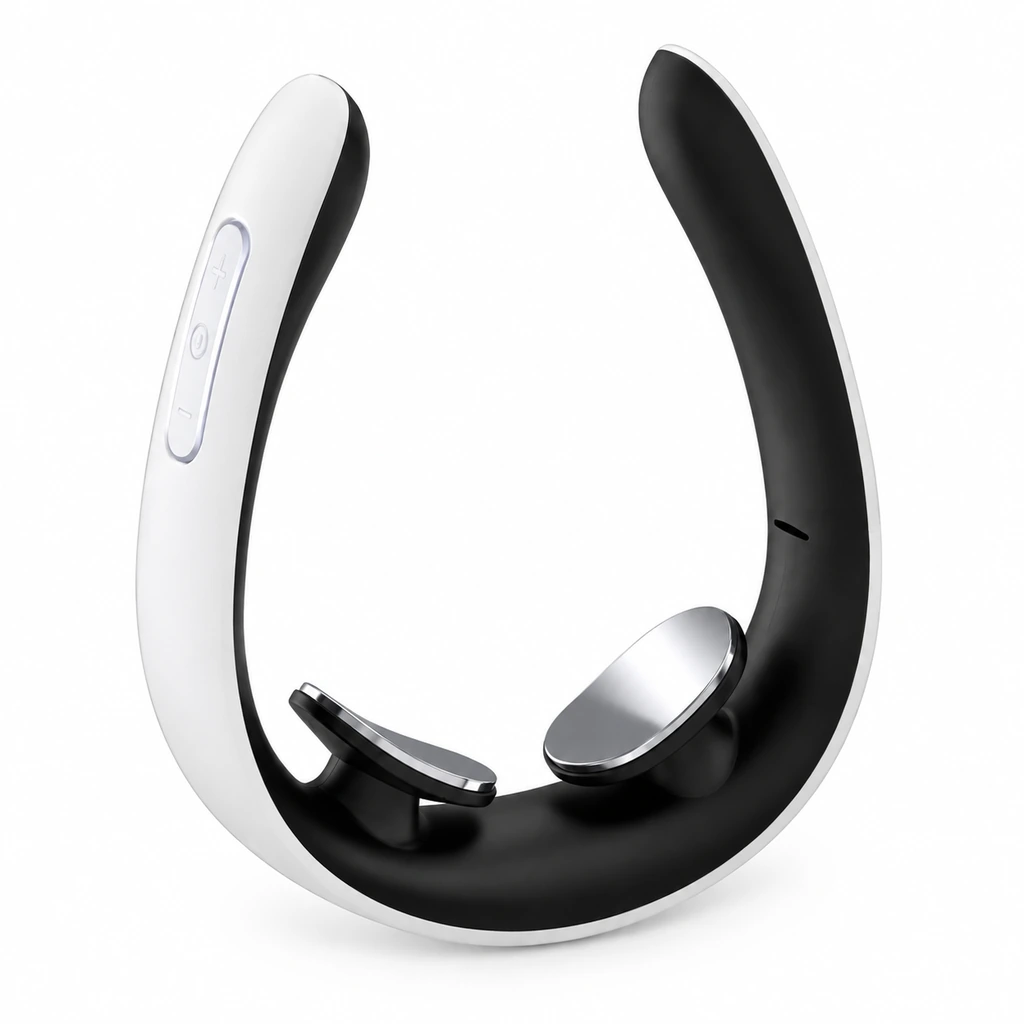
F5 product visual. Record its approved configuration and packaging separately from any other candidate in the range.
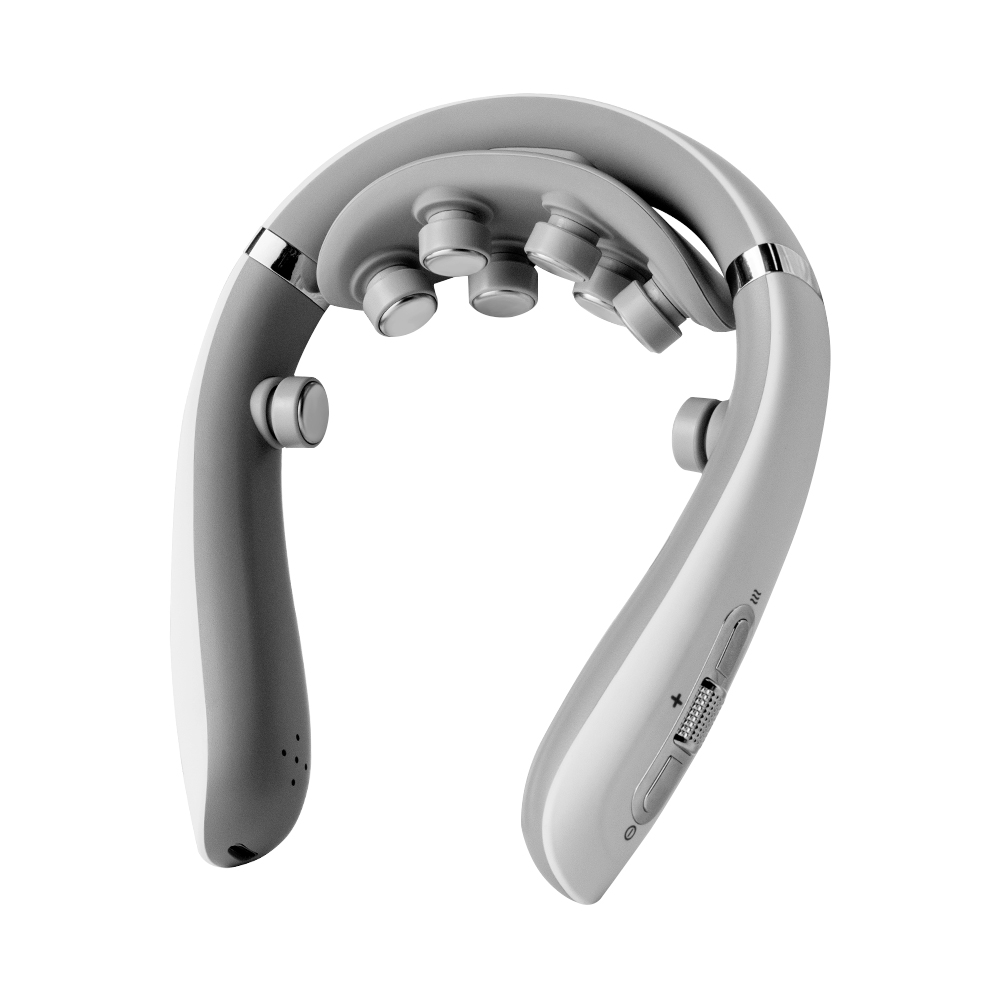
F12 image from Meilan's supplied materials. Its visible contact-head layout is an assortment discussion point, not a verified performance advantage.
Build a buyer-facing SKU matrix
Give each candidate a row and use the same evidence standard for every column:
| Column | Buyer question |
|---|---|
| Model and revision | Which exact sample and specification are being compared? |
| Form and contact | What is visibly different in the worn structure? |
| Controls | What does the approved sample let a user select? |
| Retail kit | Which accessories, manual, and packaging are included? |
| Intended role | Which channel or display need does this SKU serve? |
| Evidence status | Which differences are confirmed, and which are still open? |
Keep a “not confirmed” entry where a document is missing. Do not fill gaps with claims borrowed from a related model. Ask for a current manual or demonstration when a function or control sequence matters to the range decision.
Test whether two SKUs are truly distinct
If the only verified difference is color, decide whether the channel needs that color choice; do not describe it as a new technical tier. If two candidates have different visible structures, test their samples and review the controls and pack contents before promising different customer experiences. A price difference alone does not explain a product-line role.
For each proposed SKU, write a one-sentence reason to stock it. If that sentence can be copied unchanged onto another model, the line may be duplicating itself. Remove a candidate or gather better evidence before increasing the order complexity.
Approve the range as a set
Review the final matrix alongside samples, specifications, images approved for the channel, and quotation details. Check that every planned listing has a distinct and accurate description. Then contact Meilan with the shortlisted models and the missing fields. A smaller, clearly documented range is often easier to sell and maintain than a longer list of unexplained variants.

