

Technical guide
Red Light in Massagers: Wavelength and Evidence
A red-light feature identifies emitted light, while a therapy claim requires more evidence than color.
More context
F30 publishes a 640 nm wavelength and a 15-minute timer. Its current record does not publish irradiance, delivered dose or clinical authorization; those missing values cannot be inferred from wavelength or the presence of LEDs.
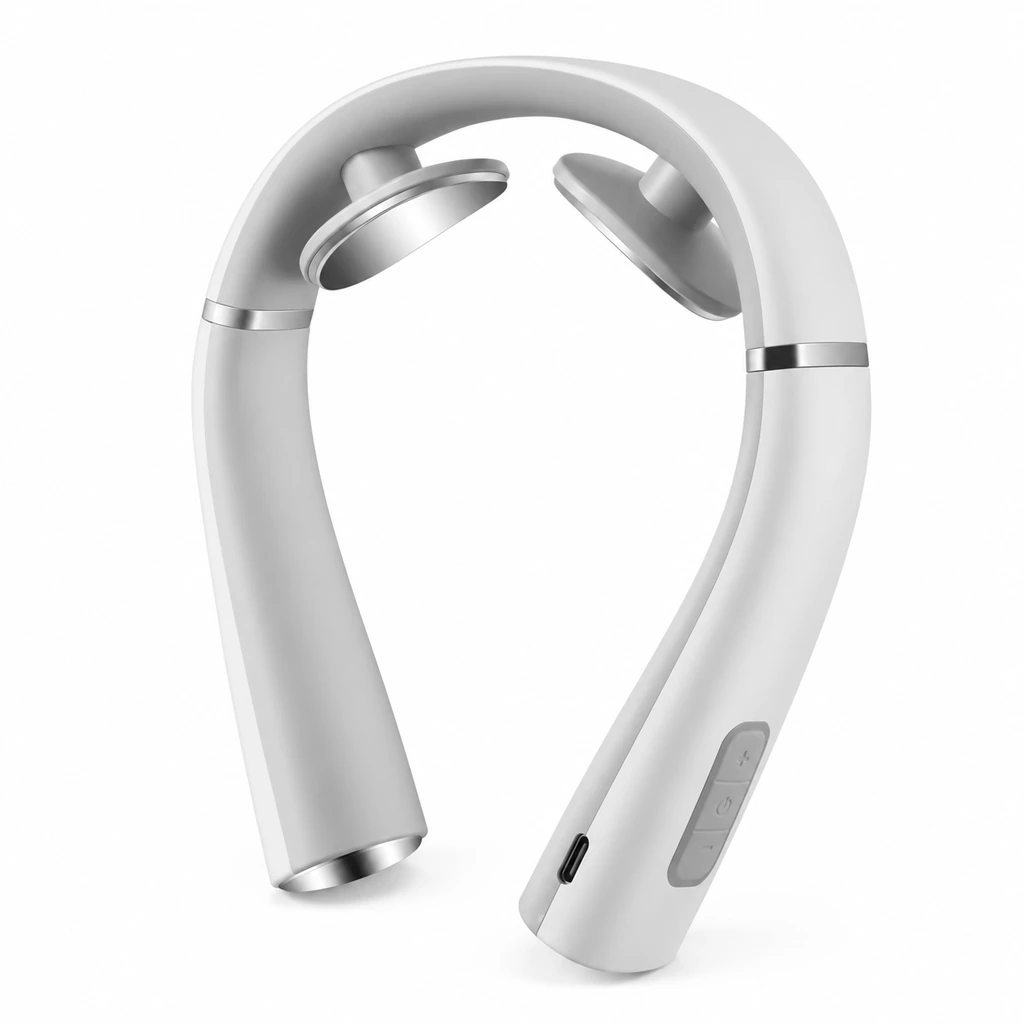 Meilan F30 Smart Electric Neck Massager View model details
Products and selection
Compare relevant models
Buyer facts
Facts to compare
| Parameter | Value or status | Evidence scope |
|---|---|---|
| F30 wavelength | 640 nm | Published specification |
| F30 timer | 15 minutes | Operating timer, not dose evidence |
| F30 heating | 38–42°C | Separate thermal parameter |
Meilan manufacturing profile
Meilan at a glance
Purchasing considerations
Before you order
What the term means
- Red Light in Massagers
Red light is visible optical radiation in the red part of the spectrum. Wavelength identifies spectral position; irradiance and exposure duration concern delivered optical energy.
Published implementation and related model scope
- Catalog examples
F30 publishes a 640 nm field. Red-light entries for F100 and T1 do not provide a matching wavelength and are not assigned one.
Buyer guide
Selection guide
What does F30's 640 nm specification establish?
F30's 640 nm field establishes a published wavelength for its red-light feature. It does not establish irradiance at the contact surface, illuminated dose or a clinical outcome. The same record lists pulse, heating and red light, with ten modes, sixteen intensity levels and a fifteen-minute timer. These are useful configuration facts, but the pulse intensity scale is not a light-output scale. The published heating range of 38°C to 42°C also concerns heat, rather than proving a particular optical dose. F100 and T1 list red light without a model-level wavelength field in their current records. The distinction allows a retailer to describe F30 more specifically while avoiding an invented specification for the other models.
Why does a red LED not automatically establish light therapy?
A red LED does not automatically establish light therapy because the intended purpose and delivered optical exposure matter alongside wavelength. Irradiance describes power per area, and exposure duration contributes to dose; geometry, distance and active emitting area can also affect the result. The current F30 record does not publish those output measurements or a clinical authorization. Its fifteen-minute timer therefore cannot be multiplied by an invented irradiance to create a dose figure. Red-light wording in another product's feature list is likewise insufficient evidence for hair growth, tissue repair or disease-treatment claims. This is a practical merchandising boundary, not a reason to omit the documented feature.
Purchasing FAQ
Common buying questions
Does 640 nm state the delivered light dose?
No. Wavelength and dose are different quantities.
Can the fifteen-minute timer determine dose alone?
No. Delivered irradiance and exposure conditions are also needed.
Do sixteen levels refer to red-light power?
No. The record does not publish sixteen optical-output levels.
Can T1 inherit F30's 640 nm value?
No. Each model requires its own published wavelength.
What does F30's 640 nm specification establish?
F30's 640 nm field establishes a published wavelength for its red-light feature. The same record lists pulse, heating and red light, with ten modes, sixteen intensity levels and a fifteen-minute timer.
Talk to Meilan
Discuss your sourcing brief
Share your target market, model, quantity and branding needs. We will review the right configuration with you.
