


Contact Materials in Neck Massagers: Documents Buyers Should Request
A broad statement such as “ABS and silicone” is a starting point, not a map of every surface a wearer touches. A neck massager can have a rigid shell, softer pads, contact heads, trim, coatings, and removable accessories. For a US brand buyer, the decision is which material belongs to each part in the exact proposed version—and which document supports that identification.
Map the actual touch points
Review the sample as it will be worn. Photograph the neck-contact pads or heads, the inner frame, any soft grip area, and surfaces a user handles while adjusting it. Give each location a part name or number. The Meilan F11 image below makes two neck-contact surfaces visible, but a photograph cannot identify their material grade, supplier, or formulation.
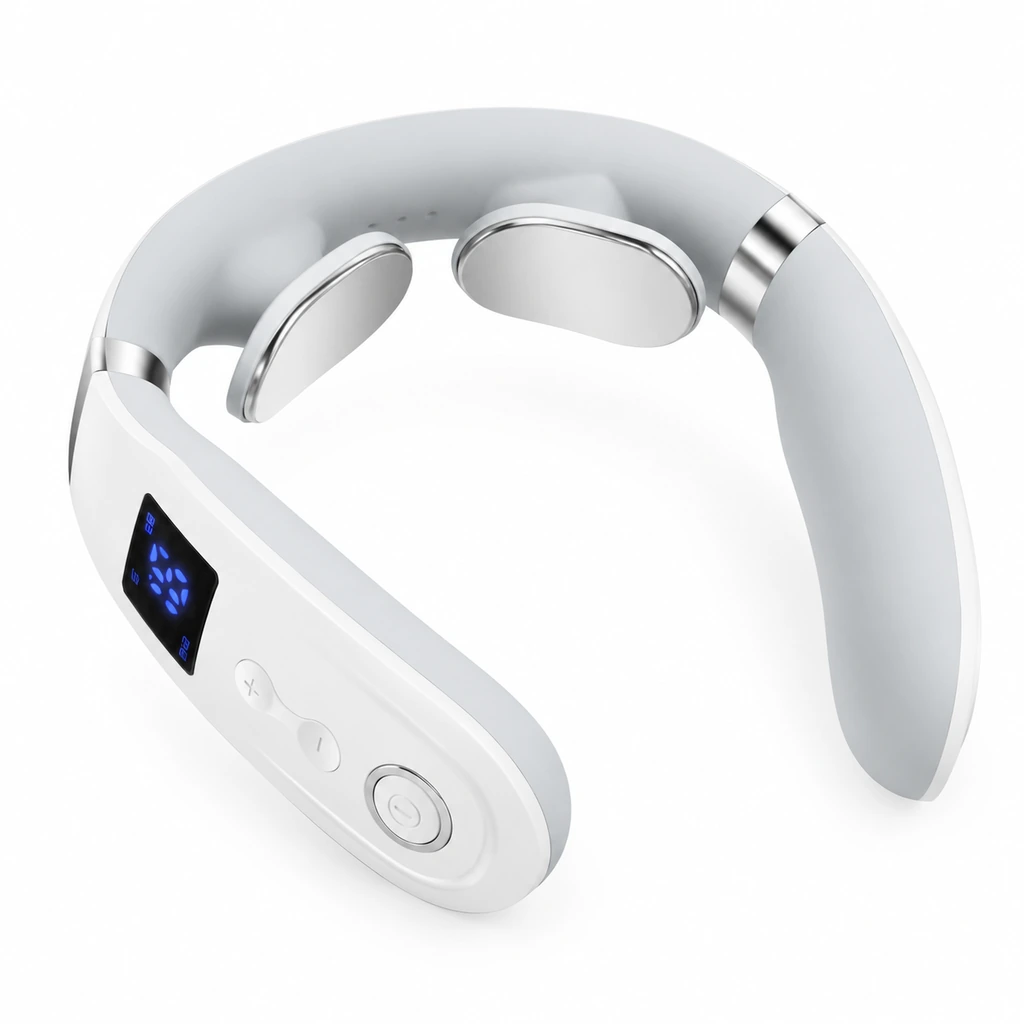
Official F11 product image. The visible surfaces help define a document request; the image is not a material test.
Ask for component-level identification
For each touch point, request the current component list or drawing, material description and grade where applicable, supplier or approved source, and revision tied to the sample. Distinguish a material-family label from a finished-part specification. If a coating, adhesive, textile, or replaceable pad is present, include it rather than grouping the entire assembly under the shell material.
A supplied F50 carton detail lists “ABS and silicone” as product materials. This is a real example of a high-level label. It does not say which F50 part uses each material, identify a grade, or establish that another Meilan model has the same construction. The label also includes a battery-capacity field; that field is unrelated to contact-material suitability.
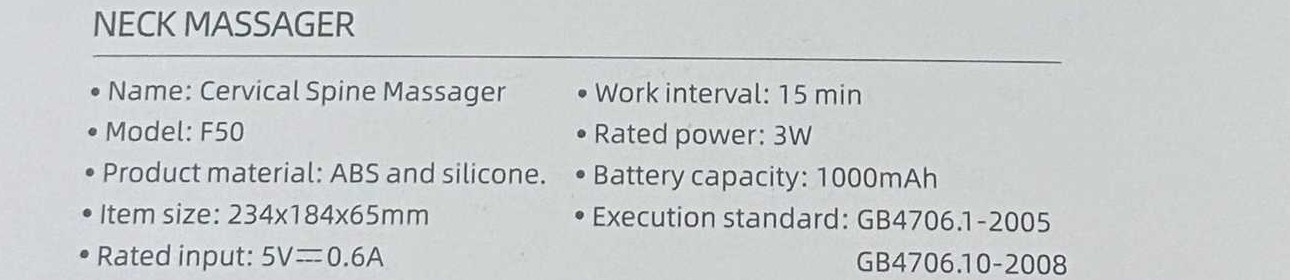
Supplied F50 carton detail. Use its material line as a question to trace to component-level records, not as proof of a specific skin-contact assessment.
| Part to map | Evidence to match to the selected version |
|---|---|
| Contact pad or head | Part ID, material specification and applicable test scope |
| Inner frame or grip | Part drawing, surface finish and approved revision |
| Coating, adhesive or textile | Named layer, supplier information and applicable document |
| Replacement part | Material and compatibility with the approved assembly |
Read the scope of each document
Ask what part, material, standard, laboratory method, date, and sample a report actually covers. A supplier declaration, material data sheet, finished-product report, and batch receiving record answer different questions. A certificate shown on a general certifications page should not be assumed to cover every pad, grade, or model. Procurement and quality should decide which evidence is relevant to their intended market and claims.
Do not turn a material name into a blanket “skin-safe,” “hypoallergenic,” or US-compliant promise. If a material or supplier changes after sample approval, request the revised part record and decide whether the change requires a new assessment or signed sample.
Close the request with an exact configuration
Send the supplier annotated photos of the selected sample and a list of the surfaces your team needs mapped. Request documents indexed by part number and revision, with open gaps marked clearly. Contact Meilan with the model and intended configuration so the response can address the actual components rather than a whole product family.

