


Building an F100 Neck Massager Product Brief: From Features to Sample Approval
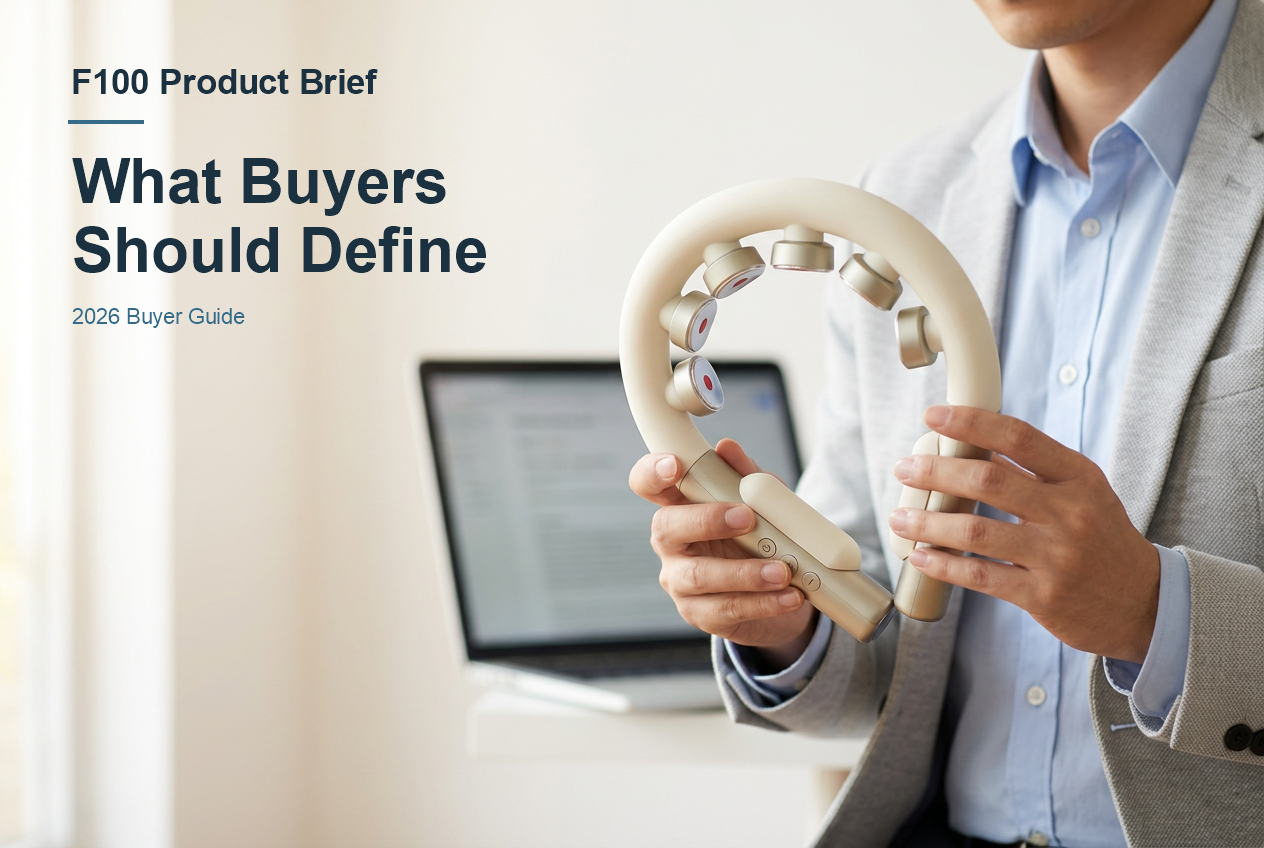
A neck massager product page helps a buyer shortlist a model. A product brief does a different job: it defines the version the brand intends to purchase, the questions a sample must answer, and the evidence required before approval.
For a US wellness brand considering Meilan’s F100, the useful starting point is not a longer feature list. It is a short, version-controlled brief that connects the intended customer experience with measurable checks, packaging requirements and approved marketing language.
1. Define the retail experience before selecting settings
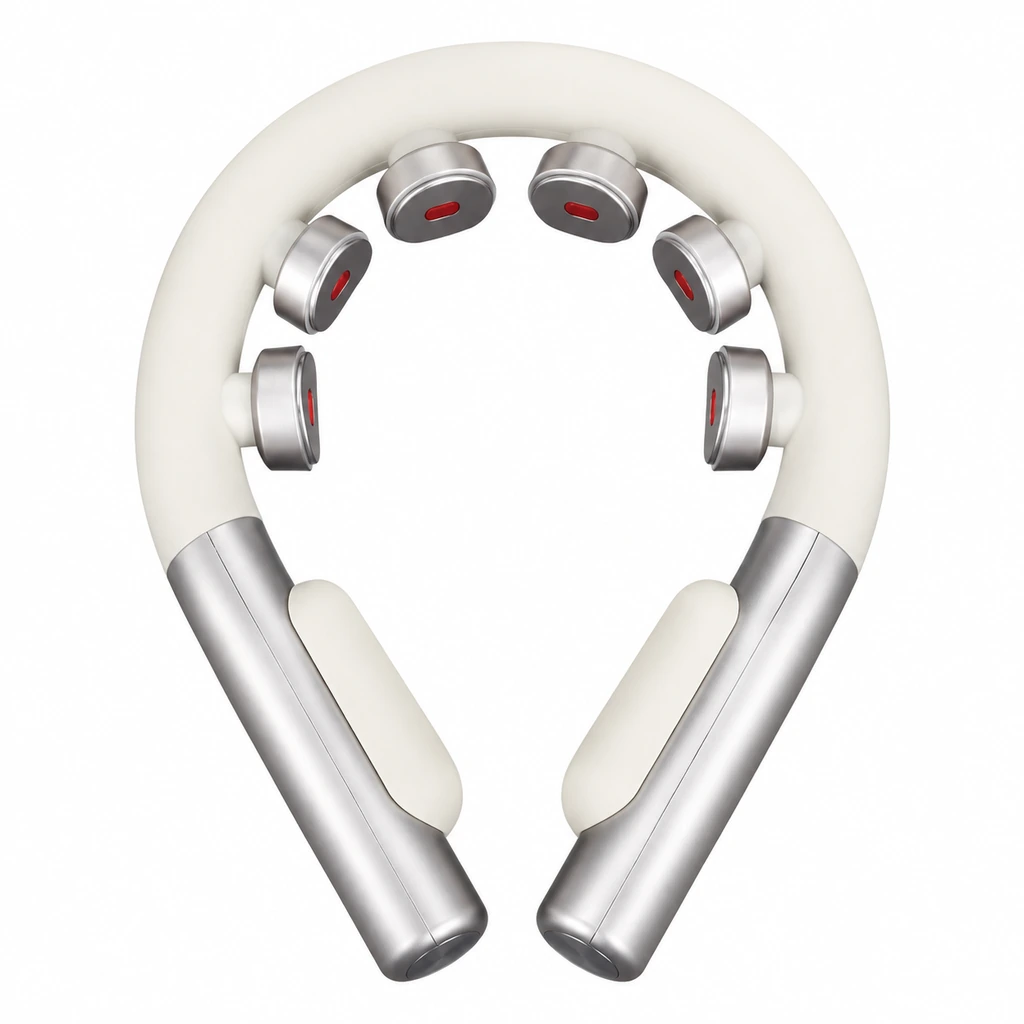
The official F100 product page identifies a neck-and-shoulder device and lists low-frequency pulse, hot compress, vibration and red-light functions. These are starting points for evaluation, not proof that every shopper will experience the device in the same way.
Describe the intended setting first: an at-home wellness routine, a travel-oriented assortment, or a gift range. Then decide what the customer should understand without assistance—how to position the device, select a setting and stop a session. Request the current instructions and review a sample against them. Do not infer anatomical coverage or comfort from the product name alone.
2. Turn listed specifications into approval questions
Record the published specifications with their source, then add the conditions needed to interpret them. A listed maximum temperature is not the same as a temperature profile during use; a battery capacity is not a runtime guarantee across every mode.
| Official F100 listing | What the buyer should put in the brief |
|---|---|
| 10 modes; 16 intensity levels | Confirm the proposed version’s setting sequence, starting level and instructions for changing or stopping a session. |
| Heat up to 42°C | Request the measurement location, operating mode and ambient conditions; review warm-up and temperature behavior for the supplied sample. |
| 1000mAh battery; working time up to 110 minutes | Ask which combination of functions and levels produced the runtime, and confirm the battery version proposed for the order. |
| 15-minute timer; charging about 145 minutes | Check session-end behavior and request the charging setup used for the stated charging time. |
| 152 × 139 × 42mm; net weight 190g | Confirm what is included in the net-weight figure. Measure the actual retail pack separately for packaging and logistics. |
| On-device controls and wireless remote | Confirm remote inclusion, pairing instructions, remote power requirements and operation if the remote is unavailable. |
This keeps the brief practical: each specification leads to a question that someone can answer or test. Avoid adding unsupported noise levels, charging cycles, clinical outcomes or universal comfort claims simply because they would make the retail story more attractive.
3. Review controls as part of the complete customer journey
A remote can change how a customer operates a worn device, but it also introduces another item to explain, pack and support. Ask a first-time reviewer to follow the supplied instructions, identify the controls and complete a session without coaching. Record confusion separately from personal preference.
For the proposed retail kit, confirm the included remote, cable, instructions and any other accessories in writing. Do not assume that a charging adapter is included because the listing gives a DC input rating. Check how each item is retained in the box and whether the instructions match the actual controls.
If the brand is considering changes, use Meilan’s OEM/ODM page to frame the discussion, then obtain a model-specific written scope. Logo artwork, packaging and instructions are different approval tasks from changes to electronics, firmware or control behavior. Availability, cost and validation responsibilities need confirmation rather than assumption.
4. Match supporting documents to the ordered version
The F100 product page links electrical-safety, EMC and quality-inspection records. The published EMC verification identifies F100, an input rating of DC 5V 0.6A 3W, and European EMC references. These fields help a quality reviewer locate the relevant record.
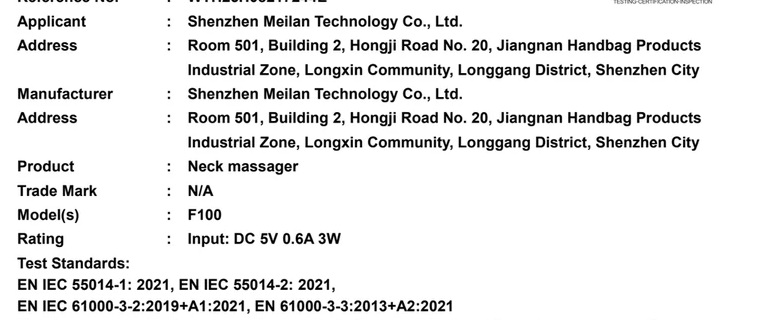
Request the full applicable reports and connect them to the sample revision, supplied accessories and proposed order. European EMC documentation does not by itself establish US market readiness. Have the appropriate reviewer assess requirements for the exact device, intended use and final claims; do not turn a certificate image into a blanket “US approved” statement.
5. Close the brief with clear approval owners
Give each decision an owner: the product team for the customer experience and control flow, quality for applicable documents and sample findings, and the brand team for artwork, instructions and public claims. Keep commercial questions—minimum order, quotation validity, lead time and change costs—in the same project file, but request current answers instead of treating them as fixed F100 specifications.
“Please quote F100 for our US wellness range. Confirm the proposed configuration, retail-kit contents and available branding scope. Provide the current instructions, specification sheet and applicable full reports. We will approve the sample, artwork and final kit against brief revision [number] before production authorization.”
The output should be one agreed reference, not several disconnected screenshots. Keep the approved sample identification, packing list, document references and unresolved items together. If a feature or accessory changes, update the brief and review the affected approvals before proceeding.
Contact Meilan with the F100 model, intended market, sales channel and retail-kit requirements to request a configuration-specific discussion.

