


F10 vs F11: Building a Verified Neck Massager Comparison
For a brand choosing between F10 and F11 neck massagers, the first question is whether the differences justify a different customer promise—or a second SKU. Both public listings describe compact pulse-and-heat devices with wireless remotes, 16 intensity levels, and a 15-minute timer. The clearest listed distinction is six modes for F10 versus ten for F11.
That makes F11 worth evaluating when mode choice matters to your positioning. It does not establish better comfort, longer battery life, or a stronger massage. A useful comparison connects each listed difference to the exact sample, its documentation, and the experience your customer will actually notice.
What the published specifications establish
The current F10 product listing and F11 product listing provide the following starting point. These are listed specifications, not measurements from a comparative test.
| Comparison point | F10 | F11 |
|---|---|---|
| Listed functions | TENS pulse and heating | TENS pulse and heating |
| Modes / intensity levels | 6 / 16 | 10 / 16 |
| Controls | Wireless remote and device buttons | Wireless remote and device buttons |
| Display / audio description | LED display and voice broadcast | LCD display; voice not specified in listing |
| Battery capacity | 400 mAh | 400 mAh |
| Session timer | 15 minutes | 15 minutes |
| Net weight | 126 g | 123 g |
| Dimensions | 152 × 139 × 42 mm | 152 × 139 × 42 mm |
| Rated power / input | 1.5 W / DC 5 V, 1 A | 1.5 W / DC 5 V, 1 A |
The shared specifications narrow the decision: neither model has a listed advantage in intensity-level count or overall dimensions. The display and mode differences deserve sample review because they may change how customers select and understand a session.
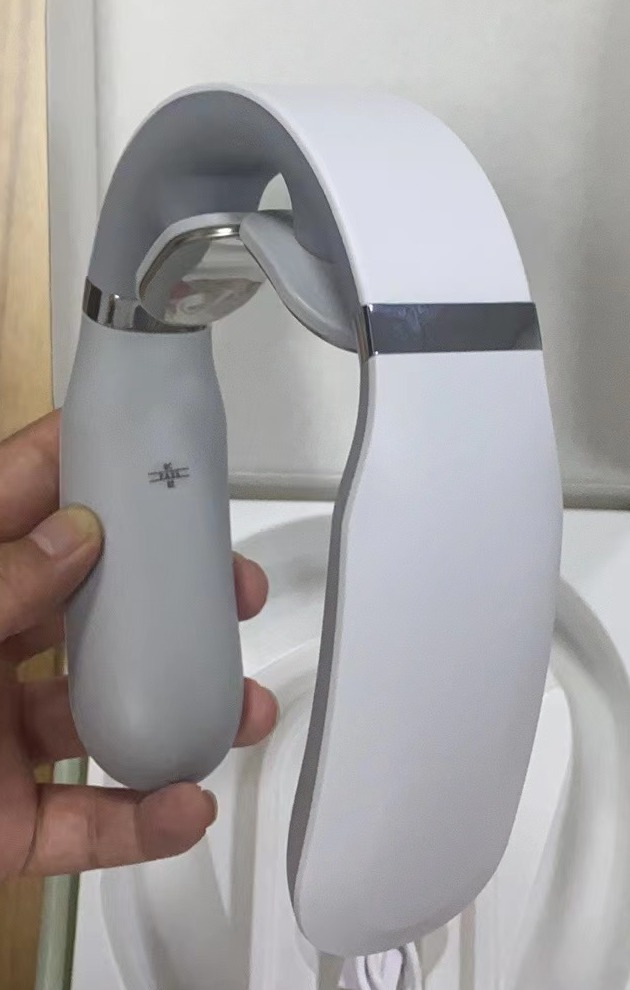
F10 supplied sample. The photograph shows its body profile and contact surface; it does not establish fit across users.
Resolve F11 versus F11A before approving the comparison
The public product page uses F11, while the supplied specification sheet identifies F11A. The sheet lists ten modes and 16 intensity levels, but matching those numbers does not prove every F11 configuration is identical to F11A.
Ask for written confirmation linking the quotation's model code to the sample, specification revision, manual, and packaging artwork. If F11 is a family name and F11A is a specific configuration, record that relationship in the purchase specification. If they differ, compare the actual quoted versions.
This matters when a buyer approves one sample but the manual or packaging describes another control sequence. Keep the confirmed model designation attached to the approved feature list so your product page, customer support instructions, and reorder describe the same device.
Decide whether ten modes create a useful distinction
F11's ten listed modes may support a wider-choice position. F10's six may be sufficient when customers mainly want a repeatable routine. Neither conclusion follows from the count alone: six modes are not automatically easier to navigate, and ten are not automatically more useful.
Review the mode sequence on both samples using their instructions. Can a first-time user identify the selected mode, find a preferred setting again, and explain the difference between the options? If several options feel difficult to distinguish, a larger count may add little value to your product story.
Names such as “kneading” and “acupuncture” describe listed pulse modes. They do not establish moving massage mechanisms or clinical outcomes. Use language that accurately describes the device rather than turning a mode name into an unsupported benefit.
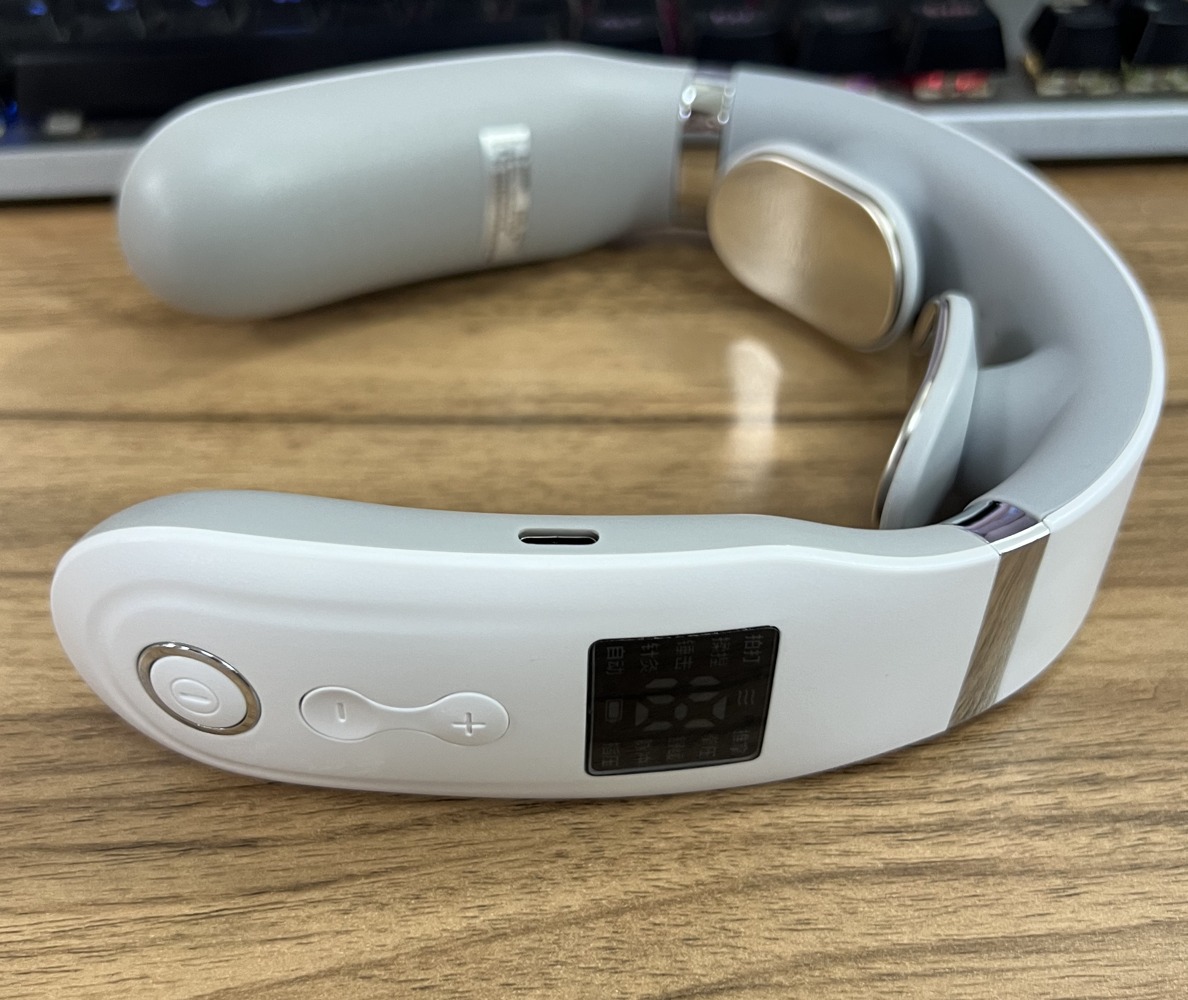
F11-series supplied sample with a visible display window and on-device controls. Confirm the quoted configuration before approving display artwork or instructions.
Compare the control experience, including voice prompts
F10's listing includes voice broadcast; F11's listing emphasizes an LCD display. The omission of voice from the F11 page does not establish that every F11 variant lacks it. Confirm the available configuration, prompt language, and whether prompts can be disabled before positioning either model for your market.
For English-speaking customers, assess whether prompts and display labels help them understand the current setting. Review the display in normal room lighting and check which information remains understandable while the device is worn. A visible screen in a product photograph does not demonstrate that experience.
The supplied F10 and F11A sheets describe startup without pulse output, output beginning at level one after pressing the increase button, and intensity returning to level one after a mode change. Verify these behaviors on the quoted samples. They affect both onboarding and how customers return to a preferred setting.
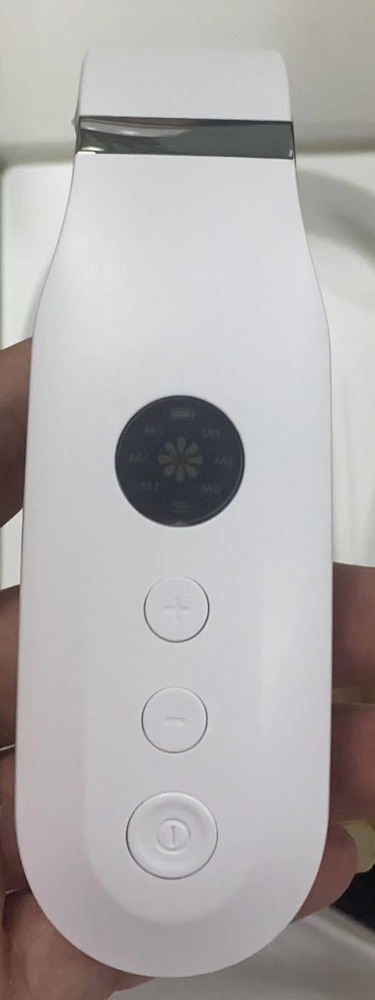
Supplied F10 remote photograph. Review button functions, display feedback, and battery instructions against the manual for the approved version.
Keep weight, fit, and runtime claims proportionate
F11 is listed as three grams lighter. That is a specification difference, but it is insufficient evidence for a comfort claim. The identical listed outer dimensions also do not prove identical fit. Compare how the approved samples sit on intended users, whether controls are reachable, and whether normal seated movement changes their position, following each manual's use restrictions.
Battery capacity cannot settle runtime either. Both listings specify 400 mAh, while the supplied materials describe operating time under conditions that are not consistently defined. The F11A sheet also contains different runtime descriptions that need reconciliation.
If runtime affects your positioning, request a matched comparison with the same mode, intensity, heating state, starting charge, and endpoint. Until those conditions are documented, avoid declaring either model the longer-lasting option. The same principle applies to the listed heating temperature: a catalog value does not establish identical warm-up behavior or measured contact temperature.
Choose one model—or give each a distinct role
Shortlist F10 if its six modes meet your intended routine and its confirmed voice and control experience suit your customer. Shortlist F11 if its additional modes and confirmed display experience provide a difference customers can understand and value. Compare commercial terms for those exact configurations before choosing; the available feature data do not establish a price advantage.
Carry both only when you can explain two distinct roles without relying on an unsupported “better” claim. If the extra modes do not create a meaningful benefit in sample review, one well-documented SKU may be easier to merchandise and support than two similar products.
Before approval, keep a record of the matched model codes, control behavior, included remote and accessories, manual version, and approved marketing claims. For a US launch, request applicable documentation for the exact configuration and intended claims; neither a catalog description nor a component requirement in a specification sheet establishes market readiness.
To build the comparison around your channel, contact Meilan with your target market, must-have controls, and proposed F10/F11 configurations. Request matched samples and version-specific documents before finalizing your SKU plan.

