


Sampling Plans for Neck Massager Orders: Questions to Agree in Writing
What does it mean when a supplier says an order has been ‘sample inspected’? For a neck massager buyer, that phrase is incomplete until the parties agree on the lot being inspected, how units are selected, what is checked, and what happens when a sample fails. A report with a pass mark is difficult to interpret if those conditions are missing.
An acceptance-sampling plan uses observations from selected units to inform a decision about a defined lot. It is not a promise that every unit was tested. The NIST explanation of acceptance sampling describes the distinction. The questions below help procurement and quality teams turn that general idea into an order-specific agreement; they do not prescribe Meilan's current factory procedure or a universal sampling rate.
1. Define the lot before selecting units
Write down the product model, configuration revision, quantity, and the point in the process when units become available for inspection. For a private-label order, include the approved device sample, artwork revision, instruction version, accessories, retail box, and carton configuration. If production or packing is split across dates or versions, ask whether these are one lot or separate lots. A sample from an earlier version cannot settle the acceptance of a changed version.
Also identify where the lot is held and which cartons are accessible. Selecting only the easiest open carton may miss differences elsewhere. The buyer and supplier should agree who may select units, whether selection is spread across cartons, and how substitutions for unavailable or damaged samples are recorded.
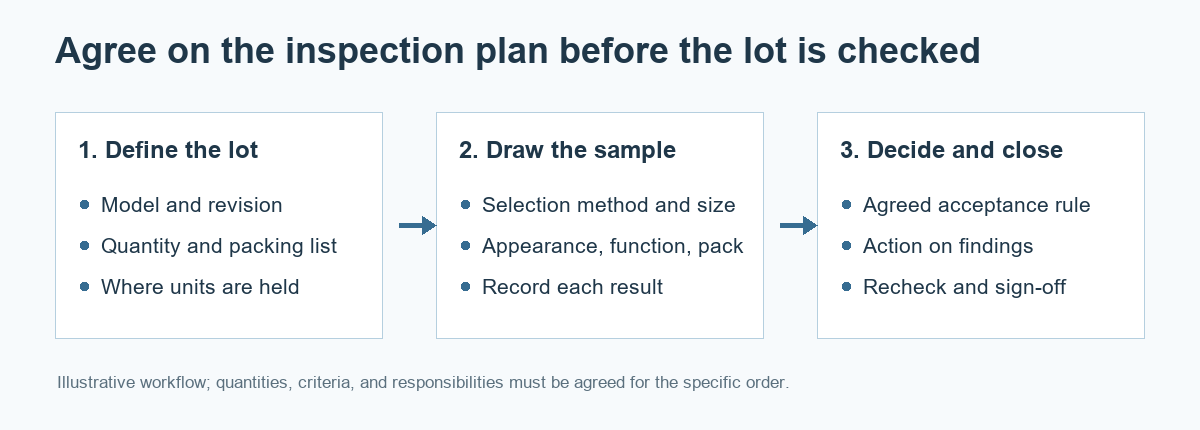
2. Agree on selection method and sample size
Ask for the proposed sample size and the rule used to choose it. If an AQL-based or other published sampling system is proposed, record its edition, inspection level, lot-size band, defect classification, and acceptance and rejection numbers. Do not accept ‘standard AQL’ as a complete instruction: two teams can use different settings while thinking they agreed on the same plan.
The choice depends on the order and the risk of the check. A visual check, a functional run, and a destructive test may not use the same units or sample quantity. If a buyer requires every unit to undergo a particular check, state that separately as a 100% check rather than describing it as sampling. The written plan should also say whether inspected units may return to the saleable lot.
3. Turn product requirements into observable checks
Link each inspection item to the approved version and a practical method. On a neck massager, this may include exterior finish, controls, display or indicators if fitted, contact surfaces, charging port, supplied accessories, instructions, and packaging. The exact list depends on the purchased configuration; a product photograph is not itself an inspection standard.
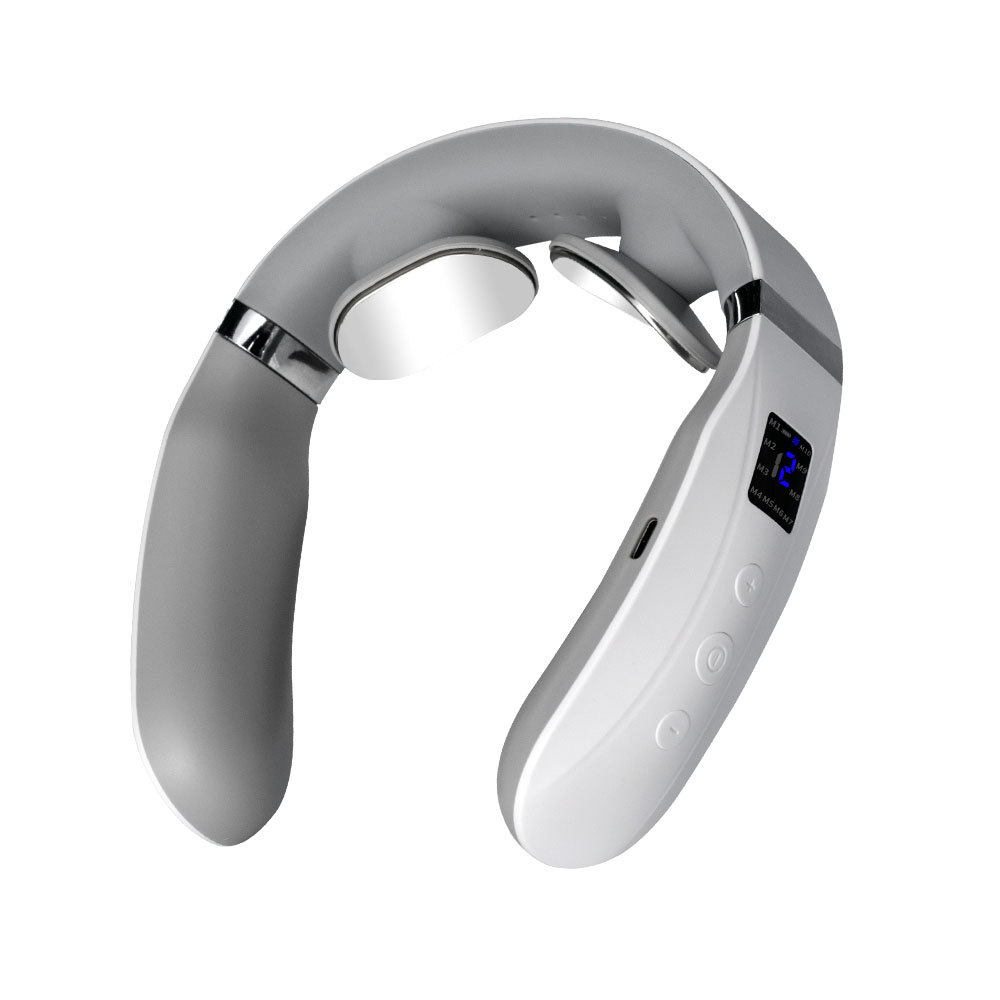
For example, ‘check buttons’ leaves too much open. A useful instruction identifies the sample configuration, how to power the device, which controls to operate, what response to observe, and what counts as a deviation. Where heat, runtime, or electrical output is checked, record the setup and conditions instead of comparing an isolated number. The F16 product page can help identify a candidate device for discussion, but the order specification and approved sample should control the actual inspection.
4. Classify findings and define the lot decision
Agree in advance how findings are classified and documented. A cosmetic mark, a missing accessory, and a failure to stop operating should not be collapsed into one undifferentiated count. Record the exact location, unit or carton identifier, photograph where useful, test condition, and the criterion used. This makes a result reviewable by people who were not present at inspection.
The plan also needs an explicit lot decision rule: what results lead to acceptance, rejection, a hold for investigation, or an additional check. Do not rely on a general ‘pass/fail’ column without defining the threshold and the person authorized to decide. If product and packaging revisions have separate approval records, identify which record controls each finding. For OEM or private-label changes, Meilan's OEM/ODM process is a starting point for discussing version and artwork approvals; it does not replace an order-specific acceptance plan.
5. Decide how a failed lot will be closed
Before inspection starts, agree what happens when the lot is held or rejected. Who investigates? May units be sorted or reworked? What evidence must accompany the correction? Will the same items be rechecked, will a new sample be drawn, or will a revised lot be defined? Name the buyer-side approver and the supplier-side owner, and keep the original findings beside the reinspection result. A second pass should not erase the first record.
| Write this into the order file | Question to settle |
|---|---|
| Lot identity | Which model, revision, quantity, packing version, and production group? |
| Sampling | Who selects units, from where, using which method and sample size? |
| Checks | Which visual, functional, accessory, document, and packaging checks apply? |
| Decision rule | How are findings classified and when is the lot accepted or held? |
| Closure | Who approves correction, reinspection, and release? |
Ask the supplier to return the proposed plan against these five fields before inspection day. That gives both teams a basis for comparing results and resolving deviations without inventing criteria after a problem appears. Contact Meilan with the model, approved configuration, order quantity, and proposed checks to discuss a plan for your specific order.

