


Functional Customization: Questions Before a Neck Massager Redesign
Buyer guide · 2026
Functional Customization: Questions Before a Neck Massager Redesign“Can we add a separate heat control?” sounds like a small request. For a wellness brand, however, the answer depends on the exact device and the behavior the brand expects. A new control might change how the user operates the product, how power is managed, what fits inside the housing, which instructions must change, and which checks need to be repeated. None of those consequences can be settled by adding a feature name to a quotation.
This guide gives brand buyers and product managers a way to frame a functional change before asking a supplier to confirm feasibility. It is not a list of features that Meilan has agreed to offer on every model.
Describe the user action, not just the feature
Start with one observable task. If the request is “independent heat control,” specify whether the customer should be able to use heat without massage, change heat while a massage program is running, or turn heat off without resetting the program. Ask what the display or indicator should show, how the user reaches the setting, and what happens after an automatic stop or restart.
These questions expose different levels of change. A new label for an existing action may require artwork and instruction approval. A new sequence or function may require changes to controls and internal operation. The buyer should not assume either route is available: write down the intended behavior, then let the supplier assess it against a named product version.
Freeze the existing version before discussing a redesign
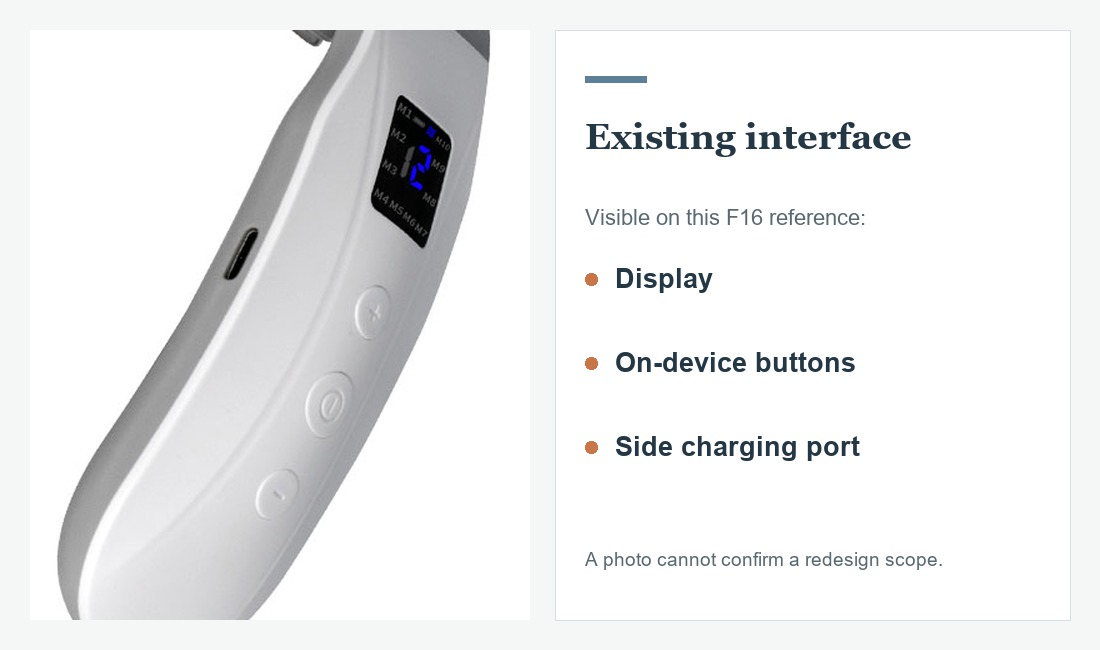
The Meilan F16 product page describes a current reference with an LCD display, on-body buttons, and a wireless remote. That makes it useful for asking how a proposed control would be reached and explained. It does not establish that a new button, revised control program, or independent function can be added to that model.
Before feasibility work, identify the model, hardware revision, current control behavior, battery and charging specification, included remote and accessories, and matching manual. Ask for the controlled sample that represents the quotation. A photo of one interface should not become the baseline for a different F-series or Q1 version.
Trace the possible effects across the device
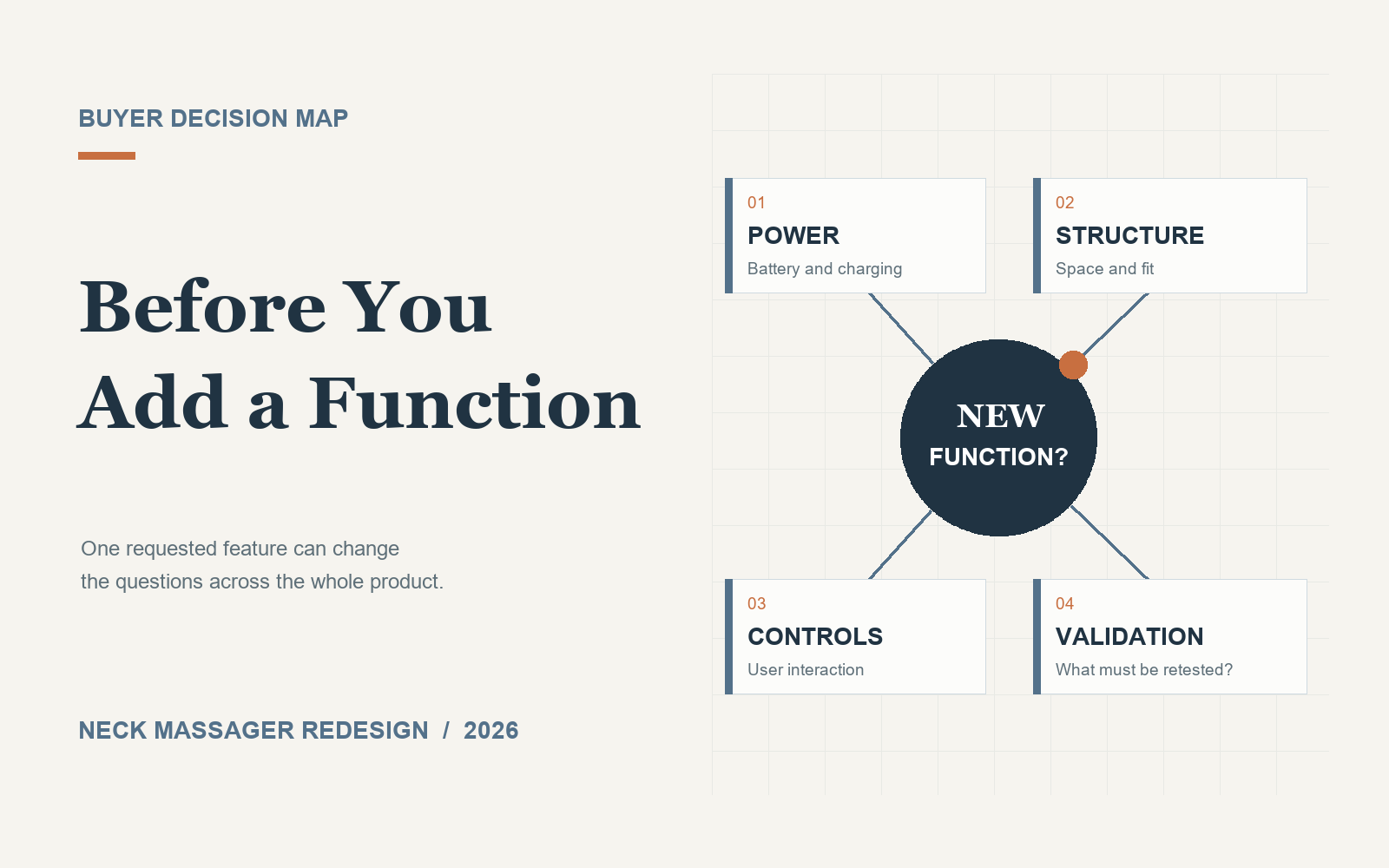
Ask the supplier to review each proposed behavior against four connected areas. Power: could the new operating state change current draw, battery runtime, charging assumptions, or thermal behavior? Structure: would a new control, indicator, or component need space, alter sealing or fit, or affect contact surfaces? Controls: must on-device buttons, a remote, display text, prompts, or automatic shutoff behavior change together? Validation: which existing checks and documents still apply to the revised configuration, and which must be updated or repeated?
These are questions, not predetermined outcomes. A supplier may find that an existing setting satisfies the brand's customer need without new hardware. Another request may need a new sample and a broader review. The commercial trade-off should be visible before the buyer commits to artwork, a launch date, or a retail claim.
If the request concerns how a customer selects settings, review another existing interface before specifying a new one. The F10 product page describes a wireless remote, voice prompts, and an LED display. Compare the documented user sequences and physical samples with the proposed task. F10's listed functions do not prove that its controls can be transferred to F16 or another model.
Ask for a feasibility response that separates “possible” from “approved”
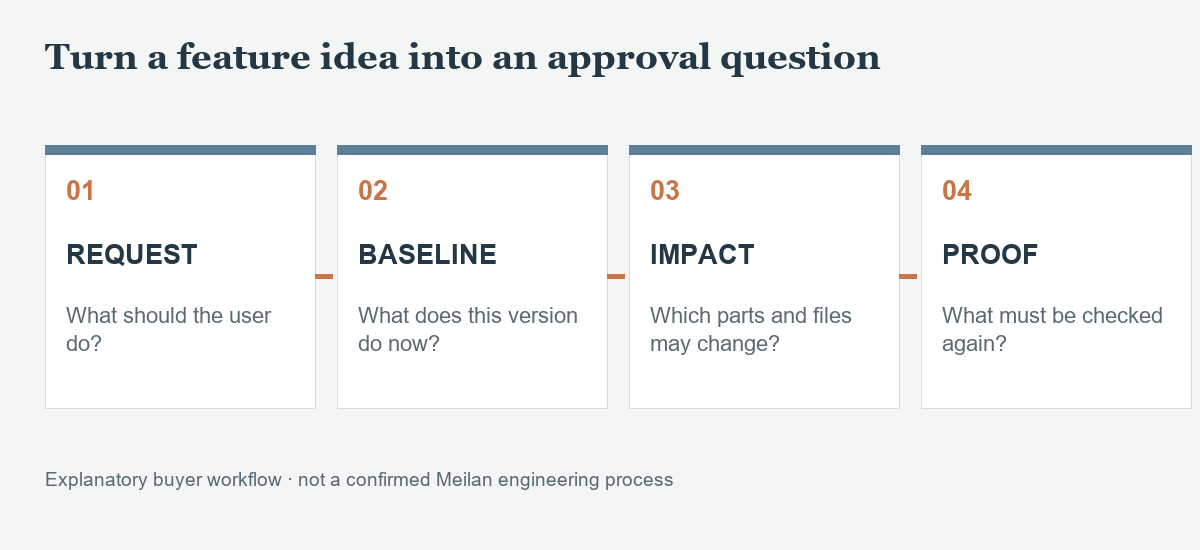
A useful first response should name the assessed model and version, describe the proposed change, identify affected parts and documents, and list the open technical questions. It should say whether the supplier is discussing an existing configuration, a software or control change, a physical change, or a combination. Do not treat a verbal “yes” as approval of the finished product.
Then request a revised sample and a verification plan matched to the actual change. A control change may need a sequence check on the product and in the manual. A change that affects the battery, electronics, heat output, or housing can also alter the scope of prior test evidence; the appropriate review must be defined for the final configuration and intended market. The buyer and supplier should agree who supplies revised files, who performs the checks, and who signs off the result.
| Decision point | What to request | Who should approve |
|---|---|---|
| Behavior | Written user sequence and acceptance examples | Brand product owner |
| Baseline | Exact model, sample, specification and manual versions | Brand and supplier technical owners |
| Impact | Changed parts, controls, packaging or documents | Supplier engineering and brand product owner |
| Verification | Checks and evidence for the revised configuration | Named quality and market reviewers |
| Release | Approved sample, files, quotation assumptions and change record | Authorized buyer and supplier representatives |
Check existing product routes before requesting a redesign
Compare the proposed redesign with an existing configuration using the same customer task. If an available control sequence already meets the intended experience, the brand may avoid unnecessary revision work. If it does not, the written request should show what the new behavior adds and why that benefit warrants the extra sample, document, verification, and approval effort.
Also distinguish a functional request from a form-factor request. If the customer problem is carrying and storing the device, the F5 foldable model is a different product route to inspect, not proof that a foldable structure can be added to F16. Use the neck massager range to shortlist existing candidates, then compare physical samples and version-specific documents. A product page can start the search; it cannot settle cross-model engineering feasibility.
Meilan's OEM/ODM page is a starting point for discussing cooperation. To assess a specific functional idea, contact Meilan with the target model, current sample or specification, intended user action, target market, and any non-negotiable requirements. Ask for a written feasibility response before treating a proposed function as part of the approved product.

