


Neck and Shoulder vs Neck-Only Devices for Retail Buyers
“Neck and shoulder” and “neck-only” sound like straightforward shelf categories. For a retail buyer, however, the naming should be tested against the product’s contact area, wearing position, and the experience customers are likely to expect. A broader product name does not automatically mean broader physical coverage.
Start With the Shopper’s Intended Use
Is the shopper looking for a compact device used around the neck, or expecting a product that also reaches the shoulder area? That difference should guide assortment selection, listing images, and packaging copy.
Meilan lists the F100 as a neck-and-shoulder massager. Its page describes low-frequency pulse, heat, vibration, and red light. These listed functions do not, by themselves, tell a buyer exactly where an individual user will feel contact or stimulation.
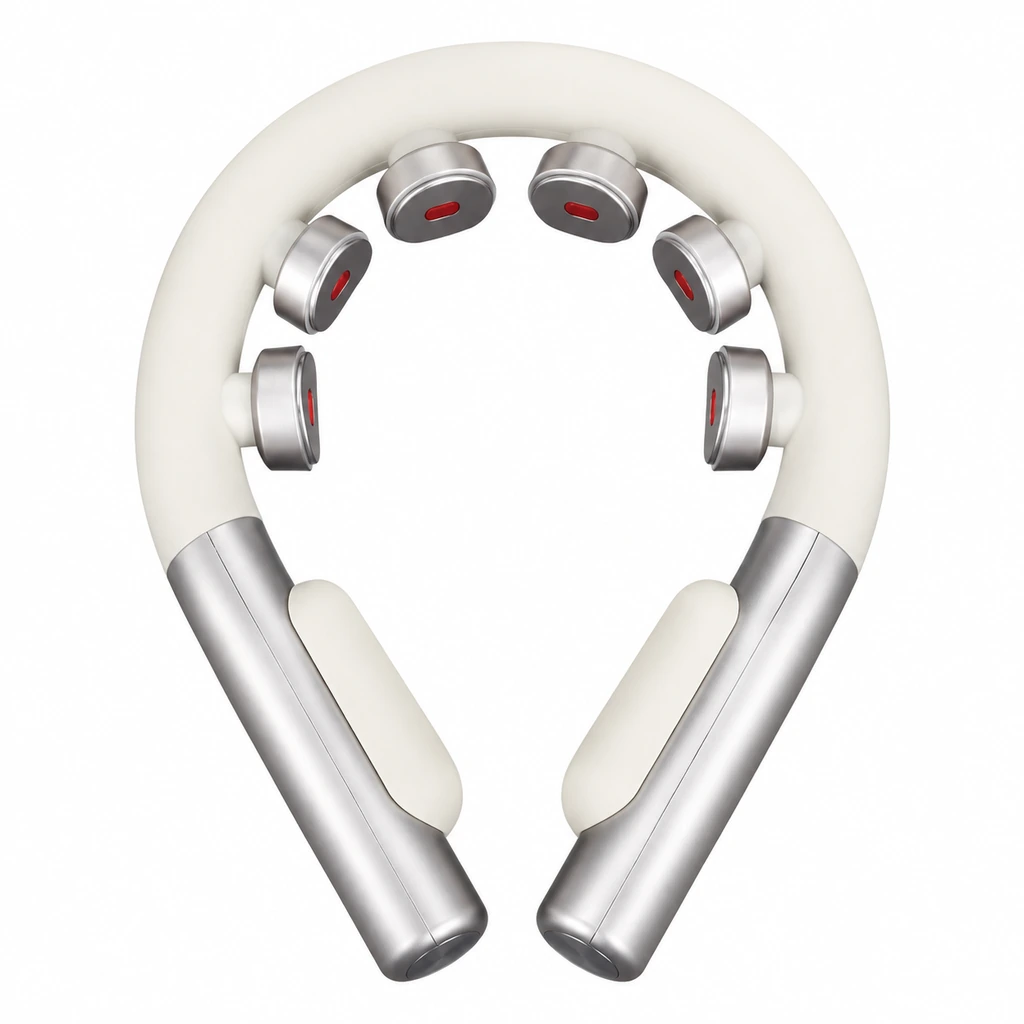
F100 product reference. Assess wearing position and actual contact area with the proposed sample.
Compare the Wearing Experience
A neck-focused option such as the foldable F101 may suit a different retail proposition. Rather than comparing model names alone, have reviewers try the proposed configurations according to their instructions.
| Retail question | Neck-and-shoulder proposition | Neck-focused proposition |
|---|---|---|
| Shopper expectation | Does the experience reach the areas shown and described? | Is the neck experience clear and comfortable? |
| Fit | How does contact change across different body shapes? | Does the device sit securely around the neck? |
| Controls | Can the wearer adjust or stop it easily? | Can the wearer adjust or stop it easily? |
| Presentation | Do images accurately show the wearing area? | Do images make the narrower positioning clear? |

F101 provides a neck-focused product reference; the photograph alone cannot establish comparative comfort or performance.
Match the Claim to the Demonstration
Review the main product image, on-body image, carton front, online title, and description together. If a listing promises a shoulder experience, the approved sample and visual presentation should support what a shopper would reasonably understand by that claim.
Separate massage technology from body-area positioning. Pulse, vibration, and heat describe functions; they do not prove that a device treats every area named in a marketing title. Avoid medical or pain-relief promises without a separate claims review.
Consider the Whole Retail Offer
The larger-sounding category is not necessarily the better assortment choice. Compare the complete kit, packaging footprint, instructions, controls, and expected use setting. Request the current specification and packing list for each candidate. Price, minimum order quantity, and lead time should be compared only through current, configuration-specific quotations.
Before committing to shelf or online copy, retain an approved sample and photograph how it is worn. Have product, merchandising, and quality reviewers agree on the final positioning.
Contact Meilan with the shopper use case and target sales channel. Ask for samples that let your team verify the difference between the proposed neck-and-shoulder and neck-focused experiences.

