


How to Read a Neck Massager Specification Sheet
A specification sheet helps buyers compare neck massagers, but only when each number has a clear meaning and belongs to the version being quoted. A battery figure does not tell you runtime. Device weight is not shipping weight. A list of modes does not explain how the device produces each sensation.
Use these checks to turn a supplier sheet into questions your procurement and product teams can resolve.
Identify the Exact Version
Before reading individual figures, find the model, revision date, color or configuration, and document owner. Match them to the quotation and sample. If the sheet covers several versions, ask which values change between them.
Meilan’s F16 product page offers a public example with labeled product-information fields. A purchase still needs a version-specific sheet and confirmation that the quoted device matches it.
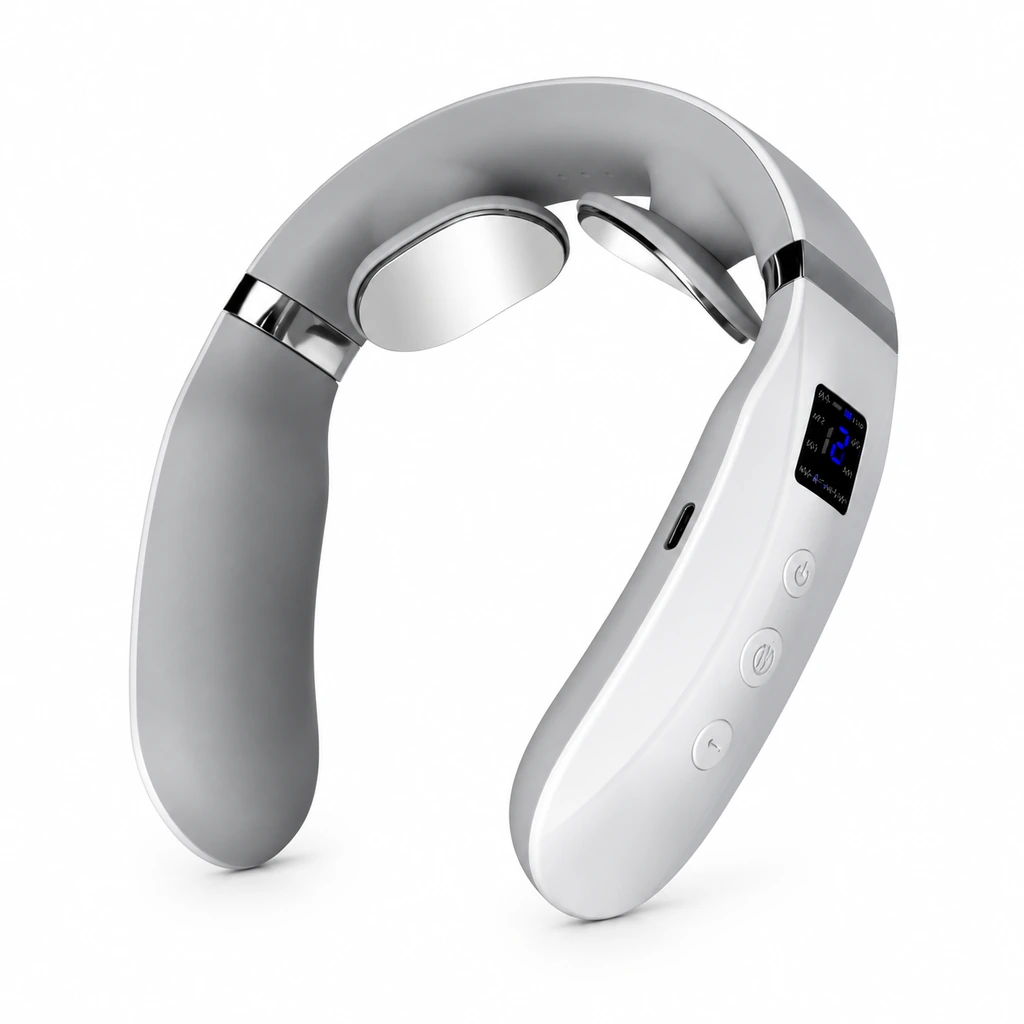
F16 product visual. Appearance helps identify the model, but the quotation and specification should identify the exact version.
Read Electrical and Battery Figures Separately
The F16 page lists a 5 V, 0.3 A rated input, 1.5 W rated power, and 400 mAh battery capacity. These are different fields. Input describes the stated electrical supply requirement; battery capacity describes stored charge. Neither figure, on its own, establishes charging time or usable runtime.
Ask whether the quoted pack includes a charging cable or adapter, and confirm the charging instructions for that version. If runtime matters to your product brief, request a measured result with its operating mode, intensity, heat setting, battery condition, and test method. Do not calculate a customer-facing promise from capacity alone.
Check What Was Measured
The F16 page lists 150 × 141 × 40 mm as product size and 113 g as net weight. Confirm the orientation of each dimension and whether the weight includes the remote or other accessories. A device measurement cannot fill a retail-box or shipping-carton field.
Request separate figures for the finished retail pack when packaging or freight planning depends on them. Keep the measurement date and product version beside the data, particularly if artwork, accessories, or pack structure later change.

An in-use visual explains the form factor; it cannot establish dimensions or fit for every wearer.
Translate Controls Into Testable Questions
The F16 page lists 10 modes, 16 intensity levels, an LCD display, and a 15-minute automatic shut-off. These entries tell you what to examine on a sample. Ask how the user starts, changes, and stops a session; what the display shows; and what happens when the timer ends. Check both on-device buttons and any quoted remote.
Treat mode names as interface labels, not proof of a particular physical mechanism. If heat or another function is described, request the operating description and any conditions behind a numerical claim before using that wording in a product listing.
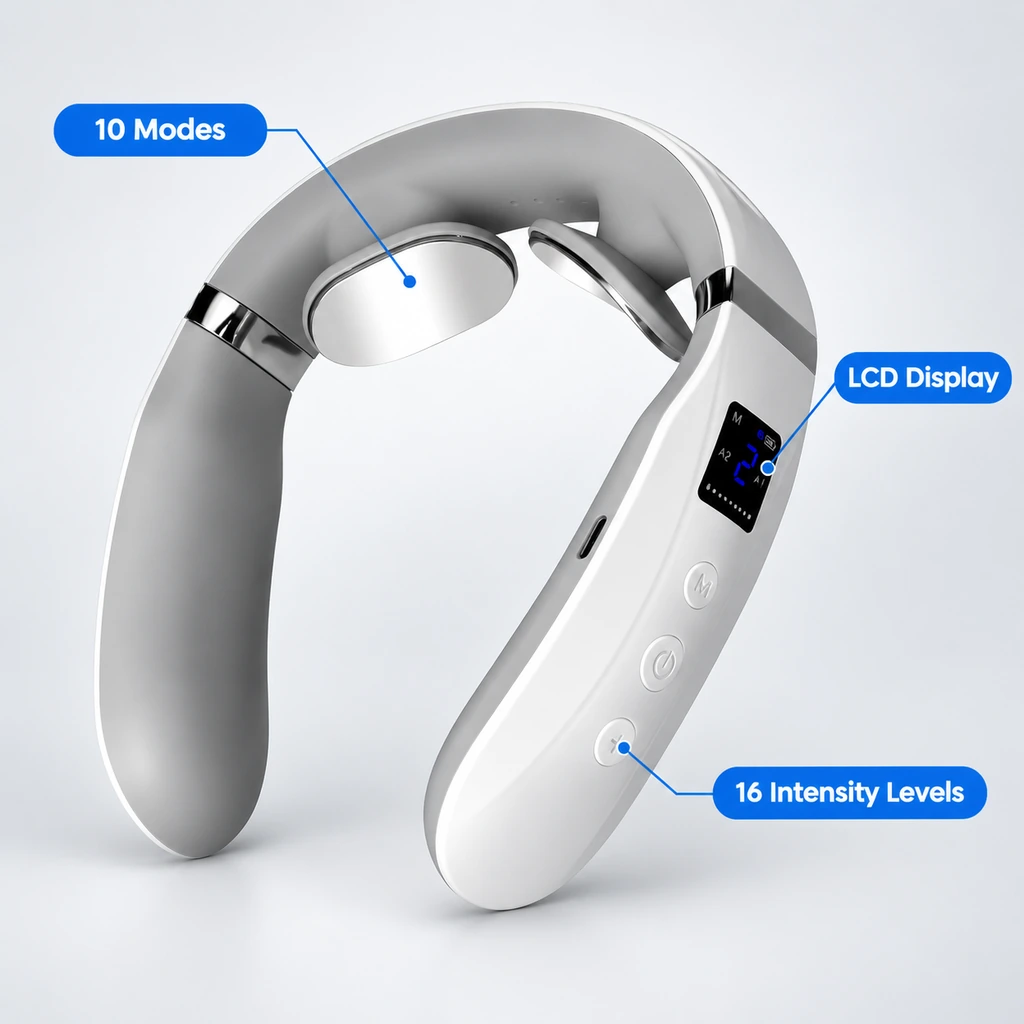
The feature visual highlights controls to check against the sample and final instructions.
Send Back a Short Clarification List
| Specification field | Buyer’s follow-up |
|---|---|
| Model and revision | Which quoted sample and artwork does this sheet cover? |
| Input and battery | What charging items are included, and how was any runtime claim measured? |
| Size and weight | Are these device, retail-pack, or carton measurements? |
| Modes and timer | What does each control do on the approved sample? |
| Accessories | Which items appear on the signed packing list? |
Record each answer in the approved specification rather than leaving it in an email thread. Then compare the updated sheet with the sample, manual, and quotation.
Browse Meilan’s neck massager range for candidate models. To resolve a specific sheet, contact Meilan with the model, revision, target market, and exact fields requiring clarification.

