


How to Evaluate Private Label Neck Massager Manufacturers for the US Market
Launching a private label neck massager in the US takes more than adding a logo. The right manufacturer should help you define the product, review relevant evidence, and keep bulk production consistent with your approved sample.
Use these four checkpoints to compare suppliers. Meilan’s supplied F50 materials illustrate what to examine—not a blanket guarantee of US compliance.
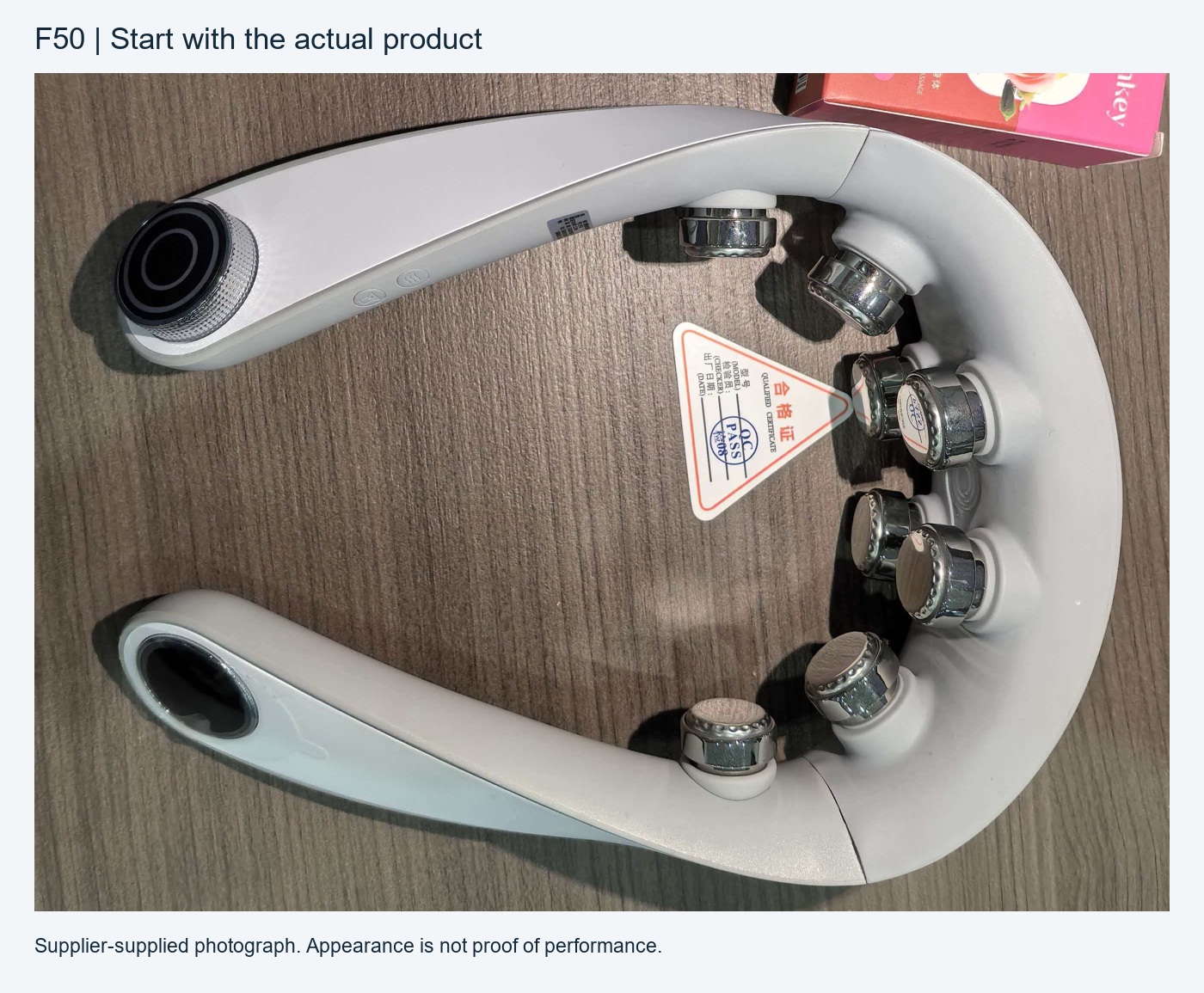
F50 product reference. Appearance and a QC tag alone do not establish performance or safety.
Product Fit: Compare the Exact Configuration
Similar-looking neck massagers can use different technologies. Confirm whether the proposed version includes electrical stimulation, vibration, mechanical massage, heat, or a combination.
- Comfort: Evaluate fit, weight, contact surfaces, and control access.
- Functions: Separate standard features from optional upgrades.
- Customization: Confirm logo, color, packaging, and manual options for that version.
Ask for a dated specification. A quotation that does not identify the configuration is difficult to compare fairly.
Document Checks: Look Beyond the Logo
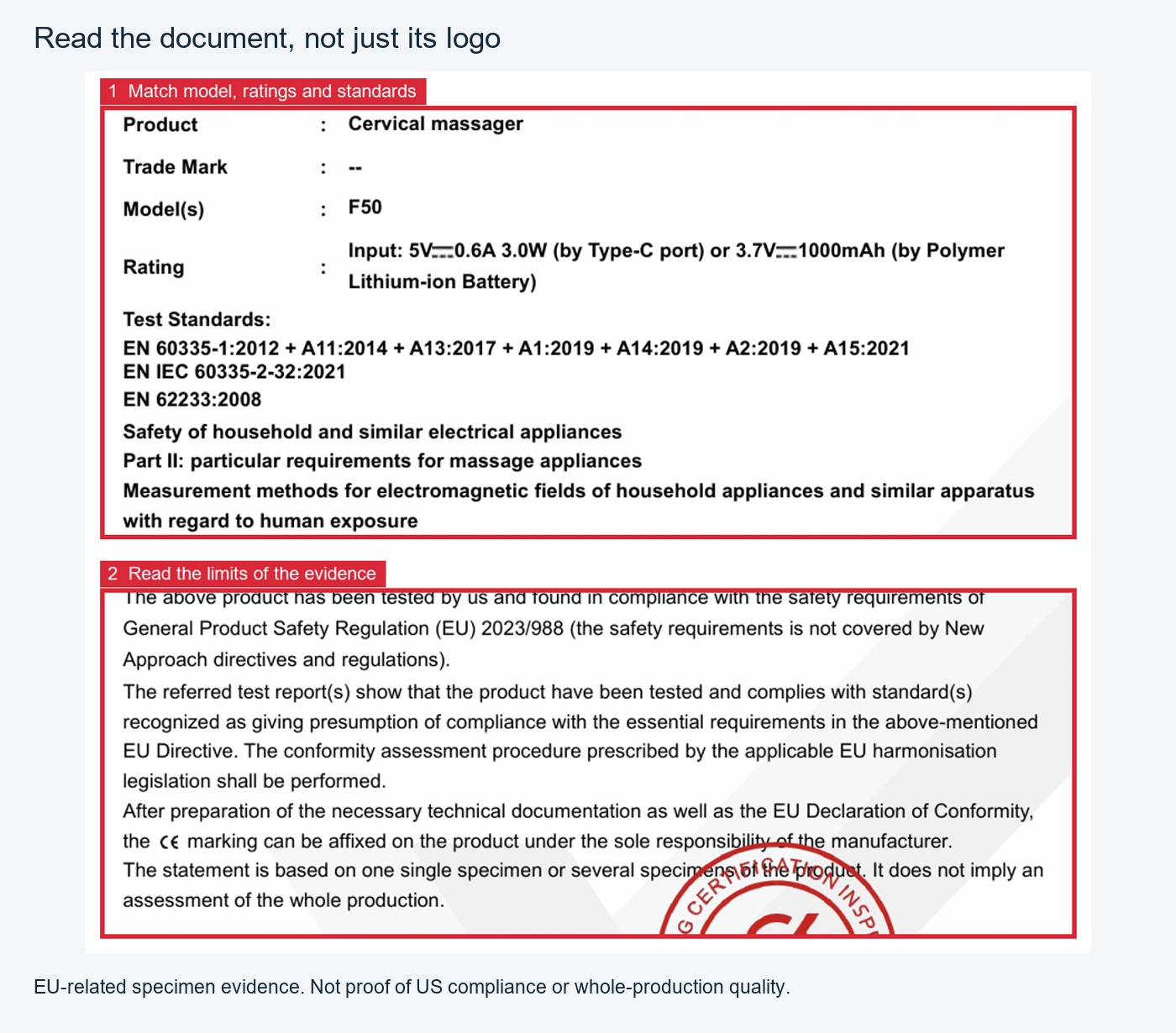
Red boxes highlight the F50 model, electrical ratings, referenced standards, and assessment scope. This document relates to European requirements; US market requirements should be evaluated separately.
The supplied F50 verification lists model F50, a 5 V/0.6 A Type-C input, and a 3.7 V/1000 mAh polymer lithium-ion battery. Match these details to the sample and order specification.
It also cites European standards and states that the assessment concerns specimens, not the whole production. European documentation does not automatically establish US compliance.
Have a qualified reviewer assess the exact device and intended claims. Depending on the design, review may involve FDA classification, FCC requirements, battery transport documentation, and sales-channel requirements. Request full reports rather than relying on certificate thumbnails.
Sample Validation: Inspect the Complete Kit
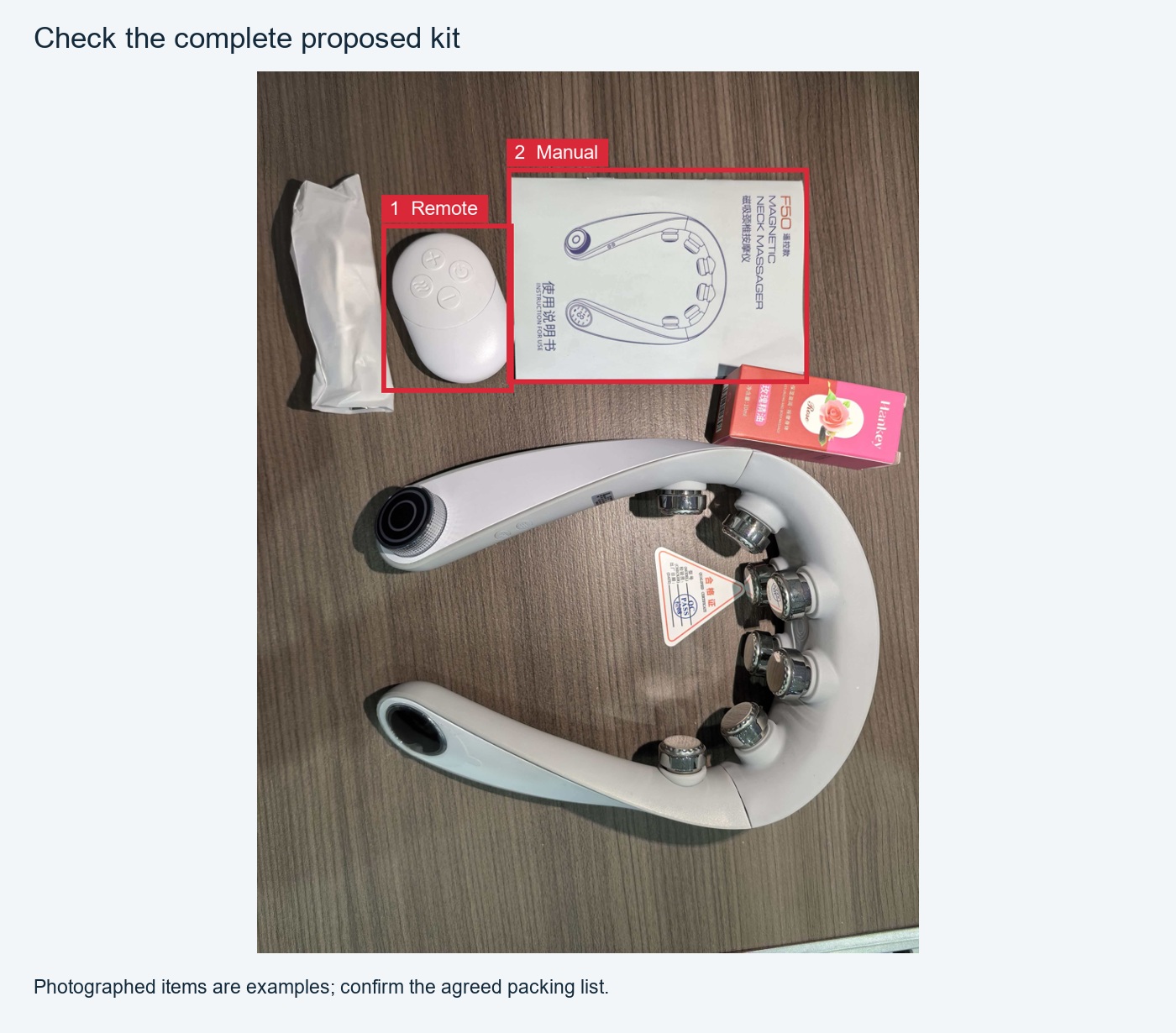
The remote and manual are highlighted. Confirm the packing list; photographed items are not automatically included in future orders.
Test more than the main device. Check controls, charging behavior, instructions, and accessories against the specification. Informal usability checks do not replace qualified safety testing.
- Retain an approved reference sample.
- Agree on inspection criteria and defect remedies.
- Require written approval before critical component substitutions.
A supplier should explain how production units will match the approved version—not simply promise “strict QC.”
Brand Readiness: Packaging and Commercial Terms
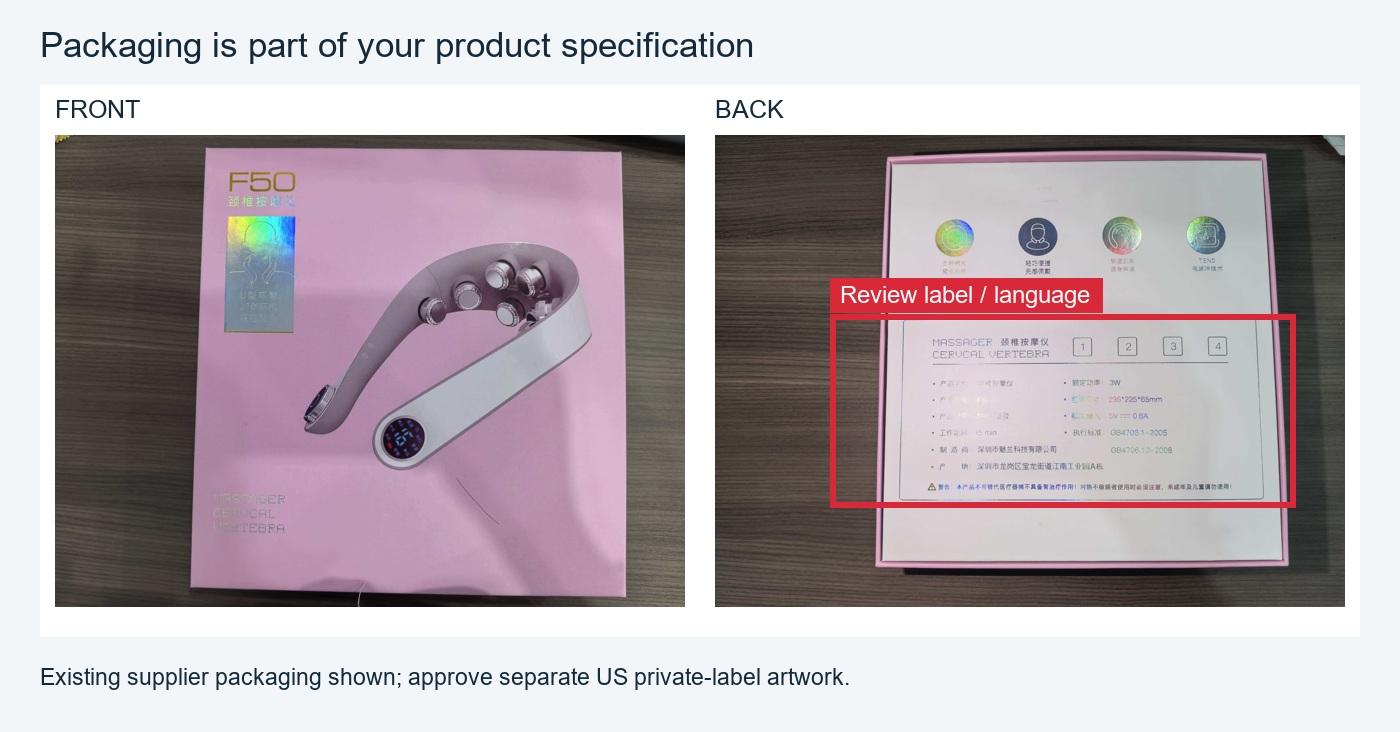
Existing supplier packaging is a reference. The highlighted panel needs review before approving US private label artwork.
Your box, manual, product label, and online listing should describe the same configuration. Review English instructions, warnings, ratings, and marketing claims before printing.
Request written terms covering MOQ by product and packaging, included accessories, customization fees, production milestones, inspection, shipping scope, and after-sales support.
Compare total landed cost, not just the factory price. An attractive quotation is less useful when testing, packaging, or defect-handling costs remain unclear.
Frequently Asked Questions
Does a CE document prove US market readiness?
No. US requirements must be assessed separately against the device’s configuration, intended use, and claims.
What is the MOQ for a private label neck massager?
It depends on the model and customization scope. Request separate minimums for the product, colors, and printed packaging.
What should I approve before bulk production?
The specification, reference sample, packing list, artwork, relevant technical review, and written quality and service terms.
Ready to Discuss Your Private Label Project?
Contact Meilan with your preferred functions, target US sales channel, branding needs, and planned order quantity. Request model-specific specifications and supporting documents before committing.
This guide supports procurement decisions; it is not a product-specific compliance determination.

