

OEM vs ODM vs Private Label for Neck Massager Buyers
Choosing between OEM, ODM, and private label is a decision about design control and responsibility—not simply how to add your logo. Brand buyers and product managers should clarify who provides the design, how deeply it will change, and who approves the final product.
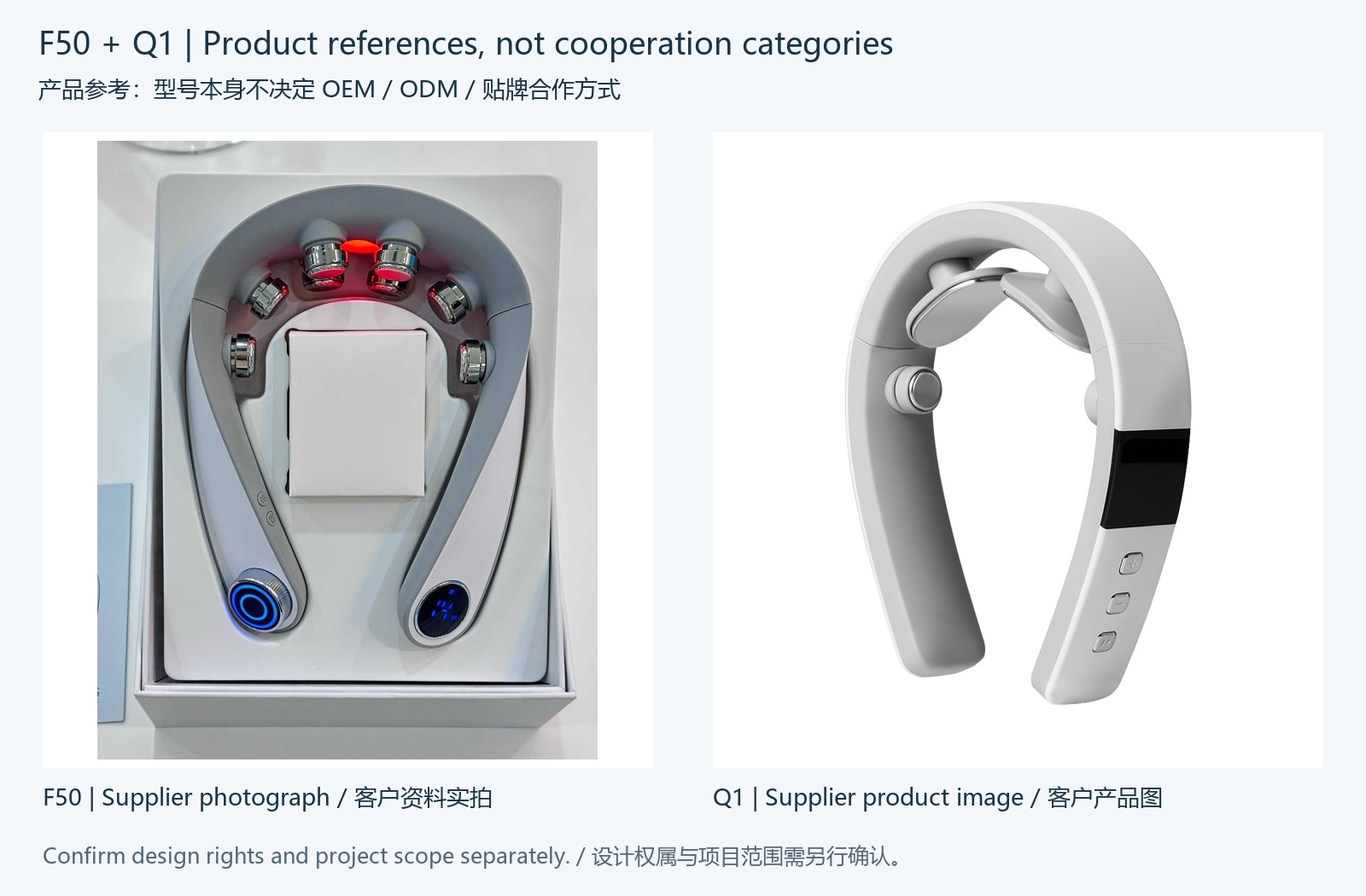
F50 and Q1 are candidate product references. A model number does not determine the cooperation route or grant design rights.
Three Routes, Three Starting Points
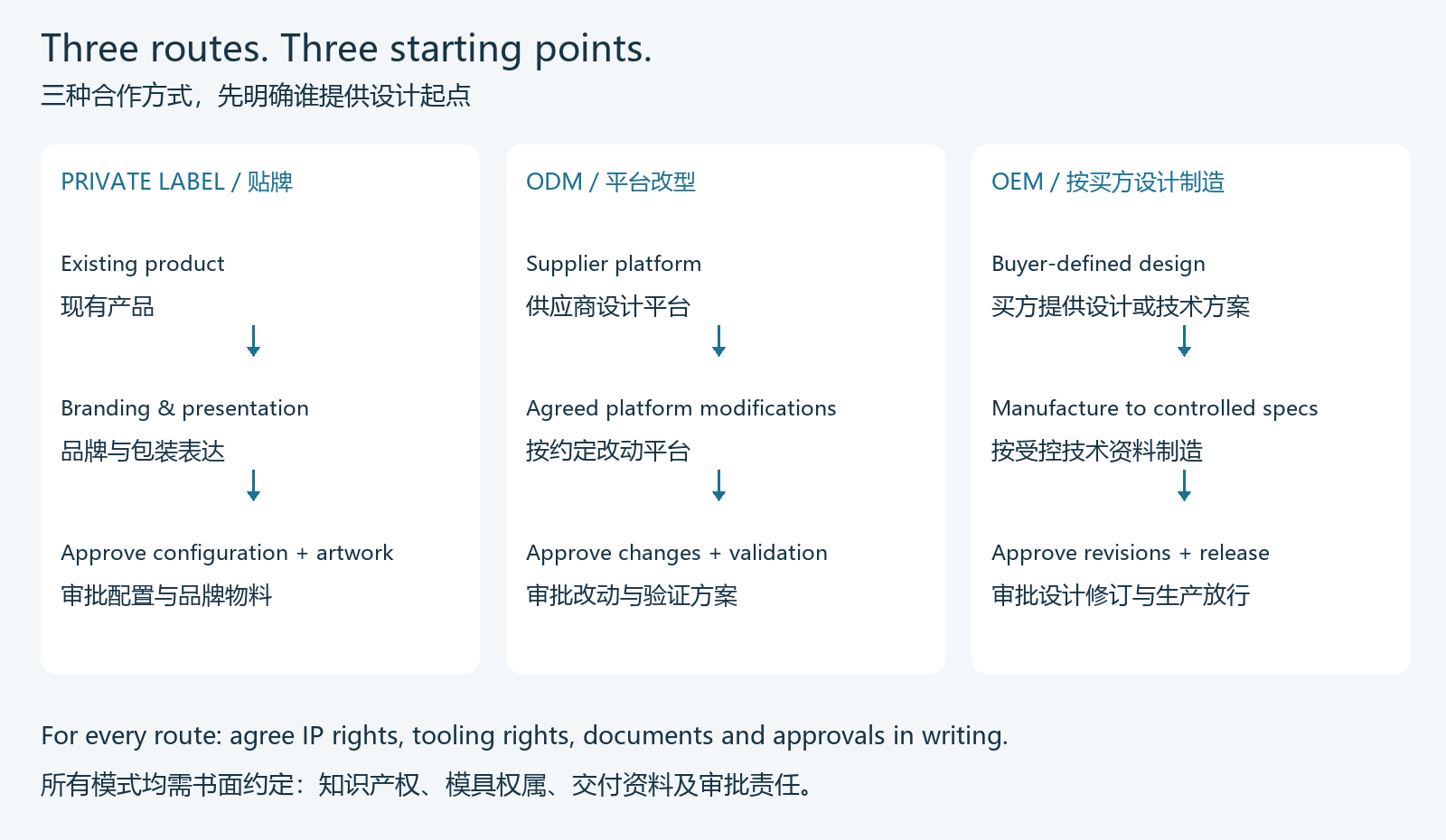
An explanatory comparison of common cooperation routes. Actual project scope and contract terms take precedence.
Suppliers sometimes use these terms differently. Use the comparison below as a working framework, then put the actual scope and responsibilities into the agreement.
| Comparison | Private Label | ODM | OEM |
|---|---|---|---|
| Starting point | Existing supplier product | Supplier-developed platform | Buyer-provided design or technical package |
| Change depth | Branding, packaging, selected cosmetic options | Agreed changes to materials, controls, structure, or functions | Manufacture to buyer-defined requirements; engineering scope agreed separately |
| Design rights | Existing rights remain with their owner | Base-platform rights and new developments must be distinguished | Buyer-provided IP and newly developed project IP must be distinguished and documented |
| Documents | Configuration, artwork, manual, relevant reports | Revised specifications, change records, validation evidence | Controlled drawings, BOM, specifications, test records |
| Buyer approval | Configuration, sample, branding, claims | Changes, revised sample, validation plan | Design revisions, sample, production release |
Private Label: Brand an Existing Product
Private label is a practical route when an existing neck massager already fits your product line. The main work is usually branding, packaging, and instructions, with available options confirmed for the selected version.
For the F50, for example, distinguish a logo change from a battery or circuit-board change. Internal hardware changes require a separate engineering and document review.
Key boundary: Branding does not automatically create exclusivity or transfer product-design ownership.
ODM: Adapt a Supplier’s Design Platform
ODM typically starts with a supplier-developed design. It may suit buyers seeking differentiation through agreed changes to materials, interfaces, accessories, or functionality—subject to feasibility.
Record each modification and its impact on specifications, instructions, tooling, and testing. Existing reports should not be assumed to cover a changed configuration.
Key boundary: Agree who owns newly developed drawings, firmware, tooling, and improvements, and whether they may be reused.
OEM: Manufacture to a Buyer-Defined Design
OEM commonly describes manufacturing against a buyer-provided design or technical package. However, some suppliers also use “OEM” for basic branding. Confirm the deliverables rather than relying on the label.
Where the manufacturer contributes engineering, define who selects components, reviews revisions, validates the design, and resolves failures.
Key boundary: Paying for tooling does not automatically grant ownership of every related design file or intellectual-property right.
Define the Change Before Choosing the Route
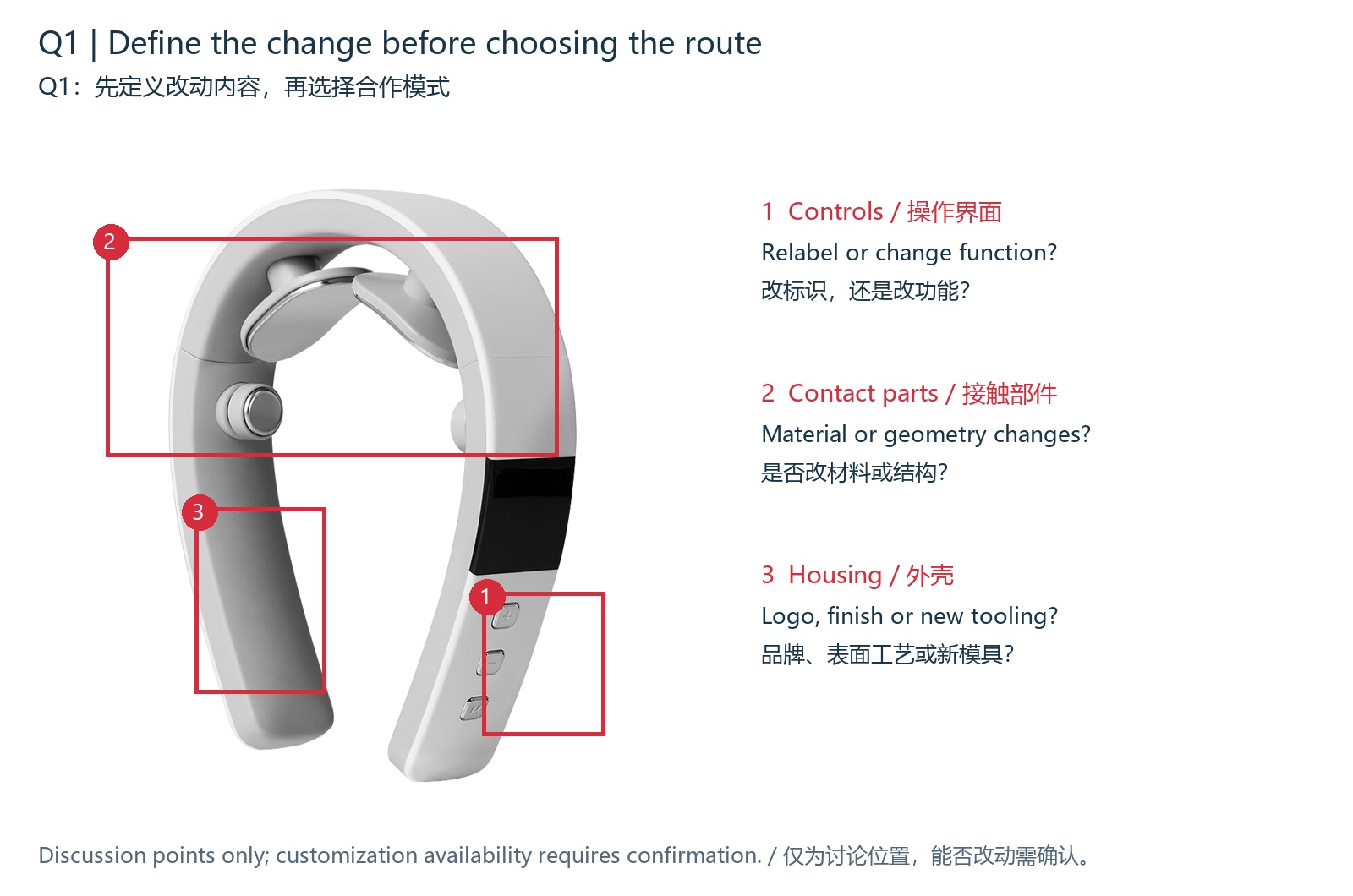
Red boxes identify discussion areas, not confirmed customization options.
Using Q1 as a reference, changing a button label is different from changing its function. Adjusting a surface finish is different from redesigning the housing. Contact-material changes may also affect testing.
The depth of the modification—not the model name—determines the development and approval work.
Documents and Approvals: Assign the Owners
Across all three routes, assign responsibility for:
- Technical records: Who maintains drawings, specifications, BOM revisions, and test evidence?
- Approval: Who signs off the sample, artwork, changes, and production release?
- US market review: Who coordinates assessment of the exact device, intended use, and marketing claims?
The cooperation label does not itself transfer legal obligations. Document responsibilities before development begins.
Which Route Fits Your Project?
Choose private label when the existing product fits and branding is the main change. Consider ODM when adapting a supplier platform. Discuss OEM when you have a buyer-defined design and need manufacturing support.
Contact Meilan to confirm the available scope for your selected F-series or Q1 model. Agree on design rights, modification depth, document deliverables, and approval responsibilities before committing.

