


Comparing Neck Massager Battery Runtime on Equal Terms
Two neck massagers can both be described as “rechargeable” while delivering very different use between charges. For a US wellness brand, the useful comparison is not which listing prints the largest hour figure. It is whether the figures were measured on the exact versions under conditions your customers will recognize.
Identify the configuration before comparing hours
Start with the model, hardware revision, battery specification, firmware or control version, and included charging components. A runtime result from an earlier build should not automatically follow a revised heating element, motor, or control program. The Meilan neck massager collection can help shortlist candidates, but a collection page is not a substitute for a version-specific test record.
The photograph below shows a Meilan F101 candidate. It identifies a product to sample; its appearance alone cannot establish battery endurance. Ask for the matching manual and specification sheet before using any runtime figure in an assortment comparison.
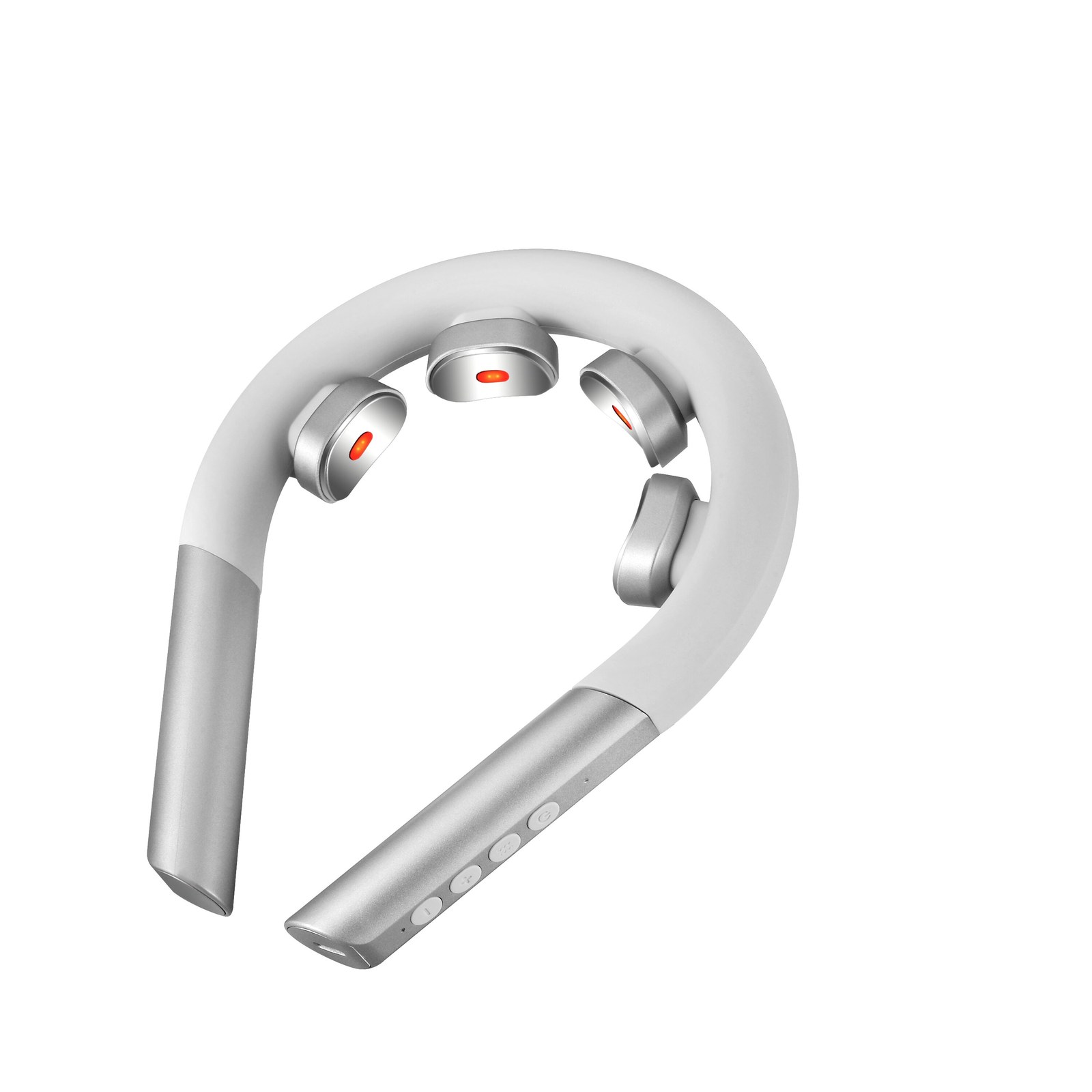
F101 product photograph. Use the exact sample and revision for a runtime assessment; the image is not a battery test.
Put operating conditions beside the result
Heat, massage mode, intensity, and the length of each timed session can change energy use. Record whether the test runs continuously or as repeated sessions with pauses. Define what “fully charged” means at the start and what event ends the test: automatic shutoff, a low-battery warning, or loss of the selected function. Ambient conditions and battery age should also be noted.
| Field | What the buyer should record |
|---|---|
| Exact sample | Model, revision, battery and control version |
| Functions | Heat on/off, mode and intensity |
| Cycle | Session length, pause and repeat pattern |
| End point | The event counted as the end of usable operation |
| Conditions | Charging method, ambient setting and sample age |
Two reported hour values are not like-for-like if these fields differ. Battery capacity is useful component information, but it does not by itself convert into hours of use: the device's power demand and test method are also needed.
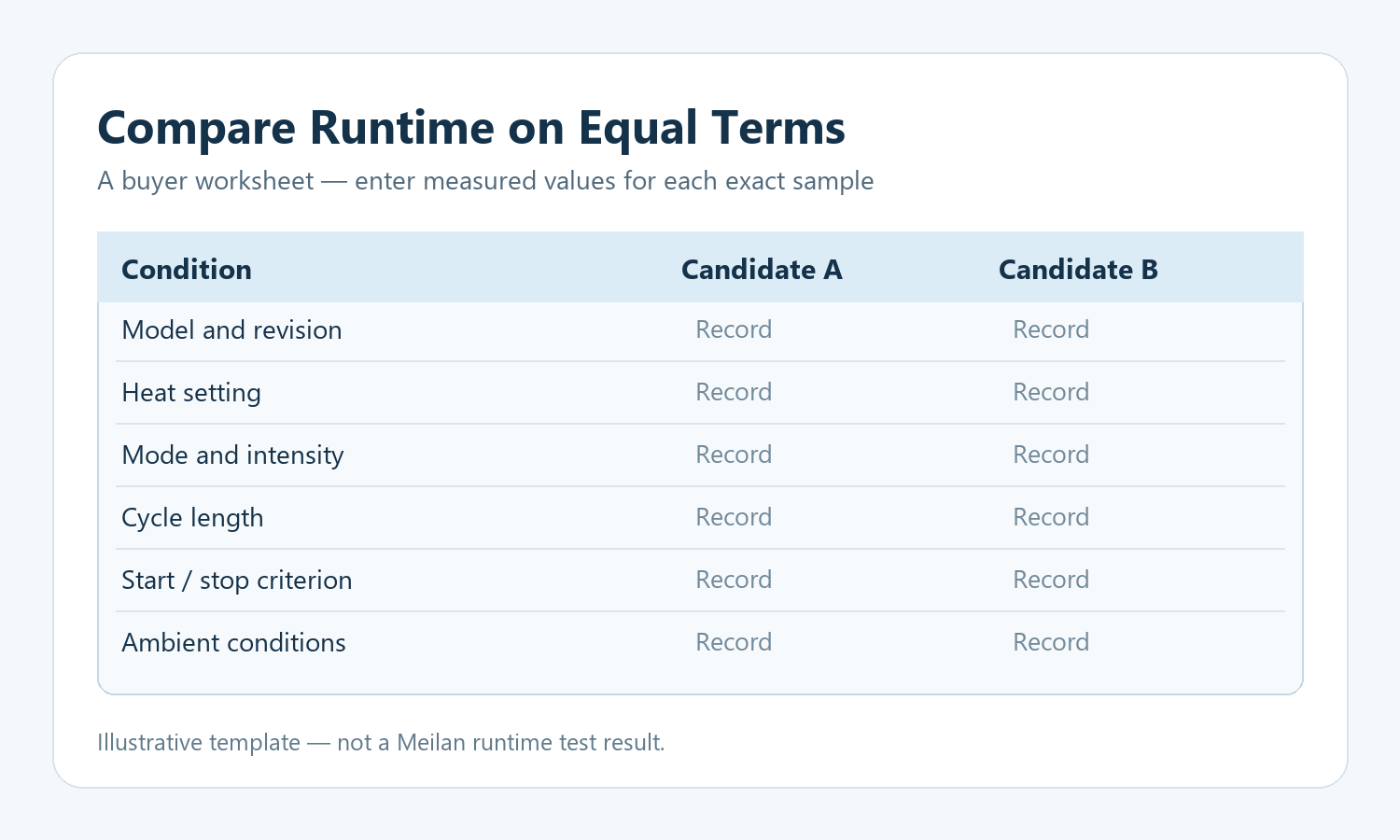
Illustrative buyer worksheet, not a Meilan runtime test result. Fill both columns with measured conditions before comparing candidates.
Repeat a buyer-relevant test on samples
Choose one operating profile that reflects the proposed retail promise, such as a stated mode and intensity with heat either consistently on or consistently off. Fully charge each sample according to its own manual, then run the same session-and-pause sequence. Record each completed session and the reason the test ended. If the products cannot use identical settings, describe the nearest comparable profiles and the remaining difference instead of presenting a false head-to-head winner.
More than one sample may be needed to understand variation. A single result is a sample observation, not a guaranteed production minimum. Procurement and quality should agree what repeatability they require before converting the observation into a specification or public claim.
Write a claim that names its conditions
Avoid an isolated “up to X hours” claim if the supporting settings are unavailable. Keep the final test record, approved configuration, manual and retail copy together. If heat is disabled during the measured run, do not let the same number appear beside imagery that implies heat was operating throughout.
Contact Meilan with the exact candidate configuration and target use profile. Request the applicable runtime method and a sample your team can test under the conditions it intends to describe.

