


EMS vs Mechanical Neck Massagers: What Buyers Should Compare
Choosing a neck massager for your brand starts with the mechanism—not the number of advertised modes. Electrical stimulation and mechanical massage create different experiences, require different specifications, and raise different validation questions.
For procurement and product teams, the goal is to match the technology to the intended customer experience, then confirm that the sample, documentation, and product claims describe the same device.
1. Identify What Actually Produces the Sensation
EMS, or electrical muscle stimulation, uses electrical pulses delivered through electrodes to stimulate muscle contractions. Mechanical massagers use moving components to apply physical action, such as kneading, rolling, tapping, or vibration.
However, “pulse,” “EMS,” and “TENS” are not interchangeable labels. TENS generally targets nerves for pain modulation, while EMS targets muscle stimulation. Ask suppliers to identify the technology and provide its technical specifications rather than relying on a marketing name.
Likewise, a mode called “kneading” does not prove that a device contains rotating kneading nodes.
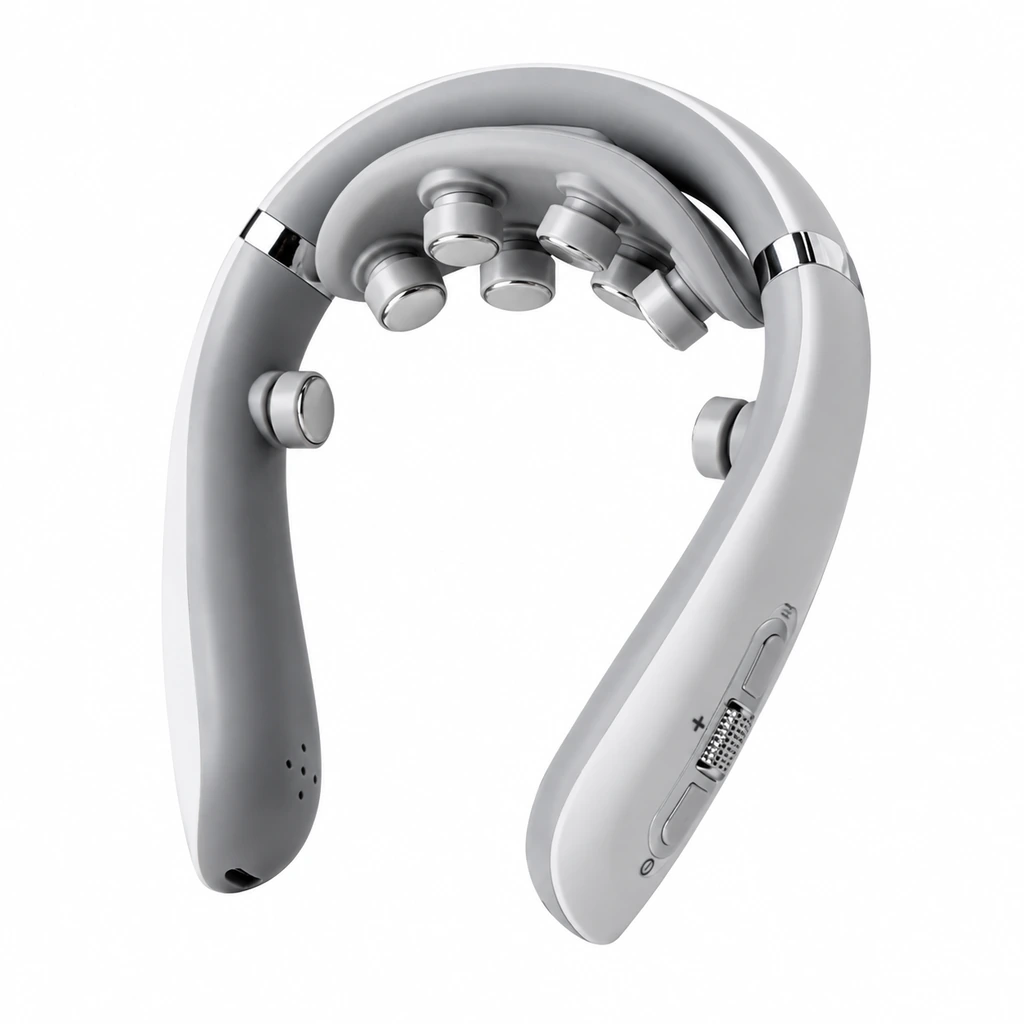
Meilan’s F12 product page lists TENS pulse, vibration, heating, and interchangeable heads. It illustrates why buyers should check the stated mechanism rather than classify a product by appearance.
The F12 product information provides a useful starting point for configuration discussions—not evidence that every pulse device is EMS.
2. Compare the Right Specifications
A shared “16 intensity levels” claim does not make two technologies equivalent. Electrical intensity settings and mechanical speed or pressure settings describe different outputs.
| Buyer checkpoint | EMS / electrical stimulation | Mechanical massage |
|---|---|---|
| Working mechanism | Confirm EMS versus TENS and electrode arrangement | Confirm kneading, rolling, tapping, or vibration |
| Output specification | Waveform, pulse frequency, pulse width, and output limits | Motion, speed range, pressure, and behavior under load |
| Contact and fit | Electrode placement, contact stability, and skin-contact instructions | Node position, coverage, strap tension, and applied pressure |
| Experience to evaluate | Adjustment steps and consistency of sensation | Smoothness, noise, pressure distribution, and comfort |
| Maintenance | Electrode cleaning and replacement requirements | Covers, moving components, cleaning, and wear |
| Validation focus | Electrical output, contact behavior, and protective controls | Moving-part protection, load behavior, and durability |
Compare battery runtime under stated operating conditions. Heat, vibration, stimulation intensity, and mechanical load can change power consumption; an unexplained runtime figure is difficult to compare fairly.
3. Evaluate Fit and Controls, Not Just Features
Assess whether users can position the device correctly, reach the controls, and understand how to reduce intensity or stop operation.
For electrical products, review electrode placement, required contact conditions, warnings, and contraindications in the instructions. For mechanical products, examine pressure adjustment, coverage, and protection against accessible pinch points or hair entanglement.
Plan any user evaluation around the manufacturer’s instructions and an appropriate safety review. A comfortable demonstration does not establish therapeutic effectiveness.
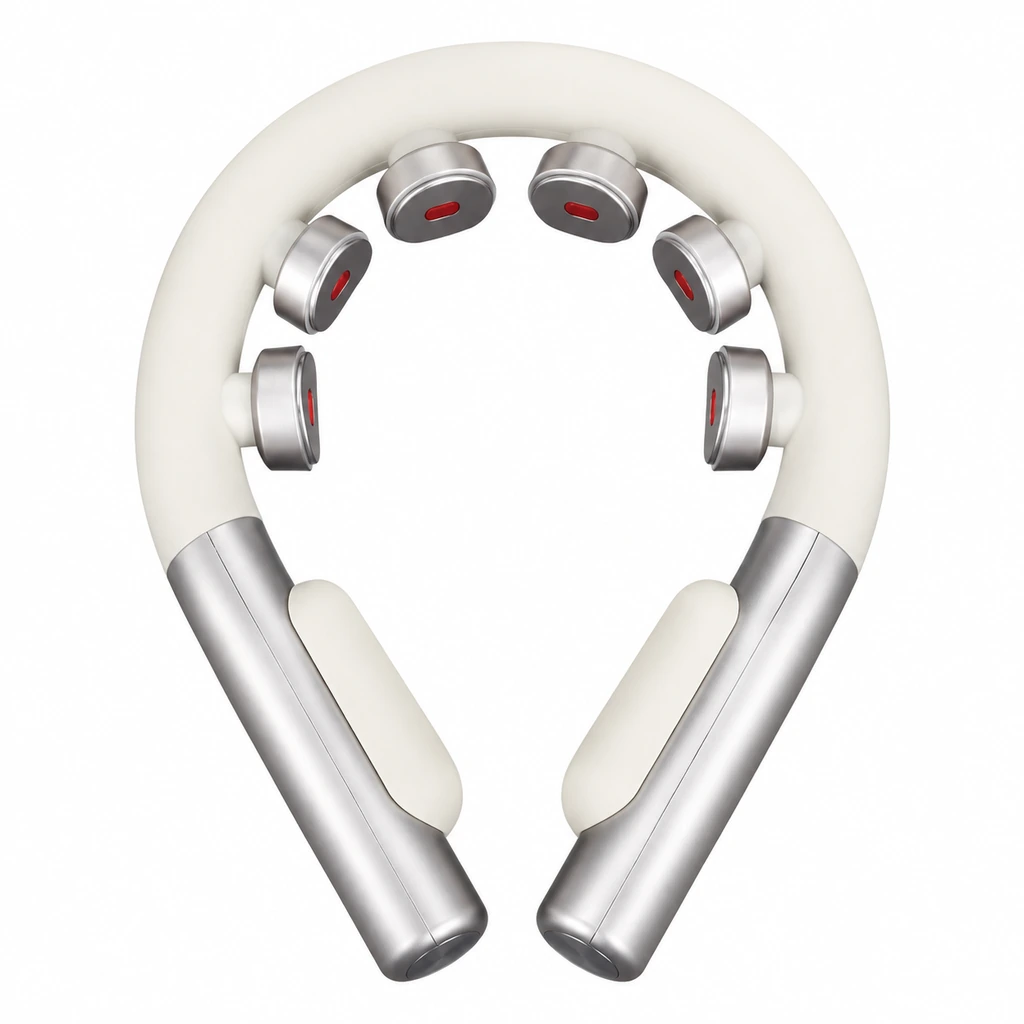
F100’s official specifications list low-frequency pulse, vibration, heat, and red light. Its contact layout is a useful reference when reviewing fit and controls; the image does not establish a mechanical kneading mechanism.
4. Separate Core Technology from Added Functions
Heat, remote control, voice prompts, and timers may improve usability, but they do not define the massage mechanism.
The F100 product page illustrates a multi-function configuration. Buyers should ask which functions operate independently and which can run together.
For your selected sample, check:
- Whether heat can be switched off separately.
- How intensity changes between modes.
- What happens when contact or load changes.
- How the timer, stop control, and restart behavior work.
Do not assume that more modes mean a more suitable product.
5. Match Documents and Claims to the Final Configuration
Request the specification, instructions, relevant test records, and approved claims for the exact version being purchased.
Electrical stimulation, moving massage components, batteries, and heating introduce different review needs. Neither technology is automatically safer, medically approved, or suitable for every user.
Use Meilan’s certifications page to identify available document references, then confirm their model, configuration, scope, and relevance to your target market. Therapeutic claims need separate review; a general “massager” description does not settle regulatory classification.
Choose the Experience Before Choosing the Supplier
Choose electrical stimulation when the intended experience specifically calls for that technology and its contact requirements can be supported. Consider mechanical massage when physical kneading, rolling, or pressure is central to the product concept.
Contact Meilan with your intended experience, target market, and preferred functions. Request a configuration-specific proposal and evidence package—not simply the model with the longest feature list.

